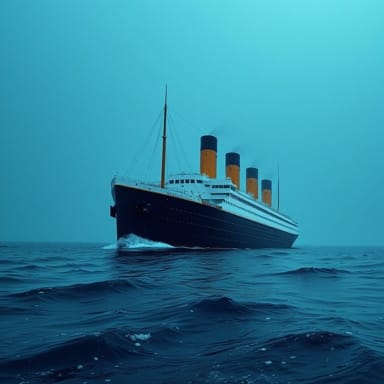
When the RMS Titanic tragically sank on April 15, 1912, one of the most harrowing aspects of the disaster was not only the sinking itself but the extreme cold of the water that claimed so many lives. Survivors recalled the freezing sensation almost instantly upon entering the North Atlantic, and the majority of those who perished that night died not from drowning but from hypothermia. Understanding how cold the water was when the Titanic sank provides crucial context to the severity and speed of the tragedy. This chilling temperature had a direct impact on survival rates and remains one of the most studied elements of the ship’s ill-fated voyage.
Exact Temperature of the Water
The water temperature on the night the Titanic sank was approximately 28°F, or -2.2°C. This temperature is below the freezing point of freshwater but not uncommon for saltwater in the North Atlantic. Because salt lowers the freezing point of water, ocean water does not freeze until around 28°F.
At this temperature, the water was lethally cold. Hypothermia could set in within minutes, and loss of muscle function and consciousness would follow shortly after. The water was just cold enough to make long-term survival virtually impossible without immediate rescue or access to something that floated and kept the body out of direct contact with the icy sea.
Why Was the Water So Cold?
The Titanic was sailing in the North Atlantic Ocean during the early spring, a time when water temperatures in that region are typically near their coldest. Additionally, the ship had entered an area known for icebergs and cold currents, particularly the Labrador Current, which flows southward from the Arctic Ocean. This current brings frigid water and icebergs into the shipping lanes, which is precisely what contributed to the Titanic’s collision.
Impact of Cold Water on the Victims
The coldness of the North Atlantic water played a crucial role in the rapid death toll following the Titanic’s sinking. While there were lifeboats available, they were not enough for all passengers and crew. As a result, over 1,500 people ended up in the water or clinging to debris.
Stages of Hypothermia in Cold Water
When the human body is immersed in water as cold as 28°F, the physiological response is both immediate and deadly. The stages include:
- Cold Shock: This occurs in the first 30 seconds to 2 minutes. Victims often gasp uncontrollably, which can lead to inhaling water and drowning. Heart rate and blood pressure spike, increasing the risk of cardiac arrest.
- Loss of Motor Control: Within 5 to 15 minutes, cold water impairs muscle function, making it difficult to swim or grasp objects. Many victims lose the ability to hold onto lifebelts or climb into lifeboats.
- Hypothermia: As the body temperature drops, confusion and loss of consciousness follow. In water as cold as that on the night the Titanic sank, death could occur in as little as 15 to 30 minutes.
Testimonies from Survivors
Many survivors spoke vividly about the water’s unbearable temperature. Second Officer Charles Lightoller, the most senior officer to survive, described the cold as shocking and life-threatening. Others recalled their limbs going numb within minutes and hearing the cries of people fade away as hypothermia took hold.
Some passengers managed to survive in the water for slightly longer by clinging to debris or wearing layers of clothing, but these cases were rare. Almost everyone who ended up in the water perished within a short time due to the frigid conditions.
Life Jackets and Lifeboats
While life jackets helped some stay afloat, they offered no protection against the cold. Only those who made it into lifeboats or climbed onto floating debris had a realistic chance of surviving the freezing water. A few individuals, including stewardess Violet Jessop and baker Charles Joughin, are noted for surviving prolonged exposure due to unusual circumstances, such as alcohol consumption, body mass, or sheer luck.
Scientific Research on Cold-Water Survival
Since the Titanic disaster, researchers have conducted studies to better understand cold-water immersion and human survival. These studies confirm that even strong swimmers and healthy individuals can succumb quickly in near-freezing water. Wearing insulating clothing or flotation devices can slightly extend survival time, but not by much in such cold temperatures.
Modern maritime safety protocols, including immersion suits and thermal lifeboats, are direct responses to lessons learned from events like the Titanic. These measures are designed to reduce heat loss and increase the odds of survival in freezing waters.
Why Weren’t More Lives Saved?
Several factors combined to limit the number of survivors:
- Insufficient lifeboats for all passengers
- Delayed rescue operations RMS Carpathia arrived over an hour after the sinking
- Extreme cold rendering most victims unconscious within minutes
- Panic and disorganization during the evacuation
Even though the Carpathia rescued over 700 survivors, many others had already died from the cold by the time help arrived.
Cold Water and the Legacy of the Titanic
The freezing water on the night of April 15, 1912, was more than a detail it was a primary factor in the high death toll. The Titanic disaster led to reforms in maritime safety, including requirements for sufficient lifeboats, regular safety drills, and better international coordination for ship tracking and iceberg monitoring.
Today, the conditions of the Titanic’s sinking are still studied by historians, oceanographers, and safety experts. The cold of the Atlantic serves as a stark reminder of nature’s unforgiving power and the importance of preparation in disaster scenarios.
Modern Comparisons
To put the Titanic water temperature into perspective, consider that competitive ice swimmers typically swim in water between 32°F and 41°F, and even then only for brief periods with safety personnel on hand. The 28°F water where the Titanic went down is colder than what is used in these extreme events, making any survival in those conditions even more remarkable.
So how cold was the water when the Titanic sank? It was about 28 degrees Fahrenheit, or -2.2 degrees Celsius cold enough to kill within minutes. The frigid temperature was not just a backdrop to the disaster but a central cause of its deadly outcome. Most of the lives lost that night were not due to injuries or drowning, but to the inescapable effects of hypothermia in freezing water. Understanding the environmental conditions of that night helps us fully grasp the scale of the tragedy and the urgency of the lessons it taught the world.