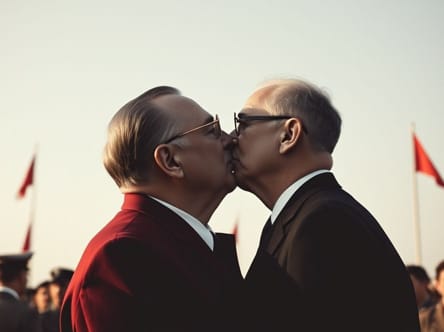
One of the most iconic and unusual images of Cold War diplomacy is the famous photograph capturing the embrace and kiss between Leonid Brezhnev, the leader of the Soviet Union, and Erich Honecker, the head of East Germany. This kiss was not merely a personal gesture but a powerful symbol steeped in political and ideological significance. Taken during a state visit, the image has come to represent the close ties between two communist regimes and the complex nature of international relations during a tense period in world history. Understanding the context, meaning, and aftermath of the Brezhnev-Honecker kiss helps illuminate the dynamics of the Cold War and the symbolism used by communist leaders to convey unity and loyalty.
Historical Context of the Brezhnev-Honecker Relationship
Leonid Brezhnev served as the General Secretary of the Communist Party of the Soviet Union from 1964 to 1982. His leadership was marked by a policy of maintaining Soviet influence over Eastern Europe and asserting control over the communist bloc. Erich Honecker was the leader of the German Democratic Republic (East Germany) from 1971 until the fall of the Berlin Wall in 1989. Honecker’s regime was strongly aligned with Soviet interests, emphasizing political stability and socialism under Soviet guidance.
The two leaders shared a close political relationship grounded in their mutual commitment to Marxist-Leninist ideology and the survival of the Eastern Bloc. Their alliance symbolized the strong ties between the USSR and its satellite states, particularly East Germany, which was often considered the Soviet Union’s most loyal and strategically important ally in Europe.
The Meaning Behind the Socialist Fraternal Kiss
What is the Socialist Fraternal Kiss?
The socialist fraternal kiss, also known as the brotherly kiss, was a traditional greeting among communist leaders that symbolized solidarity, trust, and ideological unity. Unlike a typical kiss, this gesture involved a firm embrace followed by a series of kisses on the cheek or lips. It was a public display meant to convey the strength of relationships between communist parties and governments, contrasting the ideological hostility with the capitalist West.
The Brezhnev-Honecker Kiss in 1979
The most famous kiss between Brezhnev and Honecker occurred in 1979 during Honecker’s official visit to Moscow. The image captured in photographs and newsreels quickly became iconic, showing the two leaders locking lips in a dramatic and intimate embrace. This moment symbolized not only their personal rapport but also the unbreakable political alliance between the Soviet Union and East Germany.
This gesture was rooted in tradition but took on additional meaning during the Cold War. It served as a visual message to the world about the unity and strength of the socialist camp, reinforcing the narrative that the Eastern Bloc was cohesive and prepared to stand against capitalist adversaries.
Political and Symbolic Significance
Demonstration of Loyalty
The kiss was a powerful demonstration of Honecker’s loyalty to Brezhnev and, by extension, to the Soviet Union. It reassured Moscow that East Germany would remain aligned with Soviet policies and resistant to Western influences. This was especially important given East Germany’s geographical and political position as a frontline state during the Cold War.
Propaganda and Public Perception
The Brezhnev-Honecker kiss was widely publicized by state-controlled media to emphasize friendship and ideological unity within the Eastern Bloc. The image became a propaganda tool to strengthen internal cohesion and legitimize communist rule. It projected an image of harmony and brotherhood that leaders hoped would inspire confidence among their citizens and intimidate Western observers.
Criticism and Satire
Outside the Eastern Bloc, the kiss was often viewed with irony and satire. Many Western commentators saw it as a bizarre and overly theatrical display of political alliance, sometimes mocking the exaggerated affection between authoritarian leaders. The image has been parodied and referenced in popular culture, underscoring how political rituals can sometimes appear awkward or insincere.
The Aftermath and Legacy
End of the Eastern Bloc
Despite the outward show of unity symbolized by the kiss, the relationship between the Soviet Union and its satellite states was often strained beneath the surface. The eventual collapse of communist regimes across Eastern Europe in 1989, including Honecker’s fall from power in East Germany, demonstrated the limits of such symbolic gestures. The fall of the Berlin Wall and German reunification marked the end of the era that the Brezhnev-Honecker kiss represented.
Icon of Cold War Imagery
Today, the image of the kiss remains one of the most recognizable symbols of Cold War politics. It encapsulates the complexities of diplomacy, loyalty, and ideology during a time when appearances often carried as much weight as actual policy. The photograph has been preserved in museums and studied by historians as a vivid example of how political theater was used to shape narratives.
Artistic and Cultural References
The kiss inspired numerous artistic works, most notably the 1990 mural by Dmitri Vrubel titled My God, Help Me to Survive This Deadly Love painted on the Berlin Wall. This artwork captured the paradoxical nature of the kiss both a symbol of unity and a reflection of the oppressive realities of Soviet control. The mural and other cultural references continue to provoke discussion about power, politics, and human relationships during the Cold War.
Summary of Key Facts
- Leonid Brezhnev was the Soviet leader from 1964 to 1982.
- Erich Honecker led East Germany from 1971 to 1989.
- The socialist fraternal kiss symbolized ideological unity among communist leaders.
- The famous kiss between Brezhnev and Honecker took place in 1979 during an official state visit.
- The image became a major propaganda tool and a symbol of the Cold War era.
- The gesture has been both celebrated and satirized in various cultural contexts.
The kiss between Brezhnev and Honecker is more than a peculiar historical snapshot; it represents the intricate dance of loyalty, ideology, and political theater that characterized the Cold War. This embrace symbolized the alliance between two powerful communist leaders and the solidarity of the Eastern Bloc during a period marked by tension and rivalry with the West. Although the era ended with the dissolution of the Soviet Union and the reunification of Germany, the image endures as a vivid reminder of how symbolism and spectacle played a vital role in 20th-century diplomacy and propaganda.