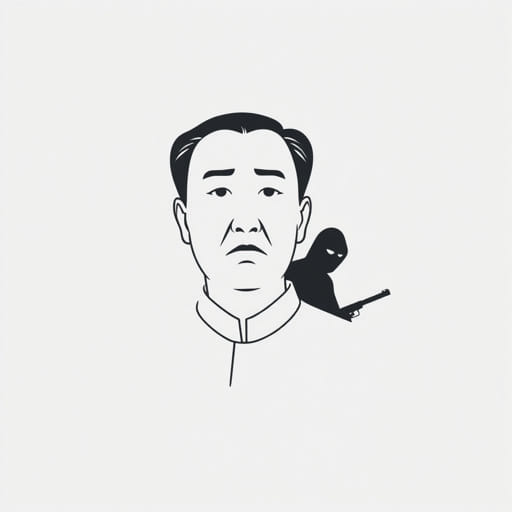
In the turbulent era of Cold War geopolitics and shifting alliances, few leaders managed to navigate international diplomacy with the grace and resilience of Zhou Enlai. As the first Premier of the People’s Republic of China, Zhou was not only a skilled politician but also a central figure in shaping modern China’s foreign policy. Despite his diplomatic acumen and respected global standing, Zhou Enlai was not immune to political intrigue. Among the lesser-known but significant episodes in his life was a mysterious assassination attempt that has intrigued historians and researchers alike.
The Political Climate of the 1950s and 1960s
Zhou Enlai rose to prominence during a time when China was redefining its role on the global stage. Following the 1949 Communist victory in the Chinese Civil War, Zhou became a key architect of China’s internal development and international posture. By the 1950s, tensions were high not only with the West but also with the Soviet Union, which had initially been an ally. The Sino-Soviet split, ideological rifts, and differing national interests created a complex web of hostility and suspicion.
During this period, China was actively participating in various international conferences and diplomatic missions. Zhou was often the face of Chinese diplomacy, forging ties in Asia, Africa, and Europe. This visibility and influence made him a potential target for those who saw China’s rise as a threat to their own geopolitical strategies.
The Mysterious Assassination Attempt
One of the most discussed and debated incidents surrounding Zhou Enlai occurred in 1955 during his trip to attend the Asian-African Conference held in Bandung, Indonesia. This event was a pivotal moment in the Non-Aligned Movement, bringing together leaders from newly independent nations across Asia and Africa to promote economic and cultural cooperation while avoiding alignment with either the United States or the Soviet Union.
Zhou Enlai’s participation was crucial. As a high-profile figure, his presence represented China’s interest in building solidarity among developing nations. However, it was during this trip that a suspicious incident unfolded a mid-air explosion that many believe was an assassination attempt on Zhou’s life.
The Kashmir Princess Incident
On April 11, 1955, a chartered Air India aircraft named Kashmir Princess was carrying a delegation of Chinese officials and journalists from Hong Kong to Jakarta, where Zhou Enlai was scheduled to attend the Bandung Conference. However, Zhou had altered his travel plans at the last minute due to reported health concerns or a possible leak of security information.
Mid-flight, the Kashmir Princess exploded over the South China Sea. Sixteen of the nineteen people onboard were killed. Investigations revealed that a time bomb had been placed in the plane’s luggage compartment. The device had been set to detonate during the flight, clearly targeting the high-level Chinese delegation.
Suspicions and Allegations
The question that lingers is: who was behind the plot to assassinate Zhou Enlai? Various theories have emerged over the decades. While the exact perpetrators have never been definitively identified, several key suspects have been discussed:
- Kuomintang Agents: Some theories suggest that members of the exiled Chinese Nationalist Party (KMT), based in Taiwan, were behind the plot. Still hostile to the Communist leadership, the KMT had a vested interest in undermining key figures like Zhou Enlai.
- Western Intelligence: Other accounts speculate that Western intelligence agencies may have had a role, fearing Zhou’s influence in uniting Third World countries against Western interests. However, there is little concrete evidence to support this claim.
- Rogue Elements: Another possibility is that internal or regional actors, not necessarily backed by a state, attempted the assassination due to ideological or personal motivations.
In the aftermath of the attack, Chinese authorities launched an investigation that pointed to a Chinese Nationalist agent in Hong Kong. However, the lack of international cooperation and Cold War secrecy limited the full exposure of those involved.
Zhou Enlai’s Response
Remarkably, Zhou Enlai chose not to retaliate or escalate tensions publicly following the failed attempt on his life. Instead, he continued with his diplomatic mission and attended the Bandung Conference, where he delivered speeches emphasizing peace, cooperation, and mutual respect among nations. This calm and principled response further solidified Zhou’s image as a pragmatic and composed statesman.
His ability to navigate such a dangerous episode without letting it derail China’s broader diplomatic goals spoke volumes about his character. Rather than focusing on vengeance or suspicion, Zhou maintained the momentum of peaceful diplomacy and non-alignment, contributing to China’s soft power in the developing world.
Legacy and Continued Mystery
The assassination attempt on Zhou Enlai remains one of the most enigmatic incidents in Cold War history. It highlights not only the dangers faced by high-ranking officials but also the deep geopolitical tensions of the era. The Kashmir Princess tragedy stands as a symbol of the risks of international diplomacy during times of ideological conflict.
Zhou’s survival and the mystery surrounding the perpetrators continue to spark interest among historians and scholars. Declassified documents and oral testimonies have shed light on some details, but much of the event remains cloaked in uncertainty. The incident is also a reminder of how leaders like Zhou, though often seen through the lens of policy and ideology, also navigated very personal threats in pursuit of national and international goals.
Zhou Enlai’s near-death experience in 1955 is not merely an anecdote of Cold War history it is a reflection of the era’s intense political rivalries and the fragile nature of international diplomacy. While the full truth behind the assassination attempt may never be known, the incident underscores the significance of Zhou’s leadership and the volatile environment in which he operated. His unwavering dedication to diplomatic progress, even in the face of lethal threats, contributed to his legacy as one of the most respected figures in modern Chinese history.