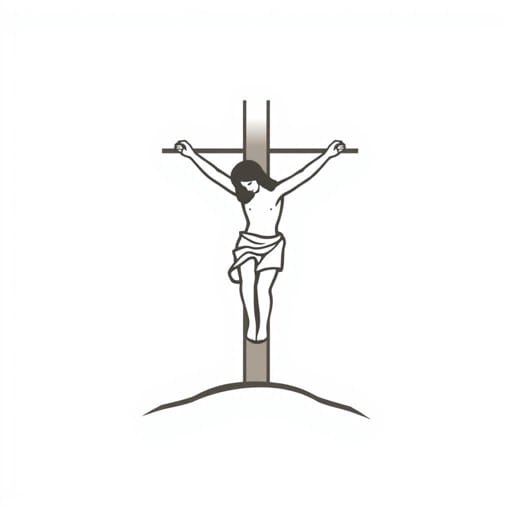
In the early first century, under the authority of the Roman Empire, Pontius Pilate served as the governor, or prefect, of Judea. His role placed him at the heart of political and religious tensions between Roman authorities and the local Jewish population. One of the most pivotal and debated events during his governance was the crucifixion of Jesus of Nazareth. Understanding why Pontius Pilate made the decision to execute Jesus by crucifixion requires an exploration of the religious dynamics, political climate, and Pilate’s own motivations. This historical moment continues to hold significant influence over both religious beliefs and secular history, prompting important questions about authority, justice, and power.
The Political Role of Pontius Pilate
Pontius Pilate held the position of Roman governor from around 26 to 36 CE. His primary responsibility was to maintain order and enforce Roman law within the province of Judea. As a Roman official, he was expected to suppress revolts, collect taxes, and uphold the dominance of Rome. To keep peace in a region with frequent religious conflicts, Pilate had to balance his authority with a cautious respect for local traditions and leaders, including the Jewish Sanhedrin, a religious council with considerable influence over the Jewish population.
Roman Authority and Crucifixion
Crucifixion was a punishment reserved by the Roman Empire for criminals considered a threat to the state especially rebels, slaves, and enemies of Rome. It was designed to humiliate and deter dissent. By executing someone in this way, Roman officials sent a clear message about the consequences of opposing their rule. For Pilate, this form of execution was not unusual, but the circumstances surrounding Jesus’s case were complex and politically charged.
Jesus’s Growing Influence
By the time of his arrest, Jesus had developed a significant following among the people in Judea. His teachings challenged the authority of both the Roman government and Jewish religious leaders. He was seen by many as a prophet, teacher, and even the Messiah an anointed one prophesied to deliver the Jews. For others, especially the elites, his popularity was alarming. He had overturned tables in the Temple, preached openly about a new kind of kingdom, and attracted crowds wherever he went.
Concerns of the Jewish Leaders
The Jewish religious leaders, particularly the Pharisees and chief priests, were concerned that Jesus was disrupting the religious order and potentially provoking Roman retaliation. They feared that Jesus’s message about the Kingdom of God could be interpreted as a challenge to Roman authority. To avoid an uprising or Roman crackdown, the Sanhedrin sought to remove Jesus from the public stage. Since they lacked the power to impose capital punishment, they needed Roman approval to carry out a death sentence.
The Trial Before Pilate
According to historical and biblical accounts, Jesus was brought before Pilate with accusations of blasphemy and claiming to be King of the Jews. While religious blasphemy alone would not have concerned Pilate, the political charge of kingship did. Anyone claiming to be king in a Roman-occupied territory could be seen as a rebel or threat to Caesar’s rule. Pilate had to consider whether Jesus was truly a revolutionary or if the charges were driven by the envy of religious leaders.
Reluctance and Pressure
Multiple gospel accounts suggest that Pilate was initially hesitant to condemn Jesus. He reportedly found no fault in him and even attempted to release him by offering a Passover pardon. However, the crowd, influenced by the religious leaders, demanded Jesus’s crucifixion and asked for the release of Barabbas, a known insurgent. Pilate faced a dilemma: if he let Jesus go, he risked public unrest and appearing weak before Rome. If he gave in to the crowd, he would be complicit in executing an innocent man.
- Pilate’s wife allegedly warned him in a dream to avoid condemning Jesus.
- He offered the crowd a choice between Jesus and Barabbas.
- The chief priests stirred up the crowd to demand crucifixion.
- Pilate washed his hands publicly to show his disapproval of the decision.
Maintaining Political Stability
Ultimately, Pilate’s decision appears to have been motivated by the need to maintain order and protect his position. Roman governors were expected to avoid riots and revolts. By condemning Jesus, Pilate may have believed he was preventing a larger conflict. He symbolically washed his hands to express that he was not morally responsible, but the authority and final decision still lay with him.
The Inscription: King of the Jews
In a final act of subtle defiance or irony, Pilate ordered a sign to be placed above Jesus’s cross stating, Jesus of Nazareth, King of the Jews. The chief priests objected, but Pilate refused to change it. This may have been Pilate’s way of mocking both Jesus’s claim and the religious leaders’ role in the crucifixion. It underscored the political nature of the accusation and the Roman belief in their supreme authority.
The Aftermath and Legacy
Following Jesus’s crucifixion, Pilate continued to serve as governor for a few more years. Eventually, he was recalled to Rome after complaints of excessive cruelty and mishandling of uprisings. His legacy is one of controversy. Some traditions view him as a weak leader who yielded to pressure; others see him as a symbol of Roman injustice. In Christian theology, his role in the crucifixion has led to centuries of debate and interpretation.
Religious Interpretations
In Christian belief, Jesus’s crucifixion was not merely a political act it was the fulfillment of prophecy and a key event in the salvation story. For this reason, the role of Pontius Pilate is both historical and theological. He is mentioned in the Apostles’ Creed, emphasizing his place in the narrative of Jesus’s death and resurrection.
Pontius Pilate’s decision to crucify Jesus was the result of a complex interplay between Roman political concerns and Jewish religious tensions. While Pilate may not have found Jesus guilty of a crime deserving death, the pressure from the local leadership and the threat of public disorder likely compelled him to act. By choosing crucifixion, he upheld Roman authority, appeased the crowd, and inadvertently shaped the course of religious history. The story of Pilate and Jesus continues to resonate as a powerful example of how justice, power, and politics often collide in moments of great consequence.