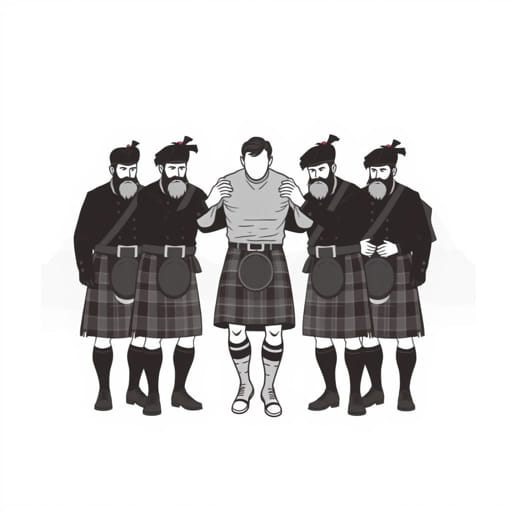
The rugged terrain of the Scottish Highlands has long been home to fiercely independent clans, known for their loyalty, bravery, and deep-rooted traditions. Throughout history, these Highland clans have not only fought for their own land and honor but have also lent their unwavering support to various political and royal causes. Among the most notable figures supported by the Highland clans was Charles Edward Stuart, also known as ‘Bonnie Prince Charlie,’ whose story became legendary during the turbulent Jacobite risings of the 18th century. His quest for the British throne, backed by these devoted Highlanders, would shape the course of British and Scottish history in a dramatic and unforgettable way.
The Jacobite Cause and the Stuart Legacy
To understand who was supported by the clansmen from the Scottish Highlands, it is essential to explore the Jacobite movement. The Jacobites were supporters of the exiled Stuart dynasty, which had lost the English throne during the Glorious Revolution of 1688. King James II of England and VII of Scotland was deposed in favor of William of Orange, leading to a deep division between those loyal to the new Protestant regime and those who believed in the divine right of kings and the Stuart line.
Highland clans, many of whom were Catholic or Episcopalian and held a strong sense of loyalty to the traditional monarchy, aligned themselves with the Jacobite cause. Their support was not only political but cultural, as many saw the new British government as a threat to their way of life, traditions, and autonomy.
Bonnie Prince Charlie and the 1745 Uprising
The Young Pretender’s Arrival in Scotland
Charles Edward Stuart, known affectionately as Bonnie Prince Charlie, was the grandson of King James II. In 1745, he landed in Scotland with a vision of restoring the Stuart monarchy. His charisma and claim to rightful kingship quickly rallied many Highland clans to his side. Despite limited resources and the risk of harsh retribution, several major clans pledged their swords to the prince.
- Clan MacDonald Historically powerful and influential, this clan played a crucial role in the uprising.
- Clan Cameron Under the leadership of Donald Cameron of Lochiel, the Camerons were among the first to support Charles.
- Clan MacGregor Though outlawed, they joined the fight under the banner of Highland unity.
- Clan Chisholm Provided manpower and local knowledge for the Jacobite army.
- Clan Fraser of Lovat Though divided in allegiance, many members sided with the Prince.
These clansmen were motivated by a mix of loyalty, tradition, and hope for a return to a Scottish-centric monarchy. Bonnie Prince Charlie promised not only the return of the Stuarts but also the preservation of Highland identity.
The March to England
With the Highland clans at his back, Charles led the Jacobite army south. They captured Edinburgh with little resistance and won a major victory at the Battle of Prestonpans. Encouraged by success, the army marched into England, reaching as far as Derby. However, lack of support from English Jacobites and fears of overwhelming British military forces led to the decision to retreat back to Scotland.
The Battle of Culloden and Its Aftermath
The Final Stand
In April 1746, the Jacobite forces made their final stand at the Battle of Culloden near Inverness. It was a brutal and swift defeat. The British government army, well-equipped and trained, overwhelmed the Highland warriors. The defeat marked the end of the Jacobite hopes and had devastating consequences for those who had supported Charles.
Repression and Cultural Suppression
In the aftermath of the failed uprising, the British government cracked down on the Highlands. Clan chiefs were executed or exiled, and new laws aimed at dismantling the clan system were imposed. These included the banning of traditional Highland dress, the disarming of the population, and the suppression of Gaelic language and customs. The support given by the Highland clans to Charles Edward Stuart cost them dearly, altering the Highland way of life forever.
Legacy of Highland Support for the Jacobite Cause
Cultural Memory and Romanticism
Though the Jacobite cause was defeated, the loyalty of the Highland clans to Bonnie Prince Charlie became a powerful symbol in Scottish history. Stories of bravery, sacrifice, and defiance inspired generations. In the 19th century, romantic literature and art celebrated the Highlanders’ role, casting them as noble warriors fighting for a lost cause.
Modern Commemoration
Today, the memory of those who supported the Jacobite cause is preserved in monuments, museums, and folk traditions across Scotland. The site of the Battle of Culloden is now a national heritage location, and the stories of clans such as the Camerons and MacDonalds continue to be told as examples of unwavering loyalty and cultural pride.
Other Figures Supported by Highland Clans
While Charles Edward Stuart is the most well-known figure to receive Highland support, earlier Jacobite risings also saw Highland involvement. Notably, James Francis Edward Stuart, known as the Old Pretender and father of Bonnie Prince Charlie, launched an unsuccessful uprising in 1715, during which many Highland clans also took up arms.
- 1715 Rising Led by the Earl of Mar in support of James Francis Edward Stuart. This uprising was marked by early enthusiasm but lacked coordination.
- 1689 Rising The first significant Jacobite rebellion after the Glorious Revolution. Supported by Highland clans loyal to James II.
These risings demonstrated that the support of the Scottish Highlands was not a one-time occurrence, but a consistent pattern driven by shared cultural and political ideals.
The clansmen from the Scottish Highlands played a pivotal role in some of the most dramatic and emotionally resonant episodes of British history. Their support for Charles Edward Stuart, especially during the 1745 Jacobite rising, was fueled by loyalty to the Stuart dynasty, a desire to preserve their way of life, and a profound sense of identity. Though their cause ended in defeat, the legacy of their commitment endures in Scottish culture, history, and memory. Through songs, stories, and historical remembrance, the Highland clans’ support for Bonnie Prince Charlie has become a lasting symbol of courage, loyalty, and the enduring spirit of the Highlands.