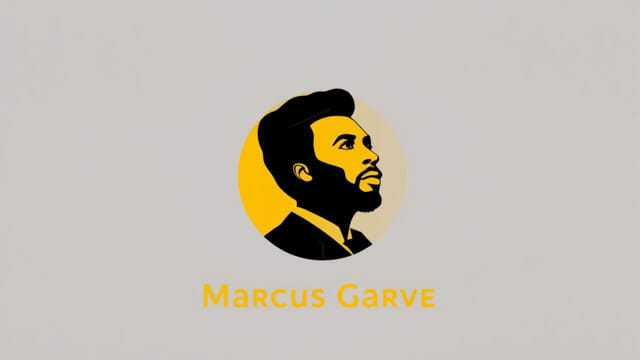
Marcus Garvey was one of the most influential political and cultural leaders of the early 20th century. Born in Jamaica, his ideas and leadership shaped movements for Black pride, self-reliance, and African unity in ways that still resonate today. Garvey’s impact extended far beyond his native island, reaching the United States, Africa, the Caribbean, and the wider diaspora. Through his speeches, writings, and organizational work, he became a symbol of resistance against colonialism and racism, encouraging people of African descent to reclaim their identity and chart their own destinies.
Early Life and Background
Birth and Education
Marcus Mosiah Garvey was born on August 17, 1887, in St. Ann’s Bay, Jamaica. He came from a modest background and was largely self-educated. His father was a stone mason and avid reader, which helped cultivate Marcus’s early love for books and learning. Although he left school at an early age, Garvey developed a strong sense of purpose and curiosity about the world around him.
Early Work Experience
As a young man, Garvey traveled throughout Central America and worked as a printer and editor. During his time in Costa Rica and Panama, he witnessed firsthand the harsh conditions faced by Black laborers, which deeply influenced his worldview. These experiences helped shape his future ideas about economic independence and Black empowerment.
Founding the Universal Negro Improvement Association (UNIA)
The Birth of a Movement
In 1914, Garvey returned to Jamaica and founded the Universal Negro Improvement Association and African Communities League (UNIA-ACL). His aim was to unify all people of African descent under a common goal: the uplifting and advancement of Black people worldwide. The motto of the UNIA was One God! One Aim! One Destiny!
Expansion to the United States
Garvey moved to Harlem, New York, in 1916. There, he expanded the UNIA and gained a large following within the African-American community. Harlem at the time was a hub of cultural and political activity, making it an ideal place for Garvey’s ideas to flourish. By the early 1920s, the UNIA had millions of members and branches across the globe.
Philosophy and Ideology
Pan-Africanism
Marcus Garvey is often considered one of the founding fathers of modern Pan-Africanism. He believed that people of African descent should unite socially, economically, and politically, and work together to achieve self-determination. Garvey emphasized the importance of Africa as the ancestral homeland and envisioned a future where Africans would be free from colonial rule.
Economic Self-Reliance
Another key element of Garvey’s philosophy was economic independence. He encouraged Black communities to build their own businesses, support Black-owned enterprises, and control their financial destiny. His slogan Buy Black was a call to action for economic empowerment and community wealth.
Cultural Pride and Identity
Garvey also promoted racial pride and a celebration of African heritage. He urged Black people to be proud of their roots and reject the idea of white superiority. He is famously quoted as saying, Black is beautiful long before the phrase became popular during the civil rights era.
Major Initiatives
Black Star Line
In one of his most ambitious projects, Garvey launched the Black Star Line, a shipping company intended to facilitate trade and transportation between Africans in the diaspora and the continent of Africa. Although the venture faced financial troubles and allegations of mismanagement, it was a powerful symbol of self-determination and Pan-African vision.
Negro World Newspaper
Garvey also created theNegro World, a newspaper that circulated internationally and spread the messages of the UNIA. It was published in multiple languages and played a critical role in promoting Garvey’s ideology. The paper highlighted African history, Black achievements, and political commentary.
Legal Troubles and Decline
Arrest and Imprisonment
In 1922, Marcus Garvey was arrested and charged with mail fraud in connection with the Black Star Line. Many scholars believe the charges were politically motivated, as Garvey had attracted the attention and opposition of both the U.S. government and rival Black leaders. He was convicted in 1923 and sentenced to five years in prison.
Deportation and Later Life
After serving two years, Garvey’s sentence was commuted by President Calvin Coolidge, and he was deported back to Jamaica in 1927. He later moved to London, where he continued to write and advocate for African causes until his death on June 10, 1940.
Legacy and Influence
Impact on Future Movements
Though Garvey’s movement declined after his deportation, his ideas lived on and inspired countless future leaders and movements. The Nation of Islam, the Black Power movement, and Pan-African leaders like Kwame Nkrumah and Jomo Kenyatta all drew inspiration from Garvey’s teachings.
Recognition and Honors
Today, Marcus Garvey is regarded as a national hero in Jamaica and a global icon of Black liberation. August 17th is celebrated as Marcus Garvey Day in many places around the world. His life and work are taught in schools and honored in speeches, art, and scholarship.
- Jamaica’s first national hero
- Influence on Rastafarianism
- Memorials, statues, and named streets in his honor
- Inducted into the Library of Congress’ list of significant historical figures
Enduring Relevance
In today’s world, the core principles that Garvey stood for unity, pride, and self-reliance continue to resonate. As discussions around racial equity, identity, and economic justice persist, Garvey’s vision provides a framework for empowerment and action. His legacy encourages people to think globally and act locally, always remembering the strength that lies in unity.
Marcus Garvey was more than a political leader; he was a visionary who dared to imagine a better future for Black people around the world. His powerful words, bold ideas, and unwavering belief in unity and pride have cemented his place in history. Though he faced opposition and setbacks, his message endures, reminding us of the power of self-determination and the importance of remembering who we are. Garvey’s influence continues to echo in movements for justice, equality, and cultural pride across the globe.