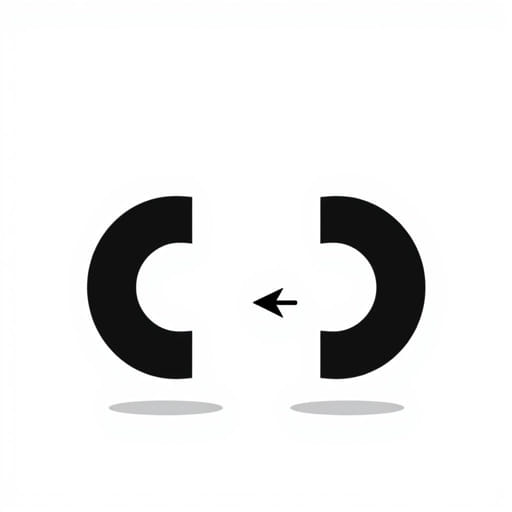
Magnetic repulsion is a fascinating phenomenon that plays a significant role in various technological, industrial, and everyday applications. It occurs when two like poles of magnets north to north or south to south push away from each other due to the invisible magnetic field surrounding them. Though it may seem like a simple concept, magnetic repulsion has far-reaching uses in engineering, medicine, transport, and entertainment. Understanding these applications not only deepens our grasp of physics but also shows how science influences our daily lives in surprising ways.
Understanding Magnetic Repulsion
Before exploring the uses, it’s important to understand what magnetic repulsion is. When two like poles of magnets are brought near each other, the magnetic field lines repel each other. This force is non-contact, meaning it occurs without the magnets physically touching. Magnetic repulsion is the counterpart of magnetic attraction and is just as crucial in many systems where non-contact force is desirable.
Why Magnetic Repulsion Matters
Magnetic repulsion is valuable because it provides motion or support without physical contact. This eliminates friction and wear, increasing efficiency and longevity of mechanical systems. It also adds a level of safety in designs where direct contact may be harmful or impractical.
Applications of Magnetic Repulsion
1. Maglev Trains
One of the most prominent uses of magnetic repulsion is in magnetic levitation (maglev) trains. These high-speed trains float above tracks using powerful magnets that repel each other. This allows the train to glide smoothly without any physical contact with the rail, reducing friction dramatically and enabling speeds over 300 miles per hour in some systems.
- Improved energy efficiency due to reduced friction
- Less maintenance as there’s no wear and tear on tracks
- Quieter operation compared to conventional rail systems
2. Magnetic Bearings
Magnetic repulsion is employed in magnetic bearings, which are used to support rotating machinery without physical contact. These bearings suspend the rotating parts using magnetic fields, allowing them to spin at high speeds with minimal resistance.
Applications include:
- High-speed turbines
- Electric generators
- Precision medical equipment
3. Magnetic Levitating Displays
In the world of consumer products and advertising, magnetic repulsion is used to create levitating display items. Products like floating globes or display platforms utilize magnets to suspend objects mid-air, giving an eye-catching and futuristic effect that attracts attention in marketing displays and home decor.
4. Magnetic Repulsion in Toys
Many educational and recreational toys use magnetic repulsion to illustrate scientific principles. Examples include levitating tops, magnetic stacking toys, or building kits where pieces repel or align based on pole orientation.
- Encourages interest in science among children
- Demonstrates physics concepts in an interactive way
5. Vibration Isolation Systems
In sensitive scientific equipment or high-precision manufacturing environments, vibration can interfere with operations. Magnetic repulsion can be used in vibration isolation systems to create a floating base that reduces mechanical noise. The absence of physical connection isolates the equipment from external vibrations effectively.
6. Magnetic Brakes
Magnetic repulsion is also used in eddy current brakes, found in some amusement park rides, trains, and industrial machines. When a conductor passes through a magnetic field, it induces eddy currents, which in turn create an opposing magnetic field. This leads to a repulsive force that slows the motion.
- Reliable and low-maintenance braking
- Safe deceleration without friction-based wear
7. Space Applications
Magnetic repulsion is being studied for future use in spacecraft docking and manipulation. Repelling magnetic fields can allow spacecraft to maneuver or dock without mechanical arms or thrusters, using magnetic force alone. This has potential for safer and more controlled space operations.
Advantages of Using Magnetic Repulsion
Contactless Force Transmission
Magnetic repulsion allows movement, support, and control without physical connection, which is ideal in sterile, hazardous, or high-speed environments.
Reduces Friction and Wear
Since there is no direct contact between components, magnetic repulsion helps extend the lifespan of machinery by minimizing surface degradation.
Enhances Efficiency
Magnetic systems often operate with less energy loss compared to mechanical counterparts, improving energy efficiency in transport and industrial machinery.
Challenges and Limitations
Cost and Complexity
Creating strong magnetic repulsion systems can be expensive, especially when using rare-earth magnets or complex control systems. This may limit their use in budget-sensitive projects.
Magnetic Interference
Magnetic fields can interfere with electronic devices and need to be carefully shielded or isolated in sensitive environments like medical labs or data centers.
Limited Range
The effectiveness of magnetic repulsion diminishes with distance, so its uses are often confined to close-range applications.
Future Potential of Magnetic Repulsion
As technology continues to evolve, new applications for magnetic repulsion are emerging. From urban transport to futuristic furniture, the potential is enormous. For example, smart city infrastructure might use magnetic levitation to create quieter roads or delivery systems. Additionally, with advances in magnetic materials and superconductors, magnetic repulsion could become more efficient and more widely adopted across sectors.
Research and Innovation
Ongoing research in magnetic levitation and repulsion technologies is unlocking innovative solutions, particularly in energy, automation, and transportation. The growing interest in clean energy and non-contact systems will likely accelerate the development of magnetic repulsion-based products in the future.
Magnetic repulsion, while often overlooked, plays a vital role in many modern technologies. From maglev trains and vibration isolation systems to levitating gadgets and magnetic brakes, it brings a unique blend of efficiency, cleanliness, and futuristic appeal. As advancements in science and materials continue, we can expect magnetic repulsion to drive innovation across many industries, offering both practical and imaginative solutions for tomorrow’s world.
Let me know if you’d like this optimized further for specific search engines or adapted into other formats.