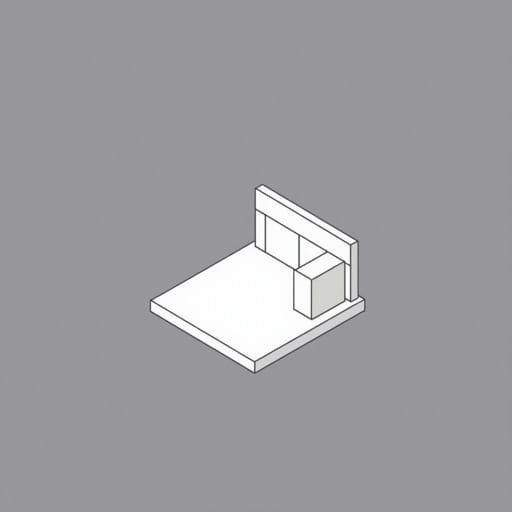
Isometric drawing is a valuable technique used across various industries to represent three-dimensional objects in two dimensions. Unlike standard perspective drawings, isometric drawings maintain scale and proportion without distortion, making them ideal for technical and engineering purposes. These drawings use a 30-degree angle to display the three axes height, width, and depth providing a clear and accurate visual representation. Whether used in architecture, mechanical design, or game development, the applications of isometric drawing are numerous and highly practical.
Understanding Isometric Drawing
Isometric drawing is a form of graphical projection, particularly useful in visualizing objects without the need for complex 3D rendering. It is constructed using parallel projection where the three dimensions of an object are equally foreshortened, typically at 120° between axes or 30° from the horizontal plane.
Key Characteristics of Isometric Drawing
- Equal scale along all three axes
- No perspective distortion
- Used to convey accurate dimensions
- Simple geometric representation
Primary Uses of Isometric Drawing
Isometric drawings are widely used in both educational and professional settings due to their clarity and precision. Below are the major fields where isometric drawings are applied extensively:
1. Engineering and Technical Design
One of the most prominent uses of isometric drawing is in the engineering field. Mechanical engineers, civil engineers, and structural designers use isometric sketches to plan and visualize parts, systems, and infrastructures.
- Machine part designs
- Piping systems in plants
- Blueprints for mechanical assemblies
These drawings make it easier to communicate complex designs between teams, especially during the manufacturing and assembly stages.
2. Architecture and Construction
In architecture, isometric drawing helps to present a detailed view of buildings and spatial layouts. It allows architects and builders to visualize rooms, furniture placement, and elevation without the need for complex 3D models.
- Floor plan perspectives
- Furniture and fixture layout
- Structural framing diagrams
This kind of drawing also assists clients in understanding the layout more easily than traditional 2D blueprints.
3. Product Design and Manufacturing
Isometric views are integral in product design as they help to translate concepts into manufacturable designs. Designers use them to show how a product looks from various angles and how its components fit together.
- Exploded views of gadgets
- Assembly instructions
- Concept visualization
These drawings help identify flaws early in the design process and allow for modifications before mass production begins.
4. Video Game and Animation Design
Isometric drawing is also popular in game development and digital animation. Many 2D and 3D games use an isometric perspective to create the illusion of depth while maintaining a consistent viewpoint.
- Game level design (especially in strategy or simulation games)
- Environment and world-building
- Character movement mapping
Its uniform scale makes it easier to align objects, characters, and environments in a coherent and organized manner.
5. Education and Instructional Material
In schools and universities, isometric drawings are often used to teach students the basics of geometry, perspective, and visual communication. They are also helpful in creating instructional manuals for products that require assembly.
- Educational diagrams in geometry
- Technical illustrations in textbooks
- Do-it-yourself (DIY) manuals
These applications improve understanding and encourage spatial thinking among students and users.
6. Urban Planning and Landscape Architecture
Urban planners and landscape architects use isometric drawings to depict parks, city blocks, and garden layouts. This method of representation provides a clear idea of how public spaces interact with natural and built environments.
- Urban zoning layouts
- Topographical representations
- Park and recreational space planning
By visualizing spaces in three dimensions, planners can make better design decisions for public use and traffic flow.
Advantages of Isometric Drawing
There are several reasons why isometric drawings continue to be preferred in many professional fields. These include:
- Clarity: They offer an easy-to-understand visual representation, especially for non-technical viewers.
- Accuracy: Measurements are not distorted by perspective, allowing for accurate scaling and representation.
- Efficiency: They require less effort than full 3D models, making them ideal for conceptualization and presentations.
- Universal application: Useful across disciplines from engineering to art and education.
Limitations of Isometric Drawing
Despite its many advantages, isometric drawing has some limitations that must be acknowledged:
- Lack of true perspective: Objects may not appear as realistic as they do in perspective drawings.
- Angle restrictions: Only certain angles can be represented clearly, which may not work for every design.
- Complex shapes: Can be challenging to depict intricate curvatures or irregular forms accurately.
These limitations mean that while isometric drawings are incredibly useful for preliminary designs, they often need to be supplemented by other forms of drawing or 3D modeling for full representation.
Tools Used for Creating Isometric Drawings
Whether done manually or digitally, a few tools are essential for creating clean and precise isometric drawings:
- Isometric grid paper: Helps maintain consistent angles and proportions.
- Set squares and rulers: Essential for accurate manual drawings.
- CAD software: Tools like AutoCAD, SolidWorks, and SketchUp are used for digital isometric designs.
These tools streamline the drawing process and ensure accuracy, whether for physical models or digital blueprints.
Isometric drawing plays a crucial role in various industries, from engineering and product design to animation and education. Its ability to represent three-dimensional objects in a clear, scaled, and accurate manner makes it indispensable for professionals and students alike. Whether you’re creating a complex machine part or designing a virtual game world, understanding the uses of isometric drawing can significantly enhance the communication and development of ideas. As technology continues to advance, the importance of mastering isometric techniques remains as strong as ever.