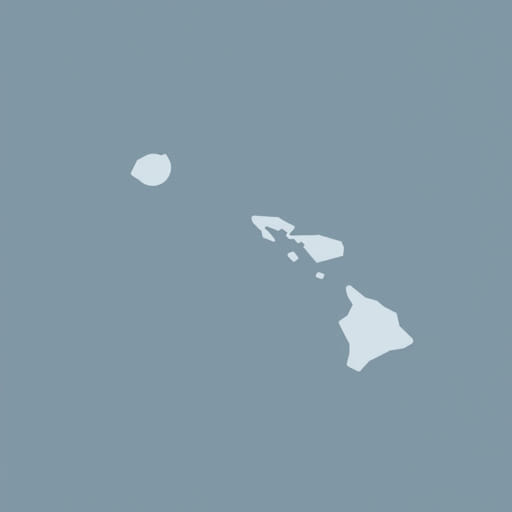
In the late 19th century, the Hawaiian Islands underwent a dramatic transformation that would forever change their political, cultural, and economic identity. What had once been an independent kingdom with a unique monarchy and deeply rooted native traditions became part of the expanding influence of the United States. The annexation of Hawaii did not occur overnight. It was the result of political maneuvering, strategic interests, and internal tensions that culminated in a controversial and contested moment in American and Hawaiian history. The process was not just a territorial acquisition it was also a reflection of America’s broader ambitions during a time of imperial growth and Pacific expansion.
Historical Background of the Hawaiian Kingdom
Rise of a Sovereign Monarchy
Before U.S. annexation, Hawaii was an independent nation governed by a constitutional monarchy. King Kamehameha I unified the islands in 1810, establishing a dynasty that would continue until the late 19th century. The Hawaiian monarchy engaged in diplomacy, formed trade partnerships, and had official treaties with major powers including the United States, Britain, and France.
Economic Ties with the United States
Throughout the 19th century, Hawaii’s economy became increasingly dependent on the United States, particularly through the sugar industry. American planters and investors began to acquire large amounts of land and economic power. The 1875 Reciprocity Treaty allowed Hawaiian sugar to enter the U.S. market duty-free, which strengthened economic integration but also increased American influence on the islands.
The Overthrow of the Hawaiian Monarchy
Queen LiliÊ»uokalani’s Reign
In 1891, Queen Liliʻuokalani ascended the throne with the goal of restoring native Hawaiian power and revising the Bayonet Constitution of 1887, which had stripped the monarchy of much authority and limited voting rights for native Hawaiians. Her efforts were viewed as a threat by American business interests and local elites of European descent.
The 1893 Coup d’Ãtat
On January 17, 1893, a group of American and European businessmen supported by U.S. Minister John L. Stevens and a detachment of U.S. Marines from the USS Boston overthrew Queen Liliʻuokalani. The queen peacefully yielded under protest, expecting the United States government to recognize the illegal nature of the coup and restore her authority.
Establishment of the Provisional Government
Formation of a New Regime
After the coup, the Provisional Government was established under Sanford B. Dole. This new regime sought immediate annexation by the United States. However, not all Americans supported this action. President Grover Cleveland, who opposed imperialism, launched an investigation into the matter.
The Blount Report
James Blount, appointed by President Cleveland, reported that the overthrow was illegal and had been aided by U.S. military forces without congressional approval. As a result, Cleveland recommended the restoration of the monarchy. Nevertheless, the Provisional Government refused to step down, and tensions remained unresolved.
The Republic of Hawaii and the Push for Annexation
Transition to a Republic
In 1894, the Republic of Hawaii was proclaimed with Sanford B. Dole as its president. The new government continued lobbying for annexation, which gained stronger traction under the next U.S. administration.
Spanish-American War and Strategic Importance
The outbreak of the Spanish-American War in 1898 shifted American priorities. Hawaii’s location in the central Pacific was recognized as a crucial military and naval asset. The U.S. needed a strategic base for operations in the Philippines and beyond.
The Annexation of Hawaii
Newlands Resolution
In July 1898, Congress passed the Newlands Resolution, formally annexing Hawaii as a U.S. territory. This decision bypassed the traditional treaty process, which would have required a two-thirds Senate majority something that had previously failed due to opposition.
Territorial Status and American Control
Following annexation, Hawaii became a U.S. territory in 1900 under the Organic Act. Native Hawaiians were granted U.S. citizenship, but their political autonomy had been eliminated. The American flag now flew over Iolani Palace, a symbolic shift in sovereignty that many locals mourned deeply.
Native Hawaiian Resistance and Legacy
Petitions Against Annexation
One of the most striking demonstrations of native resistance was the KÅ«Ê»Ä Petitions. Over 21,000 Hawaiians signed documents opposing annexation, a massive portion of the native population at the time. These petitions were submitted to Congress but ultimately ignored.
Cultural and Political Impacts
Annexation deeply affected Hawaiian identity and governance. The erosion of native leadership, suppression of the Hawaiian language in schools, and restructuring of land ownership patterns contributed to long-lasting cultural disruption. To this day, many Hawaiians consider the annexation as an unjust act of colonization.
Statehood and Modern Recognition
Hawaii Becomes the 50th State
In 1959, Hawaii officially became the 50th state of the United States. While many residents supported statehood, others viewed it as a continuation of foreign control. The issue of native sovereignty remains central to Hawaiian politics and activism.
U.S. Apology Resolution
In 1993, on the 100th anniversary of the overthrow, President Bill Clinton signed the U.S. Apology Resolution, which acknowledged that the overthrow of the Hawaiian Kingdom was illegal and that native Hawaiians never relinquished their claims to sovereignty.
The U.S. annexation of Hawaii represents a critical chapter in American imperial history and a pivotal moment for the Hawaiian people. Though framed at the time as a strategic and economic necessity, the process was fraught with controversy, resistance, and ethical dilemmas. The consequences of annexation continue to shape Hawaiian identity, governance, and cultural heritage. Understanding this history is essential not only for grasping America’s expansionist past but also for appreciating the enduring legacy of the Hawaiian Kingdom and the resilience of its native people.