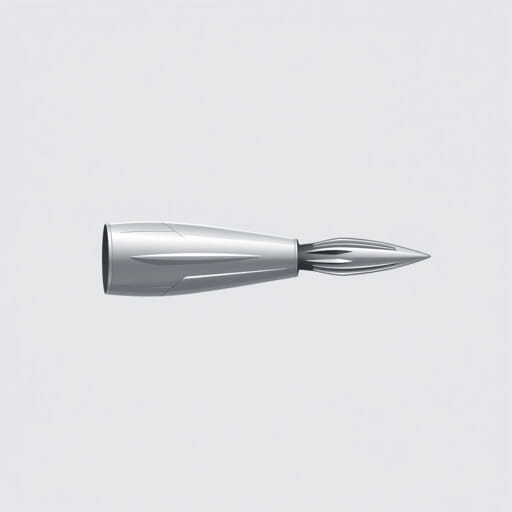
At high speeds and altitudes, the design and operation of propulsion systems become increasingly critical. Turbojet engines, long used in high-speed aircraft, begin to lose efficiency beyond certain speed thresholds. To maintain performance and efficiency at supersonic and hypersonic velocities, engineers turn to ramjets. Understanding the transition from turbojet to ramjet propulsion is key to appreciating how modern high-speed flight systems, including some military and experimental aircraft, achieve their impressive capabilities.
Understanding Turbojet Engines
Basic Operation of a Turbojet
A turbojet engine is one of the simplest types of gas turbine engines. It operates by drawing in air through an intake, compressing it via axial or centrifugal compressors, mixing it with fuel in a combustion chamber, igniting the mixture, and expelling the resulting hot gases through a turbine and out the exhaust nozzle to produce thrust. Turbojets are ideal for high subsonic and low supersonic speeds, typically up to Mach 2.
Performance Limitations
While turbojets are highly effective within their operating range, their efficiency starts to decrease at higher speeds due to several limitations:
- Compressor overheating at very high inlet air temperatures
- Drag increases in turbine and compressor blades at higher Mach numbers
- Structural constraints and inefficiencies due to moving parts
These challenges have led engineers to consider alternative propulsion methods for higher speed ranges, particularly above Mach 3.
Introduction to Ramjet Engines
What Is a Ramjet?
A ramjet is a type of air-breathing jet engine that operates without any moving parts. It relies on the aircraft’s forward motion to compress incoming air before combustion. The compressed air is mixed with fuel, ignited, and expelled through a nozzle to generate thrust. Ramjets are simple, lightweight, and highly efficient at supersonic speeds.
Ramjet Requirements
Unlike turbojets, ramjets cannot operate at low speeds or when stationary. They require a substantial forward velocity usually above Mach 1 to compress the incoming air sufficiently. For this reason, ramjets must be paired with another propulsion system for takeoff and acceleration.
Why Transition from Turbojet to Ramjet?
Efficiency at High Speeds
At speeds above Mach 3, the complexity of turbojet engines becomes a disadvantage. Compressors struggle with extreme temperatures, and moving parts create mechanical limits. In contrast, ramjets become increasingly efficient as velocity increases, making them ideal for sustained high-speed flight.
Simplicity and Reliability
The ramjet’s lack of moving parts reduces maintenance needs and potential failure points. This is particularly valuable in military applications, where reliability under stress is critical.
How the Transition Works in Practice
Hybrid Propulsion Systems
Aircraft or missiles requiring both low-speed maneuverability and high-speed capability often employ a combination of turbojet and ramjet engines. The turbojet is used for takeoff and acceleration. Once the vehicle reaches the necessary speed, fuel flow is redirected, and the ramjet system takes over.
Phases of Transition
- Phase 1 Turbojet Propulsion: During takeoff and subsonic flight, the turbojet is the primary power source.
- Phase 2 Acceleration: As the aircraft accelerates to supersonic speeds, the engine system prepares for ramjet activation.
- Phase 3 Ramjet Takeover: At sufficient speed, a valve or system redirects airflow and fuel to bypass the turbojet core, initiating ramjet operation.
Integration Challenges
The transition process must be carefully managed to avoid power loss or instability. Key technical challenges include:
- Maintaining stable airflow during switch-over
- Controlling fuel injection timing and pressure
- Ensuring proper combustion initiation in the ramjet chamber
Examples of Turbojet-Ramjet Systems
SR-71 Blackbird (Pratt & Whitney J58)
One of the most iconic examples of turbojet to ramjet transition is the SR-71 Blackbird. It used the Pratt & Whitney J58 engine, which functioned as a turbojet at lower speeds and gradually transitioned into a ramjet-like behavior above Mach 3. This was achieved by redirecting bypassed air around the engine core directly into the afterburner, mimicking ramjet functionality.
Missile Technology
Many long-range missiles such as the BrahMos and the Meteor use this kind of dual-mode propulsion. They launch with booster or turbojet assistance and cruise using ramjet technology, maximizing speed and range.
Future Technologies: Toward Scramjets
The Need for Scramjets
While ramjets work well up to about Mach 5, speeds beyond that introduce problems with airflow choking due to compression. This has led to the development of scramjets (supersonic combustion ramjets), which allow combustion to occur while the airflow remains supersonic through the engine. Scramjets are being tested for future hypersonic aircraft and spacecraft.
Research and Testing
NASA, DARPA, and other agencies continue to explore propulsion transitions through experimental aircraft like the X-43 and X-51. These programs aim to create seamless transitions from turbojet to ramjet to scramjet, unlocking higher speeds for both military and civilian use.
Engineering the Transition
The transition from turbojet to ramjet propulsion is a crucial element in the development of high-speed aircraft and missiles. While turbojets are suitable for initial acceleration and subsonic/supersonic speeds, ramjets take over as velocities increase, providing more efficient thrust with fewer mechanical limitations. Through intelligent hybrid designs and carefully managed transition systems, engineers can combine the strengths of both engines to push the boundaries of speed, efficiency, and aerospace innovation. As technology advances, future propulsion systems may integrate these methods with scramjet and rocket propulsion, unlocking hypersonic travel and redefining the limits of modern flight.