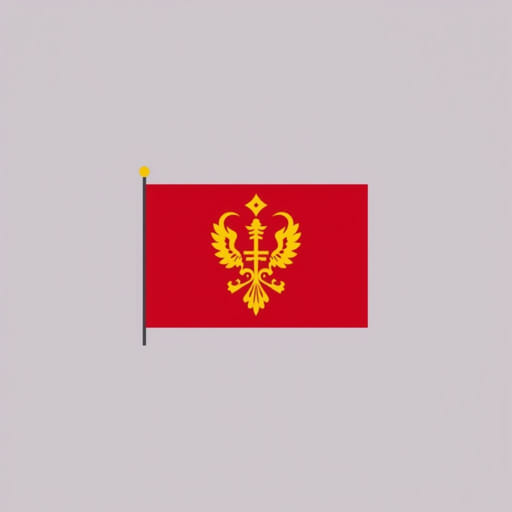
The Tsardom of Muscovy, which later evolved into the Russian Empire, is often studied for its complex history, culture, and evolving national symbols. Among these symbols, the flag of the Tsardom of Muscovy holds a unique place. It was not just a visual identifier but also a representation of the state’s authority, religious beliefs, and dynastic ambitions. Understanding the origins, design, and meaning of this historical flag helps in grasping the evolution of Russian national identity and the symbolic elements that eventually influenced the modern Russian flag.
Origins of the Tsardom of Muscovy
The Tsardom of Muscovy, also known as Muscovite Russia, emerged in the late 15th century following the decline of the Mongol Golden Horde’s control over Russian territories. Ivan III (Ivan the Great) was a pivotal figure in consolidating various Russian principalities under the leadership of Moscow. His marriage to Sophia Palaiologina, a Byzantine princess, marked the beginning of imperial symbolism in Muscovite court life. This influence would extend to state emblems and banners used in ceremonial and military contexts.
Rise of National Symbols
As Muscovy expanded its territories, especially under Ivan IV (Ivan the Terrible), there was a greater need for symbols that reflected the power and unity of the Tsardom. While coats of arms and religious icons played a dominant role, flags and banners began to serve as portable, highly visible symbols of rule. These symbols were typically used during military campaigns, parades, and religious processions.
The First Appearance of the Muscovite Flag
There is no definitive evidence that the Tsardom of Muscovy had a single official flag comparable to modern national flags. Instead, banners were used each with a specific purpose and symbolism. These banners often featured Christian iconography such as depictions of saints, especially St. George, the patron saint of Moscow, and the double-headed eagle symbolizing the Tsar’s claim as the legitimate successor to the Byzantine emperors.
Key Symbols on Muscovite Banners
- The Double-Headed Eagle: Adopted from the Byzantine Empire, this symbol represented the dual authority of the Tsar secular and religious and the unity between the East and West.
- St. George and the Dragon: A symbol of protection and righteousness, this image was commonly featured on banners and shields of Muscovite soldiers.
- Christian Icons: Images of Christ, the Virgin Mary, and archangels were often embroidered onto war banners, believed to offer divine protection and legitimacy to the Tsar’s campaigns.
Development of Color Schemes
Colors used in Muscovite flags and banners carried specific meanings. Red was the most prominent, symbolizing bravery, power, and the blood of Christian martyrs. Gold represented divine glory and the Tsar’s heavenly mandate. Blue was occasionally used to indicate the heavens or purity, often associated with depictions of the Virgin Mary.
Influence of Western Heraldry
With increasing contact between Muscovy and Western Europe in the 16th and 17th centuries, particularly through diplomatic missions and trade, elements of Western heraldry began influencing Muscovite symbols. The use of shields, lions, and structured coats of arms gradually became more common, blending with traditional Orthodox Christian imagery.
The Naval Flag under Tsar Alexei I
A significant turning point came during the reign of Tsar Alexei Mikhailovich in the mid-17th century. As Russia began developing its own naval forces, the need for standardized maritime flags arose. Dutch shipbuilders, who were instrumental in building the Russian navy, influenced the design of naval flags. One of the early flags used during this period was a tricolor consisting of white, blue, and red horizontal stripes colors that would later form the basis of the modern Russian flag.
Symbolic Meaning Behind the Tricolor
- White: Associated with peace and honesty, also possibly symbolizing God’s grace and purity.
- Blue: Linked to the Virgin Mary, indicating faith and loyalty.
- Red: Represented strength, courage, and the blood of those who defended the Tsardom.
Legacy and Transition
Although the Tsardom of Muscovy never formalized a single national flag, the use of religious and imperial banners established a deep-rooted tradition of symbolic representation. These banners evolved alongside the state itself, culminating in more standardized flags during the early Russian Empire under Peter the Great. He officially adopted the white-blue-red tricolor, building on the maritime symbols introduced earlier.
Connection to the Modern Russian Flag
The modern flag of Russia is often seen as a direct descendant of the banners and colors used during the late Muscovite and early Imperial period. While the tricolor may have been influenced by Dutch examples, its symbolism was retroactively associated with Russian tradition and identity. This transition reflects how Muscovite heraldry and flag symbolism played a foundational role in the development of Russian state symbolism.
Historical Significance
The banners and flags of the Tsardom of Muscovy were not merely ornamental. They served as rallying points in battle, symbols of divine authority, and visual affirmations of the Tsar’s claim to power. They also represented the idea of Russia as the Third Rome, a concept that emerged after the fall of Constantinople, with Moscow positioning itself as the new center of Eastern Orthodoxy and Christian rule.
Continuity and National Identity
Despite the lack of a singular flag in the modern sense, the flag traditions of Muscovy contributed to a coherent identity that would later flourish under the Romanovs. From the religiously adorned battle standards to the imperial double-headed eagle, every symbol carried weight and meaning rooted in Russia’s sense of destiny and legacy.
The Tsardom of Muscovy flag history is a fascinating journey through religious devotion, imperial ambition, and cultural adaptation. Though lacking a single, consistent flag design, the banners and symbols of the Muscovite period laid the groundwork for Russia’s later national emblems. These early visual representations of power and belief helped forge a national consciousness that endures in many forms to this day. Understanding these historical developments provides insight into the identity and heritage of one of the world’s most influential nations.