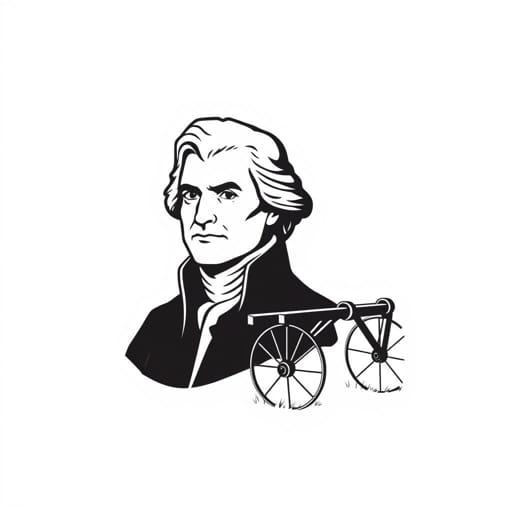
Thomas Jefferson, the third President of the United States, is widely recognized for his significant contributions to American history, politics, and architecture. However, beyond his political achievements, Jefferson was also an innovator deeply interested in agriculture and farming technologies. One of the lesser-known yet important inventions associated with him is the moldboard plow, a farming tool that played a crucial role in transforming agriculture in the young nation. The Thomas Jefferson moldboard plow was designed to increase farming efficiency and improve soil cultivation, reflecting his broader vision of an agrarian America.
The Moldboard Plow: An Agricultural Revolution
What is a Moldboard Plow?
The moldboard plow is a type of plow designed to turn over the upper layer of soil, bringing fresh nutrients to the surface while burying weeds and crop residues. This process prepares the land for planting, helping improve crop yields. Traditional plows before Jefferson’s innovation were often inefficient, requiring substantial animal power and causing uneven soil turnover. The moldboard plow, with its curved blade, allows for smoother soil turning, which reduces labor and enhances soil aeration.
Jefferson’s Interest in Farming Tools
Thomas Jefferson was an avid farmer who believed agriculture formed the foundation of America’s economy and democratic values. At his estate, Monticello, Jefferson experimented extensively with farming techniques and machinery. He sought to modernize farming to increase productivity, believing that efficient agriculture would strengthen the nation. This passion led him to design a moldboard plow that was better suited for the American soil conditions and farming practices of his time.
The Design and Innovation of the Jefferson Moldboard Plow
Improvements Over Existing Designs
Jefferson’s moldboard plow featured several improvements that distinguished it from earlier European models. He focused on creating a plow that was lightweight, durable, and more effective in turning soil without requiring excessive animal power. The curved moldboard was designed to peel back the soil in a clean and efficient manner, minimizing soil disruption while maximizing aeration and nutrient mixing.
Materials and Construction
Jefferson experimented with different materials, including iron and wood, to optimize the plow’s strength and weight. His goal was to design a tool that was not only functional but also easy to produce using local materials and skills. This emphasis on practicality made the plow accessible to many farmers across the United States, helping spread its use widely during the early 19th century.
The Impact of the Jefferson Moldboard Plow
Boosting Agricultural Productivity
The introduction of the Jefferson moldboard plow significantly improved farming efficiency. By reducing the labor and time required to prepare fields, farmers could cultivate larger areas and increase their crop yields. This advance was especially important as the United States expanded westward, with many settlers relying on effective tools to clear and farm new lands.
Supporting Westward Expansion
As settlers moved into the fertile lands of the Midwest and beyond, the Jefferson moldboard plow became an essential tool for taming the soil. Its design helped break through tough prairie sod and adapt to a variety of soil types, making farming in these new regions more viable. This contributed to the rapid agricultural development of the American frontier.
Influencing Future Agricultural Technology
The success of Jefferson’s moldboard plow inspired further innovations in agricultural equipment. His focus on functionality, efficiency, and adaptation to local conditions set a precedent for inventors and farmers alike. The plow’s design principles influenced later tools that would continue to mechanize and modernize farming practices in the United States and around the world.
Thomas Jefferson’s Legacy as an Agricultural Innovator
Agriculture and Democratic Ideals
Jefferson believed that a nation of independent farmers would uphold the ideals of liberty and democracy. His work in improving farming technology was part of this broader vision, where agriculture was not just an economic activity but also a civic virtue. The moldboard plow symbolized this belief, helping to empower farmers and sustain rural communities.
Monticello: A Hub of Agricultural Experimentation
At his Monticello estate, Jefferson’s agricultural experiments included crop rotation, soil improvement, and tool design. The moldboard plow was among these innovations that demonstrated his commitment to practical science and progress. His agricultural pursuits were documented in his extensive writings and correspondences, influencing contemporary and future generations of farmers and policymakers.
Recognition and Historical Significance
While Jefferson is better known for his political achievements, his contributions to agriculture remain significant. The moldboard plow is recognized as a key development in American agricultural history, reflecting Jefferson’s innovative spirit. Today, historians and agricultural scholars honor his role in promoting technological progress that supported the growth and sustainability of the young nation’s farming economy.
Summary of Key Features and Benefits
- Lightweight and durable design suitable for various soil types.
- Curved moldboard allowed efficient soil turning and aeration.
- Reduced animal power and labor required for plowing.
- Facilitated expansion of farming into new American territories.
- Inspired future innovations in farming technology and mechanization.
The Thomas Jefferson moldboard plow represents more than just a farming tool; it embodies Jefferson’s vision of an agrarian America rooted in innovation, efficiency, and self-reliance. By improving soil cultivation methods, Jefferson helped shape the agricultural landscape of the early United States and supported the growth of its economy and society. His moldboard plow remains a symbol of how practical inventions can influence national progress, reflecting the important connection between technology, agriculture, and democratic ideals.