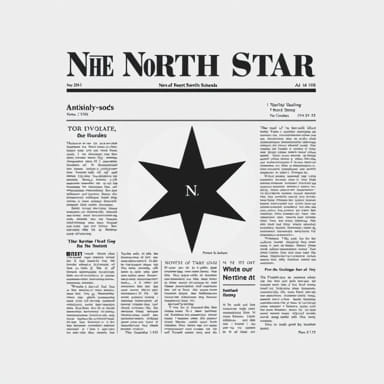
In the mid-19th century, during a time of intense racial injustice and widespread enslavement in the United States, one publication rose as a powerful voice for freedom and equality:The North Star. This antislavery newspaper was edited by none other than Frederick Douglass, a formerly enslaved man who became one of the most influential abolitionists, orators, and writers in American history. The North Star was more than just a paper it was a beacon of hope and a rallying point for the abolitionist movement. Through its pages, Douglass and his allies challenged the moral legitimacy of slavery, demanded civil rights, and urged both black and white Americans to rise in pursuit of justice.
Frederick Douglass: The Man Behind The North Star
Early Life and Escape from Slavery
Frederick Douglass was born into slavery in Maryland in 1818. He endured the brutal realities of enslavement until he escaped to freedom in the North in 1838. Once free, Douglass began to share his story and speak out against slavery, quickly gaining fame for his powerful speeches and intellect. His experiences gave him unique insight into the horrors of slavery and the urgent need for change.
Rise as an Abolitionist Leader
Douglass’s eloquence and personal testimony made him a sought-after speaker among abolitionist circles. He published his autobiography,Narrative of the Life of Frederick Douglass, an American Slave, in 1845, further solidifying his role as a leading voice in the antislavery movement. However, he soon sought to create his own platform to reach a wider audience thus was bornThe North Star.
The Founding of The North Star
Establishment and Purpose
The North Starwas first published on December 3, 1847, in Rochester, New York. Douglass founded the paper with the help of abolitionist allies, including Martin R. Delany. The name ‘North Star’ was symbolic it referred to the guiding star that enslaved people followed at night when escaping to freedom in the North. Just as the celestial North Star pointed the way, Douglass’s newspaper aimed to guide readers toward justice and liberty.
Mission Statement
The motto printed on the front page of every issue ofThe North Starwas clear and bold: Right is of no sex Truth is of no color God is the Father of us all, and we are all brethren. This guiding principle emphasized equality across racial and gender lines and highlighted the paper’s commitment to universal human rights.
Content and Impact of The North Star
Editorial Focus
The North Staraddressed a wide range of topics related to slavery and civil rights. Its topics covered the atrocities committed against enslaved people, legislative developments, speeches by abolitionist leaders, and appeals for unity and action. Douglass also used the paper to critique both the government and churches that remained complicit in the institution of slavery.
- Firsthand accounts of enslaved individuals’ experiences
- Reports on abolitionist meetings and campaigns
- Commentary on court cases and slave laws
- Appeals for education and political involvement
- Promotion of women’s rights and gender equality
Audience and Reach
Although circulation numbers were modest compared to mainstream publications,The North Starhad a significant impact within the abolitionist community. It reached readers across the Northern states, Canada, and even parts of Europe. The newspaper served as an educational tool and moral compass for both black and white reformers.
Challenges Faced by Frederick Douglass
Financial Difficulties
Running a newspaper was an expensive endeavor. Douglass faced ongoing financial challenges, as advertisements and subscriptions were not always sufficient to cover costs. He often relied on donations from abolitionist supporters to keep the paper in circulation.
Criticism and Division
Despite his growing prominence, Douglass sometimes clashed with other abolitionists. William Lloyd Garrison, a mentor and influential white abolitionist, disagreed with Douglass on matters like political involvement. Douglass believed in using the U.S. Constitution and the political process to end slavery, while Garrison believed the Constitution was inherently pro-slavery. These ideological differences led to a rift between them, and Douglass usedThe North Starto voice his independent views.
Threats and Danger
As a black editor and former slave, Douglass was always at risk of retaliation. Publishing bold and uncompromising opinions against slavery and racial injustice put him in danger. Nonetheless, he remained undeterred and continued to speak and write with fearless conviction.
Evolution of the Newspaper
Merger and Later Years
In 1851,The North Starwas merged with theLiberty Party Paperto formFrederick Douglass’ Paper. This new publication continued the mission of antislavery advocacy but reflected Douglass’s expanding political philosophy. He used the new platform to argue for broader civil rights, including suffrage and equal protection under the law.
Lasting Legacy
ThoughFrederick Douglass’ Paperceased publication in 1860, the legacy ofThe North Starendured. It remains a symbol of independent black journalism, courage in the face of injustice, and the power of the written word in the fight for freedom. The newspaper’s history is often studied in classrooms and honored in discussions of African American heritage and civil rights.
The North Star’s Place in History
Role in the Abolitionist Movement
The North Starwas more than a publication it was a movement. It amplified the voices of the oppressed and provided moral clarity during a time when injustice was institutionalized. Douglass’s vision and editorial leadership helped to unite abolitionists and inspire generations to come.
Influence on Future Journalists and Activists
Douglass set a precedent for African American journalism and activism. His work paved the way for future black-owned newspapers and for activists who would continue the struggle for justice. Publications likeThe Chicago Defenderand individuals like Ida B. Wells drew inspiration from his fearless example.
The North Starwas an antislavery newspaper edited by Frederick Douglass, a man whose life and work reshaped the American conscience. Through this publication, he challenged slavery, racism, and inequality with bold words and a clear moral vision. The North Star lit the path for freedom, not just for enslaved people of the 19th century but for all who believe in justice and human dignity. Its impact continues to resonate in the ongoing pursuit of equality and civil rights.