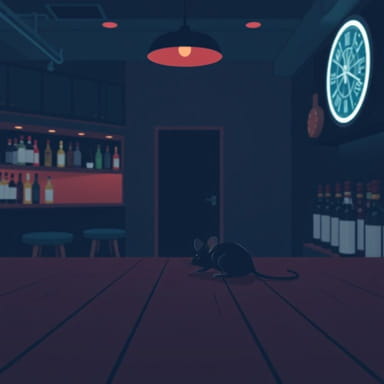
Late at night, in the corner of a dimly lit saloon where the laughter has grown quieter and the clinking of glasses has slowed, lies a curious sight that goes mostly unnoticed the mouse on the barroom floor. Not part of the show, not a planned visitor, this tiny creature becomes the silent observer of human revelry, folly, and forgetfulness. In some stories, the mouse is real, a simple rodent scurrying for crumbs. In others, it’s a symbol of loneliness, of resilience, or of life’s unnoticed moments. But in every telling, the mouse on the barroom floor brings with it a sense of oddity and meaning that clings to the edges of memory.
Origins and Cultural Reference
A Folk Song Rooted in Irony
The Mouse on the Barroom Floor is the title of a well-known folk poem and drinking song that has circulated in bars and pubs for decades. At its heart, the song tells the tale of a mouse that becomes intoxicated by the spillover from a patron’s drink. With each line, humor and melancholy weave together, portraying both the absurdity and tragedy of overindulgence.
In many versions, the tale ends with the mouse meeting its fate either passed out, ignored, or crushed beneath a careless boot. While the mouse is the focus, the underlying commentary often points toward human behavior, especially the self-destructive habits associated with excessive drinking.
Lyrics and Interpretation
The lyrics vary slightly depending on the region or singer, but they follow a familiar rhythm and rhyme. The tale describes a mouse slipping out from a hiding spot, sniffing the spilled beer or whiskey, taking a sip, and eventually lying drunkenly on the floor. The image is both humorous and pitiful.
- The mouse represents vulnerability amidst human chaos.
- The barroom reflects a space of temporary escape and hidden sorrow.
- The song’s light-hearted tone disguises a sobering message.
Symbolism of the Mouse
The Observer in the Shadows
In literature and folklore, mice are often used to symbolize humility, smallness, and quiet perseverance. In a noisy barroom filled with loud patrons and overflowing drinks, the mouse becomes a silent witness. It sees what others do not. While the people drink, boast, argue, or flirt, the mouse scampers through the remnants catching stories in fragments, understanding the world from below.
From this perspective, the mouse becomes more than an animal. It is a metaphor for those who are overlooked, those who exist on the margins, observing the drama of life without ever truly taking part in it.
Drunkenness and Consequence
When the mouse drinks the spilled liquor, it serves as an exaggerated reflection of the human condition. The idea that even a mouse, when exposed to the vices of man, will succumb to them adds a layer of satire to the scene. Just like the regular bar-goers, the mouse indulges, falters, and eventually pays the price.
The Barroom as a Setting
A Microcosm of Society
Barrooms, taverns, and pubs have long served as condensed stages where society reveals its truths. Within the four walls of a bar, people shed their outer personas. Workers, nobles, strangers, and friends all share the same air, same drinks, and often the same stories. The barroom is a place of honesty and illusion, of laughter and despair.
It’s here, amidst the cigarette smoke and spilled beer, that the mouse finds itself. The floor is sticky with past mistakes, and the air hums with old songs and broken promises. And still, the mouse scurries on, unaffected by drama, until temptation or fate stops it.
Contrasts and Parallels
- While humans drink by choice, the mouse drinks by accident yet both suffer the same results.
- People toast to forget their pain; the mouse drinks without understanding, yet ends in silence.
- The bar’s patrons step over the mouse, just as society often steps over its forgotten members.
Modern Interpretations
A Lesson in Simplicity
In today’s world, the image of a mouse on the barroom floor can be interpreted as a reminder of life’s smaller truths. While people chase grand ambitions, power, or recognition, it’s often the quietest stories the ones told from the floor up that carry the deepest meaning. The mouse, unnoticed by most, becomes the unintentional philosopher of the room.
It teaches the value of humility. That sometimes, what’s discarded or left behind be it a sip of whiskey or a broken dream can still impact another life. It challenges people to notice the unnoticed, to think about how even their smallest actions ripple outward.
In Literature and Art
Writers and artists have occasionally referenced the mouse-on-the-floor trope in their work. It’s been used in short stories, modern poetry, and even visual art to capture the essence of loneliness and perspective. From a single spilled drink, entire stories can unfold of loss, regret, or quiet joy.
Common Themes and Reflections
Alcohol and Its Shadows
Though the tale is often lighthearted, it reflects a darker side of human behavior. Addiction, escapism, and neglect run like undercurrents beneath the humor. The mouse becomes a casualty of carelessness, a warning about indulgence that’s both subtle and striking.
Perspective and Awareness
Looking at the world from the mouse’s viewpoint changes things. What is merely a dropped crumb to one is a feast to another. What seems like harmless fun could have unintended consequences. The story encourages empathy, humility, and the importance of recognizing life beyond our immediate view.
The Mouse on the Barroom Floor is more than just a song or an old tavern tale. It’s a moment captured in time a simple scene rich with meaning. It speaks to the heart of human behavior, our indulgences, our blindness, and the tiny truths we often ignore. Whether seen as a cautionary fable, a metaphor for the unnoticed, or simply a curious anecdote, the mouse remains on the floor not as a joke, but as a reminder. A reminder that in the grand tales of life, sometimes the smallest characters carry the greatest weight.