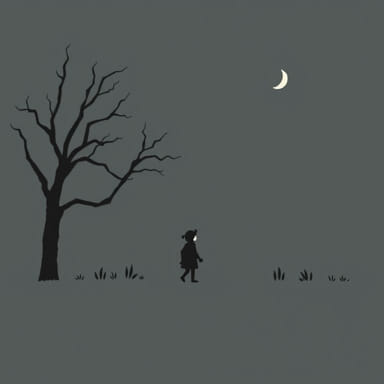
At the stroke of midnight on August 15, 1947, as India gained independence from British rule, a boy named Saleem Sinai was born in Bombay. But this was no ordinary birth. It marked the beginning of a magical legacy that intertwined with the destiny of a new nation. Midnight’s Children by Salman Rushdie is a groundbreaking novel that uses magical realism, political history, and vivid storytelling to explore post-colonial India. The novel is both deeply personal and expansively national, drawing connections between one man’s life and the fate of a subcontinent.
The Concept of Midnight’s Children
Magical Realism at the Core
Rushdie introduces a world where children born in the first hour of India’s independence possess unique supernatural abilities. Saleem, the narrator and central figure of Midnight’s Children, discovers that he is telepathically linked to over a thousand other children born at the same time. Each of these Midnight’s Children has a distinct power, and together they symbolize the potential of a new, independent India.
Symbolism and National Identity
The story of Saleem is more than just a biography. It becomes a symbolic reflection of Indian history. The novel mirrors the nation’s tumultuous journey through wars, political upheaval, and social transformation. Saleem’s body and mind become metaphors for a fractured, diverse, and often chaotic India trying to define itself in the post-colonial era.
The Narrative Style of Salman Rushdie
Non-linear and Layered
Rushdie’s storytelling is intricate, weaving back and forth in time with a narrator who is self-aware and sometimes unreliable. Saleem often interrupts his narrative, comments on his own story, and addresses his audience directly. This narrative technique allows readers to engage with history not as a straight timeline but as a series of memories, interpretations, and interconnected events.
Language and Tone
The language of Midnight’s Children is lyrical, playful, and rich in wordplay. Rushdie blends English with Hindi, Urdu, and other regional dialects to reflect India’s linguistic diversity. His tone can be humorous, satirical, and tragic all at once. This blend of tones brings to life a country full of contradictions and complexities.
Historical and Political Themes
Partition and Its Aftermath
One of the central historical events in the novel is the Partition of India and Pakistan, a traumatic division that left millions displaced and dead. Saleem’s family experiences this firsthand, and the novel explores the emotional and cultural impact of this event. The trauma of partition reflects the challenges of national identity, religious tension, and regional conflict.
The Emergency and Authoritarianism
Another key period in the novel is the Emergency declared by Prime Minister Indira Gandhi between 1975 and 1977. Rushdie critiques the suppression of civil liberties, forced sterilizations, and political corruption during this time. Saleem and other midnight’s children suffer greatly, symbolizing the stifling of a generation’s dreams under authoritarian rule.
Key Characters and Their Roles
- Saleem Sinai: The narrator, whose life is a mirror to the nation’s. His telepathic power links him to all the other midnight’s children.
- Shiva: Saleem’s rival, born at the same moment. While Saleem represents mind and memory, Shiva symbolizes strength and aggression.
- Padma: Saleem’s listener and a symbol of the grounded, everyday Indian. She questions Saleem’s narrative, offering a counterbalance to his grandiose storytelling.
- Ahmed and Amina Sinai: Saleem’s parents, representing the generation struggling to transition from colonial to independent identity.
Family as Microcosm
The Sinai family embodies the complexity of Indian society. Their internal conflicts, religious tensions, cultural habits, and social aspirations all serve as a smaller version of the wider Indian experience. Through them, Rushdie delves into questions of loyalty, heritage, and the effects of history on personal identity.
Major Themes in Midnight’s Children
Memory and Identity
Saleem’s story is driven by memory his attempt to understand who he is by retelling his past. But memory is slippery. Rushdie plays with the idea that the stories we tell about ourselves shape our sense of self, even if those stories are not completely true. The question of whether Saleem’s memories are accurate is less important than what they mean to him and to the reader.
Fate vs. Free Will
Saleem often wonders if his life is controlled by fate. Born at midnight during such a significant moment, is he destined to suffer, or does he have the power to shape his own path? This tension between destiny and choice runs throughout the novel, reflecting a broader philosophical debate relevant to individuals and nations alike.
Hybridity and Multiculturalism
The novel celebrates the diversity of India. Through characters of different backgrounds, religions, and languages, Rushdie shows how India’s identity is hybrid by nature. Yet, this hybridity also leads to conflict, as seen in political struggles, religious clashes, and personal dilemmas. Midnight’s Children embraces multiculturalism while also exploring its challenges.
Literary Significance and Awards
Booker Prize and Beyond
Midnight’s Children won the 1981 Booker Prize and later the Booker of Bookers, awarded to the best novel to have received the prize in its first 25 and then 40 years. Its critical acclaim is matched by its popularity among readers. The novel has been translated into several languages and continues to be studied in literature and post-colonial studies programs worldwide.
Influence on Modern Literature
Rushdie’s fusion of political history with magical realism inspired a new generation of writers from India and other post-colonial nations. His bold style, use of satire, and fearless tackling of controversial topics have made Midnight’s Children a landmark in modern fiction. It opened doors for authors to experiment with narrative forms while engaging with national identity and political history.
Midnight’s Children by Salman Rushdie is far more than just a novel; it is an epic reflection on the soul of a nation. By merging personal narrative with national history, magical elements with political reality, Rushdie crafts a story that is both timeless and profoundly tied to its historical moment. For readers looking to understand India’s complex journey or simply to experience masterful storytelling, Midnight’s Children remains essential. It invites us to question how we remember, how we belong, and how we make sense of a world in constant change through the eyes of a boy born at midnight, holding the dreams of a nation in his hands.