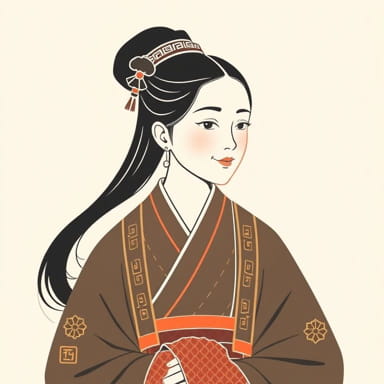
In the heart of China’s Henan Province lies the ancient city of Kaifeng, once the capital of several Chinese dynasties. Among its many communities was a unique and largely forgotten group Chinese Jews who had settled there centuries ago. Their history is a fascinating blend of faith, migration, adaptation, and survival. One of the most poignant stories associated with this community is that of the last Jewish daughter of Kaifeng, a woman whose existence embodies both the resilience and the quiet disappearance of a people long integrated into Chinese society. Her tale serves as a doorway into the broader narrative of Kaifeng’s Jewish population and their extraordinary journey.
Origins of the Jewish Community in Kaifeng
Historical Arrival in China
The Jewish presence in Kaifeng dates back at least to the Northern Song Dynasty around the 10th or 11th century. Scholars believe that Jewish merchants, traveling along the Silk Road from Persia or India, settled in Kaifeng because of its commercial and political importance. The Chinese called them the religion of the pluckers of the sinew, a reference to the kosher laws derived from the story of Jacob in the Hebrew Bible.
Over time, these Jewish settlers built a synagogue, wrote Torah scrolls in Hebrew, and lived relatively peacefully alongside their Chinese neighbors. The community thrived, adopting local customs, language, and even Confucian practices, while still maintaining core aspects of Jewish faith and identity.
The Structure of Jewish Life in Kaifeng
Adaptation and Integration
Kaifeng Jews were remarkable for how thoroughly they integrated into Chinese culture without completely abandoning their heritage. They dressed like other Chinese citizens, spoke Mandarin, and even bore Chinese surnames such as Zhao, Li, Jin, and Ai. However, they preserved important traditions such as Sabbath observance, dietary laws, circumcision, and the study of Hebrew scriptures.
Loss and Rediscovery
By the 19th century, a combination of social pressure, intermarriage, and lack of religious leadership caused the Jewish community in Kaifeng to dwindle. The last rabbi died in the early 1800s, and without clergy to maintain religious education, knowledge of Hebrew and Jewish customs began to fade. Synagogues fell into disrepair, and the community slowly assimilated into the broader Chinese population.
The Last Jewish Daughter of Kaifeng
Symbol of an Ending Lineage
The story of the last Jewish daughter of Kaifeng is more than just about one woman it is a symbol of the near-extinction of a once-flourishing community. In many versions of the story, she is described as a descendant of one of the original Jewish families. Her ancestors were known to have observed Jewish traditions, kept Hebrew texts, and maintained a sense of distinct religious identity even as many of their kin faded into cultural assimilation.
A Legacy Fading into Silence
This last daughter reportedly held on to fragments of tradition taught to her by her elders. Perhaps she remembered Sabbath blessings or learned family stories about a time when the community celebrated Passover in the courtyard of Kaifeng’s synagogue. But as her generation grew older and fewer, the direct link to the past slipped away. Her death is often seen by historians and storytellers as a symbolic end of Jewish matrilineal continuity in the region.
Modern Rediscovery and Revival
Recent Interest in Kaifeng Jews
Despite the community’s decline, the 20th and 21st centuries saw renewed interest in the Kaifeng Jews. Scholars from Israel and the West began to visit Kaifeng to research its lost Jewish population. Some descendants of the original families have begun reclaiming their heritage, studying Hebrew, and embracing Jewish rituals anew. A few have even made aliyah, immigrating to Israel and undergoing formal conversion to reconnect with global Jewry.
Preservation Efforts
- Digitization of old Hebrew scrolls found in Kaifeng
- Anthropological studies into family lineages and oral histories
- Jewish organizations providing support for religious education
- Exhibits and documentaries highlighting Kaifeng’s unique place in Jewish history
The Meaning Behind the Legacy
Why the Story Matters
The tale of the last Jewish daughter of Kaifeng resonates far beyond its specific historical setting. It highlights the fragility of cultural identity when isolated from a larger community. Her story is a reminder of the resilience of Jewish memory and the profound impact that even a single individual can have on preserving a people’s legacy.
It also offers a window into how Jewish life has taken root in the most unexpected places and adapted in astonishing ways. Kaifeng’s Jews may not have survived in the traditional sense, but their memory lives on through the stories of individuals like this last daughter, whose quiet presence echoed centuries of faith, migration, and integration.
A Culture Remembered
The history of Kaifeng’s Jews, and especially the story of its last Jewish daughter, reminds us that cultural survival is never guaranteed but always worth honoring. Though the community nearly vanished, its memory has inspired a revival of interest and a deeper appreciation of global Jewish diversity. The last daughter may be gone, but the tale she represents continues to illuminate the pathways of identity, endurance, and the enduring human desire to remember and belong.