The Elder Scrolls universe is one of the most complex and richly layered fictional cosmologies in modern fantasy. It spans countless realms, timelines, and metaphysical theories, blending high fantasy with surreal metaphysics. Unlike typical fantasy worlds, where the structure of the universe is relatively straightforward, the Elder Scrolls cosmology is mysterious, abstract, and deeply philosophical. From the divine origins of Aedra and Daedra to the Wheel, the Towers, and the strange nature of reality itself, this universe offers a deep well of lore that encourages exploration and interpretation. Understanding the Elder Scrolls cosmology is not just about memorizing names and places it’s about grasping how this world views time, space, divinity, and existence itself.
The Wheel of Existence
Structure of the Universe
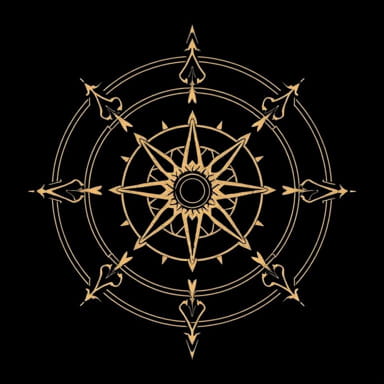
At the core of Elder Scrolls cosmology lies a powerful visual metaphor: the Wheel. This Wheel represents the entire universe, with each of its spokes symbolizing different aspects of reality. The outer ring is Aurbis, the totality of existence. The spokes are the various planes of the Aedra and Daedra. At the center is Nirn, the mortal plane. This symbolic structure provides a conceptual map of how all realms are interconnected, while also emphasizing the importance of balance, cycle, and unity.
Aurbis, Anu, and Padomay
Everything begins with two primal forces: Anu and Padomay. Anu represents order and stasis, while Padomay symbolizes chaos and change. From their interaction emerged the foundation of Aurbis the cosmic totality. These opposing forces gave birth to various deities and realms, ultimately leading to the creation of Mundus, the mortal world. The eternal conflict between order and chaos continues to shape the destiny of the cosmos, making duality a central theme throughout Elder Scrolls lore.
Mundus and Nirn
The Mortal Plane
Mundus is the mortal plane where Nirn, the world inhabited by mortals, resides. It was created through the sacrifice and cooperation of the Aedra divine beings who bound themselves to reality to give it form. This act weakened them, which is why they are referred to as ‘et’Ada,’ or ‘original spirits,’ who gave part of their essence to build the world. Among them, the most significant was Lorkhan, who proposed the creation of Mundus and tricked or persuaded others to join him. His actions resulted in both the birth of the mortal plane and his eventual punishment.
Divine Intervention and Withdrawal
After the creation of Mundus, many Aedra withdrew from the world, becoming distant gods who rarely interfere directly. Others, like the Eight Divines, remained as part of mortal religion. The withdrawal of these divine beings left a fragmented world full of conflict, struggle, and potential a theme that resonates deeply in Elder Scrolls storytelling. Nirn is a place of hardship and beauty, shaped by the lingering presence of the divine and the active influence of mortal will.
Planes of Oblivion
The Daedric Realms
Surrounding the mortal realm are the planes of Oblivion, each governed by a Daedric Prince. Unlike the Aedra, the Daedra did not sacrifice their essence to create Mundus, retaining their full power and existing outside of time and mortality. Each Daedric Prince’s realm reflects their unique personality and sphere of influence. Some examples include:
- Mehrunes Dagon Prince of Destruction, ruler of the Deadlands.
- Sheogorath Prince of Madness, lord of the Shivering Isles.
- Molag Bal Prince of Domination, master of Coldharbour.
These realms are accessible through powerful magic, rituals, or divine intervention, often serving as the setting for key events in Elder Scrolls games. While some Daedric Princes are malevolent, others are more neutral or even helpful, though their motives are always alien to mortal understanding.
Time and Myth in Elder Scrolls
The Non-Linear Nature of Time
Time in the Elder Scrolls universe does not function in a strictly linear fashion. Events like Dragon Breaks moments where time fractures and multiple outcomes occur simultaneously highlight the fluid and unstable nature of causality. These breaks are often associated with divine intervention, powerful artifacts, or significant mortal actions. One of the most famous examples is the Warp in the West, where contradictory histories emerged, yet all are equally valid.
Myth as Reality
In this cosmology, myth and reality are often the same. Belief shapes existence. Gods are not always static beings they can evolve, change, and be redefined by worship. For instance, Talos was once a mortal named Tiber Septim, who through conquest and divine ascension became a god. This idea of mantling assuming the role and identity of another through action and belief is fundamental to Elder Scrolls metaphysics.
The Towers of Reality
Architects of Stability
Towers are metaphysical constructs that anchor reality. Each tower has a ‘stone’ that powers it, and together these towers maintain the structure of Mundus. Disrupting or destroying a tower’s stone can unravel part of reality, alter physical laws, or even collapse entire regions of space-time. Some well-known towers include:
- White-Gold Tower Located in Cyrodiil, heart of the Empire.
- Adamantine Tower Oldest tower, site of divine judgment against Lorkhan.
- Crystal Tower Ancient Altmer tower that once stood in Summerset.
The presence and condition of these towers are often tied to the fate of Nirn and play a role in maintaining the cosmic balance.
The Role of the Elder Scrolls
Cosmic Artifacts
The Elder Scrolls themselves are mysterious artifacts that contain the threads of fate, prophecy, and time. They do not exist in a fixed form and are incomprehensible to most. To read an Elder Scroll is to risk blindness or madness, but it can also grant profound insight. These scrolls serve as narrative devices that allow stories to unfold in unpredictable ways. They are both records of what has happened and blueprints of what may come to be.
Mortality and Divinity
Becoming a God
One of the most fascinating aspects of Elder Scrolls cosmology is that mortals can become divine. Through great deeds, sacrifice, or metaphysical understanding, a mortal can ‘mantle’ a divine being. This idea blurs the line between god and mortal, suggesting that divinity is not absolute, but earned. Talos is the prime example, but figures like the Nerevarine and the Hero of Kvatch also brush against divine power through their actions.
The Role of Choice
Choice and agency are central to this universe. Unlike many mythologies where fate is set in stone, the Elder Scrolls universe allows for change, rebellion, and redefinition. Mortals are not just pawns they can shape the cosmos, resist divine will, or rewrite destiny itself. This fluidity reinforces the idea that belief and action are powerful enough to reshape reality.
The Elder Scrolls cosmology is a vast, multi-layered system that blends myth, philosophy, and fantasy in a unique and thought-provoking way. From the Wheel of Existence to the mysterious Towers, from the conflicting realms of Oblivion to the fragile beauty of Nirn, every part of this universe contributes to a deeper understanding of its metaphysical themes. What sets this cosmology apart is its openness to interpretation. There are few absolutes, and much is left deliberately vague, inviting players and readers to explore, question, and discover for themselves. This depth of lore is what makes the Elder Scrolls universe not only immersive but endlessly fascinating for those who seek to understand it.