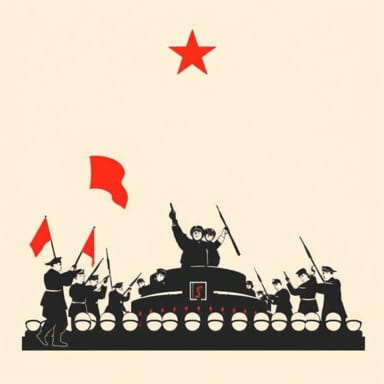
The Bolshevik Revolution, also known as the October Revolution of 1917, was a pivotal moment in world history that altered the political structure of Russia and set the foundation for the Soviet Union. This revolution was not a spontaneous uprising but the result of a carefully planned and ideologically driven movement. It was led by a determined group of revolutionaries who believed in the power of the proletariat to overthrow a corrupt and outdated regime. The movement was spearheaded by Vladimir Lenin, but many other leaders played significant roles in shaping its direction and outcome. Understanding who led the Bolshevik Revolution offers insight into the strategies, ideologies, and historical significance of this transformative event.
Historical Context of the Russian Revolution
Before exploring the leaders of the Bolshevik Revolution, it’s essential to understand the broader historical context in which it occurred. Russia in the early 20th century was a deeply divided society. The ruling Romanov dynasty maintained a rigid autocracy while the vast majority of the population lived in poverty. The discontent was further amplified by Russia’s involvement in World War I, which brought immense hardship, food shortages, and military failures. The February Revolution of 1917 led to the abdication of Tsar Nicholas II and the establishment of a Provisional Government. However, this government failed to address the pressing issues of land reform, peace, and workers’ rights. This created the perfect conditions for a more radical movement to seize power.
Vladimir Lenin: The Primary Leader
Vladimir Ilyich Lenin was the central figure in the leadership of the Bolshevik Revolution. A Marxist theorist and revolutionary, Lenin was the founder of the Bolshevik faction of the Russian Social Democratic Labour Party (RSDLP). After years of exile and ideological refinement, Lenin returned to Russia in April 1917 with the help of the Germans, who hoped his presence would further destabilize Russia. Upon arrival, Lenin immediately began advocating for ‘peace, land, and bread’ slogans that resonated deeply with soldiers, peasants, and workers.
Lenin’s April Theses called for the overthrow of the Provisional Government and the transfer of all power to the soviets (workers’ councils). He believed that the revolution must not stop halfway, and his uncompromising stance galvanized support among radicals and the working class. Lenin’s ability to blend theory with political strategy made him the undisputed leader of the Bolshevik movement.
Leon Trotsky: The Architect of Victory
Leon Trotsky, a brilliant orator and strategist, was another key leader of the Bolshevik Revolution. Though originally a member of the Menshevik faction, Trotsky joined the Bolsheviks in mid-1917 and quickly became one of Lenin’s most trusted allies. As the head of the Petrograd Soviet and later the Military Revolutionary Committee, Trotsky played a vital role in planning and executing the October insurrection.
Trotsky organized the Red Guards and ensured their loyalty to the Bolshevik cause. Under his leadership, the Bolsheviks were able to seize key government buildings, communication hubs, and eventually the Winter Palace with minimal bloodshed. His tactical acumen was instrumental in ensuring the success of the revolution. Trotsky would later go on to build the Red Army, securing Bolshevik power during the subsequent civil war.
Other Prominent Bolshevik Leaders
While Lenin and Trotsky were the most prominent faces of the revolution, they were supported by a cadre of committed revolutionaries who contributed significantly to the cause.
- Joseph Stalin: At the time of the revolution, Stalin held a lesser role, but he was a key Bolshevik involved in party organization and propaganda. He would later rise to supreme power following Lenin’s death.
- Grigory Zinoviev: A close associate of Lenin, Zinoviev was an important figure in the Petrograd Soviet and a founding member of the Comintern.
- Lev Kamenev: Kamenev, another senior Bolshevik, played a crucial role in Moscow during the revolution and was influential in the early days of Soviet governance.
- Alexandra Kollontai: One of the few prominent female leaders, Kollontai advocated for women’s rights and social welfare policies within the revolutionary framework.
The Role of the Bolshevik Party
The success of the revolution was not solely due to its leaders but also to the disciplined structure and ideological commitment of the Bolshevik Party. The party operated under the principle of democratic centralism, which allowed internal debate but required strict adherence to central decisions. This unity was critical in navigating the chaos of 1917 and swiftly capitalizing on the weaknesses of the Provisional Government.
The Bolsheviks had a clear message and were adept at mobilizing mass support through propaganda, newspapers like Pravda, and their presence in the soviets. Their ability to present themselves as the only party capable of delivering peace and social justice won them widespread popularity among soldiers, workers, and peasants.
Outcomes and Legacy of Bolshevik Leadership
Once in power, the Bolsheviks moved quickly to consolidate their rule. They withdrew from World War I through the Treaty of Brest-Litovsk, redistributed land to peasants, and nationalized major industries. The revolution marked the beginning of a civil war between the Red (Bolsheviks) and White (anti-Bolshevik) forces, during which the leadership of Lenin and Trotsky again proved decisive.
The Bolshevik Revolution had a global impact. It inspired communist movements worldwide and established the Soviet Union, which would go on to play a central role in 20th-century geopolitics. The leaders of the revolution became both revered and controversial figures, depending on one’s political perspective.
Leadership That Changed History
The Bolshevik Revolution was led by a group of revolutionary thinkers and strategists who fundamentally altered the course of Russian and global history. While Lenin and Trotsky are rightly recognized as the primary leaders, the collective effort of other Bolsheviks and the disciplined structure of the party were equally important. Their leadership turned a moment of political crisis into a full-scale revolution that ushered in the first socialist state in history. The influence of the Bolshevik Revolution continues to be studied and debated, highlighting the enduring legacy of those who led it.