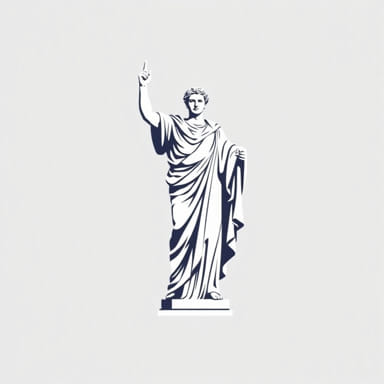
Amidst the remnants of ancient Rome and scattered across the museums and city squares of Europe, the statue of Julius Caesar stands as a powerful symbol of political authority, leadership, and the enduring legacy of Rome’s most famous dictator. Representing one of the most iconic figures in world history, statues of Julius Caesar not only immortalize his likeness but also reflect changing artistic, political, and cultural interpretations over centuries. From marble busts to equestrian bronze statues, these works of art capture both the glory and controversy surrounding Caesar’s rule. The statue of Julius Caesar is more than a historical artifact; it is a visual narrative of power, reform, ambition, and assassination.
Historical Background of Julius Caesar
Julius Caesar, born in 100 BCE, rose from a patrician Roman family to become a formidable military general, politician, and eventually the dictator perpetuo of the Roman Republic. His pivotal role in the transformation of Rome from a republic to an empire makes him a figure of immense importance. Statues and monuments dedicated to him aim to reflect his influence in both domestic governance and foreign conquests. His assassination on the Ides of March in 44 BCE did not diminish his legacy, but rather cemented him as a central figure in Roman and world history.
Iconography and Features of Caesar Statues
The artistic representations of Julius Caesar generally follow a classical Greco-Roman tradition. Sculptures and statues emphasize his military and political stature, often portraying him with distinctive features:
- Laurel wreath: Symbolizing triumph and authority, Caesar is often depicted wearing a laurel crown, especially after being declared dictator for life.
- Roman toga: His statues usually feature a draped toga, indicating his civic role and Roman identity.
- Facial realism: Unlike the idealized Greek gods, Roman statues, including those of Caesar, often show age lines, receding hairlines, and expressions that evoke wisdom and command.
- Outstretched arm: Many statues present Caesar with an arm extended, symbolizing oration, command, or statesmanship.
These elements combine to form a visual language that associates Julius Caesar with power, intellect, and destiny.
Notable Statues of Julius Caesar
Statue at the Roman Forum, Rome
One of the most visited representations of Caesar is the bronze statue located near the Roman Forum in Rome. This statue stands close to the site believed to be where Caesar was cremated after his assassination. The statue features Caesar in military garb, gazing forward with an air of determination. Tourists often leave flowers or messages at its base, demonstrating the lasting emotional and cultural connection people feel with Caesar’s story.
Statues in France and the United Kingdom
Several statues of Julius Caesar can be found outside Italy, including in cities once under Roman control. In Nîmes, France a city founded by veterans of Caesar’s campaigns a statue honors his legacy as both conqueror and builder. In the United Kingdom, museums often house busts and statues depicting Caesar, highlighting his invasion of Britain and his place in British-Roman history.
Busts in the Vatican Museums and Louvre
The Vatican Museums in Rome and the Louvre in Paris host several marble busts believed to represent Caesar. These busts are characterized by sharp features and furrowed brows, reflecting the psychological realism favored by Roman sculptors. Though some are debated in authenticity, they remain central to academic and public interpretations of Caesar’s appearance.
Symbolism and Political Relevance
The statue of Julius Caesar often transcends art and enters the realm of political symbolism. During the Renaissance, humanist thinkers admired Caesar as a model of classical virtue and intellect. In the 19th and 20th centuries, statues of Caesar were used to symbolize state authority, imperial ambition, and the legacy of Roman law. Even today, Caesar’s image is referenced in political debates about authoritarianism, democracy, and populism.
Influence on Modern Art and Monuments
Modern artists and sculptors have drawn inspiration from Julius Caesar’s statues, using his image to explore themes of leadership, betrayal, and power. The statue serves as a reminder of the fragility of democratic systems and the charisma that can both build and dismantle republics. Replicas and reinterpretations of his likeness appear in galleries, parks, and political satire across the world.
Debates Over Historical Accuracy
Despite the abundance of statues and busts of Julius Caesar, scholars often debate their accuracy. No contemporary sculpture of Caesar from his lifetime is known to survive with certainty. Most statues and busts were created posthumously, often idealized by those who admired or sought to emulate him. Nevertheless, they provide valuable insight into how Caesar was remembered and mythologized by later generations.
Authenticity Challenges
- Most known busts are dated to the early Imperial period, decades after Caesar’s death.
- Discrepancies exist between different sculptures some show a fuller face, while others depict a more angular jawline.
- Coins minted during Caesar’s life are often considered more accurate in capturing his features than statues.
Still, the multiplicity of images allows for a layered understanding of how societies across centuries interpreted Caesar’s identity.
The Statue as Cultural Memory
The enduring presence of Julius Caesar’s statues speaks volumes about cultural memory and historical identity. Whether situated in ancient ruins, national museums, or reproduced in textbooks and films, his statues bridge the gap between antiquity and the present. They become focal points for education, debate, and reflection on leadership and legacy.
Tourist Attraction and Educational Tool
Statues of Caesar serve as vital touchpoints for tourism in cities like Rome, Paris, and London. They are frequently included in guided tours and educational programs aimed at explaining the rise and fall of the Roman Republic. Museums often place Caesar’s statue alongside those of contemporaries like Cicero or Augustus, allowing for comparative understanding.
The statue of Julius Caesar remains a powerful symbol that embodies historical narrative, political legacy, and artistic craftsmanship. Each statue tells a different version of his life military genius, political reformer, dictator, or martyr. As physical embodiments of Rome’s turbulent history, these statues offer more than visual appeal; they invite inquiry into the forces that shape power, ambition, and human destiny. Whether viewed as a hero or tyrant, Julius Caesar continues to stand immortal in stone and bronze, a timeless figure whose story still resonates through art and memory.