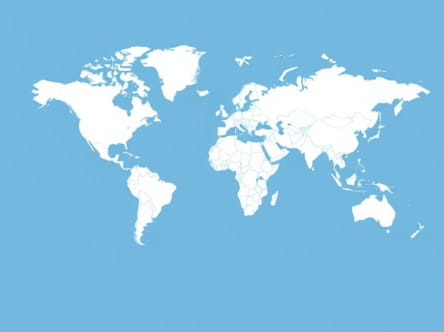
During the early modern period, the world saw a dramatic shift in global interaction through state-sponsored transoceanic exploration and expansion. These interactions were not simply voyages of discovery but were backed by powerful governments aiming to increase wealth, political power, and influence. Transoceanic interaction involved crossing oceans to connect continents, primarily for trade, colonization, and the spread of religion. European nations, in particular, launched expeditions that changed the dynamics of world power and brought about significant cultural exchanges, technological transfers, and in many cases, exploitation. The history of state-sponsored transoceanic interaction reveals a complex web of ambition, innovation, and consequences that reshaped the globe.
Origins of State-Sponsored Exploration
The Rise of Maritime Powers
By the 15th century, certain European states had developed the maritime technology and political stability necessary to undertake long-distance voyages. The Portuguese and Spanish monarchies were pioneers in this endeavor. Driven by the desire to find new trade routes to Asia and to bypass the overland Silk Road dominated by Islamic powers, these states invested heavily in exploration.
- Portugalestablished a series of trading posts along the West African coast and eventually around the Cape of Good Hope to reach India.
- Spainsponsored voyages across the Atlantic, most famously that of Christopher Columbus in 1492, which led to the European discovery of the Americas.
Motivations Behind Exploration
There were multiple motives for state-sponsored transoceanic interaction. Among the most important were:
- Economic gainsthrough access to spices, gold, and other valuable commodities.
- Political prestigeby claiming overseas territories and expanding influence.
- Religious expansionas a mission to spread Christianity to new lands.
- Scientific curiosityand a growing desire to map and understand the wider world.
Key Examples of State-Sponsored Transoceanic Interaction
Portuguese Expeditions
Portugal, under Prince Henry the Navigator, became a leader in maritime exploration. With state support, Portuguese sailors reached the coasts of Africa, India, and eventually Southeast Asia. Vasco da Gama’s voyage to India in 1498 opened a direct sea route to the East, revolutionizing global trade networks.
Spanish Voyages to the Americas
The Spanish Crown sponsored Columbus’s voyage in hopes of reaching Asia by sailing west. Though he landed in the Caribbean, the Spanish soon realized the vast opportunities in the Americas. Subsequent conquests by Hernán Cortés and Francisco Pizarro led to the fall of the Aztec and Inca Empires, respectively, bringing immense wealth to Spain through silver and gold extraction.
The Role of the Dutch and British
By the 17th century, the Dutch and the British had emerged as powerful maritime nations. Both states supported private trading companies, such as the Dutch East India Company (VOC) and the British East India Company, which operated with state backing but had the autonomy to wage war, sign treaties, and establish colonies.
- The Dutch established a strong presence in Indonesia and parts of Japan.
- The British eventually dominated the Indian subcontinent and established colonies in North America and the Caribbean.
Impacts of Transoceanic Interaction
Economic Transformation
State-sponsored transoceanic trade introduced new global commodities and wealth flows. Silver from the Americas was shipped to Europe and Asia, while new crops such as potatoes, maize, and tomatoes transformed diets and agricultural systems worldwide. The transatlantic slave trade also emerged, tragically reshaping societies and economies in Africa, the Americas, and Europe.
Cultural Exchange and Conflict
These interactions led to significant cultural blending and also cultural destruction. European settlers, missionaries, and conquerors imposed their language, religion, and political structures on native populations. In the Americas, indigenous cultures were largely destroyed or assimilated. However, elements of local traditions survived and influenced colonial societies.
Technological and Navigational Advancements
State investment in exploration pushed innovation in shipbuilding, cartography, and navigational instruments. The caravel, astrolabe, and improved compasses allowed longer and safer sea voyages. Knowledge was exchanged across continents, including agricultural techniques, medical practices, and astronomical observations.
Consequences for Colonized Societies
Loss of Sovereignty and Indigenous Displacement
The most profound impact of transoceanic state-sponsored ventures was felt by the indigenous peoples of Africa, the Americas, and Asia. Colonization resulted in widespread land dispossession, forced labor, and the imposition of foreign rule. Empires such as the Spanish and British often governed through local elites, but real power remained in the hands of the colonizers.
Spread of Disease
European contact brought with it diseases such as smallpox, which decimated indigenous populations in the Americas. These epidemics often preceded or accompanied conquests, weakening resistance and contributing to the rapid collapse of native civilizations.
Religious Conversion and Resistance
Missionary activity, often sponsored by the state, sought to convert local populations to Christianity. While some regions embraced the new faith, others resisted fiercely. Religious syncretism emerged in many areas, blending native beliefs with Christian elements to form unique spiritual traditions.
Global Legacy of Transoceanic State-Sponsored Interaction
Formation of the Modern World System
The long-term consequences of these interactions include the development of a truly global economy. State-backed trade networks connected producers and consumers on every continent, laying the foundations of capitalism and modern international relations.
Imperial Rivalries and Conflicts
As more states joined the race for overseas colonies, tensions mounted. The 18th and 19th centuries saw numerous wars fueled by competition for control of trade routes and resources. State-sponsored transoceanic interactions directly contributed to the rise of European imperialism.
Rise of Maritime Empires
The dominance of sea-based empires became a defining feature of the early modern period. Naval power became a key determinant of global influence. This marked a shift away from land-based empires like the Ottoman and Mughal, toward those capable of projecting power across oceans.
State-sponsored transoceanic interaction was one of the most transformative developments in world history. It reshaped economic systems, cultural identities, political boundaries, and social structures. While it brought new opportunities and connections, it also resulted in exploitation, violence, and cultural loss for many. The legacies of these interactions are still evident today, as modern global relations continue to be shaped by patterns set in motion centuries ago. Understanding this history helps explain the complexities of globalization, colonialism, and international power dynamics.