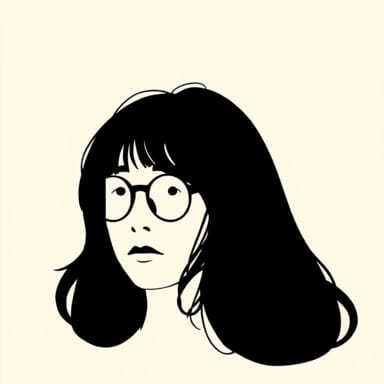
Yoko Ono is widely recognized not only as the partner of John Lennon but as a groundbreaking artist in her own right. Throughout her life, she has pushed the boundaries of conceptual and performance art, often challenging perceptions of identity, feminism, and peace. One of the most intriguing aspects of her work is her ability to infuse her personal story into universal themes. Her piece titledSelf-Portraitexemplifies this approach, presenting a complex reflection of the self while simultaneously inviting the audience into a dialogue with the artist’s identity, message, and legacy. This topic explores the multifaceted layers of Yoko Ono’s Self-Portrait, its interpretations, its significance in the art world, and how it reflects her broader creative philosophy.
Understanding Yoko Ono’s Artistic Approach
Yoko Ono’s body of work spans various mediums film, performance, music, and installation art. Her creations are typically rooted in strong concepts, where the idea behind the art is just as important, if not more, than the final form itself. In her self-portraits, Ono avoids traditional painting or photography. Instead, she uses abstraction, participation, and metaphoric symbolism to create reflective spaces that urge viewers to consider their own identity while questioning what defines selfhood.
Born in Tokyo in 1933 and raised in both Japan and the United States, Yoko Ono experienced war, displacement, and cultural integration firsthand. These life experiences heavily influenced her experimental and often minimalistic style. Her self-portrait is not a static, literal representation of her face or body; it’s a conceptual act, often performed or presented through time, space, and viewer interaction.
The Concept Behind ‘Self-Portrait’
One of Ono’s most famous works titledSelf-Portraitfrom 1965 is not what most people would consider a self-portrait at all. Rather than a painting or drawing, the piece was a live video projection of her buttocks, recorded while she rotated slowly. The camera, focused directly on her body, transforms her image into something at once deeply personal and abstract. This bold act redefines how a self-portrait is conceived and challenges societal norms around the female body, privacy, and public art.
The Self-Portrait defies objectification while simultaneously being unavoidably intimate. By offering a part of her body on screen, Ono confronts voyeurism, identity, and objectivity. Her decision to show this specific part of her body not her face, voice, or expression questions what society values when defining a person or a woman artist. It invites the viewer to reflect on their assumptions and confront the boundary between art and personhood.
A Radical Statement in a Conservative Time
When this work was first exhibited in the 1960s, it was considered shocking, even obscene, by some. However, within the world of avant-garde and feminist art, it was a powerful act of reclaiming the female form. Rather than being subjected to the gaze, Ono controlled how her body was viewed, when, and in what context. This kind of agency was rare in art history, where women were often muses rather than makers, bodies rather than voices.
The decision to use a film medium was also significant. Unlike a painting, a film runs over time, evolving with each moment. Ono’s use of time-based media emphasized the fluidity of identity and the multiplicity of self. In this way, ‘Self-Portrait’ becomes not a singular statement, but a moving exploration of presence and personhood.
Symbolism and Interpretations
The use of her back side may symbolize turning one’s back to traditional expectations. It can be read as a dismissal of classical portraiture, or even of the audience itself. Alternatively, it may be a gesture of trust, exposing something vulnerable and private. This ambiguity is typical of Ono’s work, which frequently encourages interpretation rather than offering firm answers.
For many art critics and feminists, Ono’s Self-Portrait was a milestone in conceptual art. It was raw and unapologetic, a disruption of what was acceptable in galleries and public spaces. It challenged not only viewers’ comfort levels but also their definitions of identity, femininity, and artistry.
Influence on Future Artists
Yoko Ono’s radical redefinition of the self-portrait has had a lasting influence on contemporary artists. Performance artists such as Marina AbramoviÄ and multimedia creators like Laurie Anderson have carried the torch of blending vulnerability with conceptual depth. Ono’s willingness to display, fragment, and abstract herself opened doors for more diverse and inclusive representations in modern art.
The ripple effect of Self-Portrait is especially seen in works that aim to deconstruct beauty standards, gender expectations, and cultural identities. Her approach has allowed many artists to move beyond superficial representation and toward introspective and socially charged forms of expression.
Ono’s Broader Legacy in Self-Expression
Yoko Ono has never fit easily into a single label be it artist, activist, or celebrity. Her identity is multifaceted, and her art reflects that. Self-Portrait is only one example of how she continually explores themes of individuality, silence, vulnerability, and resistance.
Other pieces, like Cut Piece, where she invited the audience to cut away her clothing, also reflect similar ideas. These works dismantle traditional power dynamics between viewer and artist, creating interactive moments that make the audience question their own role in constructing meaning.
In this way, Self-Portrait exists not just as a statement about Yoko Ono, but as a larger inquiry into what it means to represent the self in art. It questions how gender, fame, and culture shape identity, and it invites us to see beyond the surface to look at the invisible, the uncomfortable, the real.
Modern Relevance of ‘Self-Portrait’
In the current era of selfies and curated digital identities, Ono’s ‘Self-Portrait’ feels strikingly relevant. It stands in contrast to polished filters and perfection, presenting an image that is neither conventionally beautiful nor flattering. It reminds us that identity is more than surface, and that art can reflect our deeper selves flawed, complex, and unfiltered.
Ono’s piece continues to be exhibited and discussed in academic and art circles today. Its influence persists as both a challenge and an invitation to redefine what it means to depict oneself, not just in art but in life. As public figures increasingly control their own images through social media, Ono’s work raises the question: are we showing who we truly are, or what we want others to see?
Yoko Ono’s Self-Portrait is more than an artwork it is an act of defiance, a philosophical statement, and a cultural critique. It forces us to ask how much of our identity is ours to construct and how much is shaped by external expectations. As with much of her work, the power lies not just in what is seen, but in what is questioned. Her legacy continues to inspire artists to be brave, personal, and true to their own voice even if that voice challenges everything that came before it.