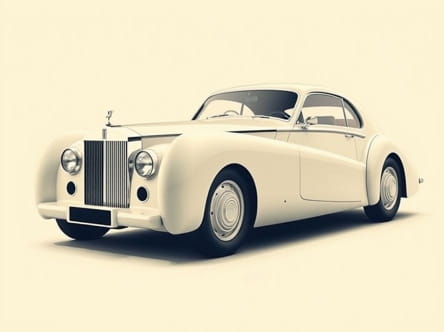
The Rolls-Royce Jonckheere Aerodynamic Coupe is one of the most distinctive and intriguing vintage cars ever built. Its sweeping lines, oval doors, and avant-garde styling have fascinated car enthusiasts and collectors for decades. Originally crafted in the 1930s, this extraordinary vehicle is more than a luxury automobile it is a bold artistic statement and a symbol of innovation during a time when design boundaries were being redefined. With its rare design and mysterious history, the Jonckheere Coupe continues to spark curiosity and admiration in the world of classic cars and automotive design.
Origin of the Jonckheere Aerodynamic Coupe
The story of the Rolls-Royce Jonckheere Aerodynamic Coupe begins with a 1925 Rolls-Royce Phantom I chassis. The chassis was originally fitted with a Hooper body, a standard luxury coachbuilder of the era. However, in the early 1930s, that body was removed, and Belgian coachbuilder Jonckheere Works took on the task of reimagining the car into something extraordinary.
Completed in 1935, the newly rebodied coupe was unlike anything seen on the road at the time. The Jonckheere company, known primarily for building buses and commercial vehicles, surprised the automotive world with a one-off creation that was both radically aerodynamic and visually theatrical.
Art Deco Influence and Design Philosophy
The Rolls-Royce Jonckheere Coupe was heavily influenced by the Art Deco movement, a design style characterized by bold geometry, smooth curves, and lavish ornamentation. The car’s flowing bodywork, long hood, and dramatic rear fenders exemplify this aesthetic.
- Oval doors: One of the most eye-catching elements, the car features large, oval-shaped doors a design not seen on any other Rolls-Royce model.
- Streamlined shape: Its aerodynamic form, with a low roofline and tapered tail, was far ahead of its time and contrasted with the boxier silhouettes of most luxury cars from that era.
- Integrated headlights and fenders: The car’s front end is sleek and sculpted, integrating headlights into the body rather than protruding separately, emphasizing its aerodynamic intent.
This visionary design helped the Jonckheere Coupe stand out not only as a luxury car but also as a design marvel. Even decades later, it remains a symbol of unconventional elegance and bold engineering.
Mechanical Foundation: Rolls-Royce Phantom I
While the body was a dramatic departure from traditional Rolls-Royce styling, the mechanical underpinnings remained faithful to the brand’s engineering standards. The Jonckheere Coupe was built on a Phantom I chassis, introduced in 1925 as a successor to the Silver Ghost.
The Phantom I featured a 7.7-liter inline-six engine, delivering smooth and reliable performance perfect for powering a large grand tourer like the Jonckheere Coupe. Its refinement and quiet operation were considered benchmarks at the time, and the chassis was strong enough to support the heavy custom bodywork without sacrificing drivability.
Performance Characteristics
Though not built for speed, the car offered a comfortable ride and quiet luxury. Due to the weight of its unique body, the performance figures were modest, but the emphasis was always on elegance and road presence rather than raw power.
The Car’s Disappearance and Rediscovery
After its debut in the mid-1930s, the Rolls-Royce Jonckheere Coupe lived a mysterious and fragmented life. It reportedly changed hands several times and disappeared from public view for decades. At one point, it was rumored to have been damaged in a fire and fell into disrepair.
The car resurfaced in the latter part of the 20th century and was eventually acquired by the Petersen Automotive Museum in Los Angeles, California. The museum undertook restoration efforts to return the car to its former glory while preserving its original styling and details.
The rediscovery reignited public interest in the coupe, and its appearances at car shows and exhibitions since then have drawn large crowds. Its mystique, rarity, and unmatched design make it a centerpiece wherever it is displayed.
Legacy and Cultural Significance
The Rolls-Royce Jonckheere Aerodynamic Coupe holds a special place in automotive history not just because of its one-of-a-kind design, but because it challenges conventional expectations of what a Rolls-Royce should be. It combines the mechanical excellence of the Phantom I with an exterior that is daring, dramatic, and completely original.
In automotive design circles, the Jonckheere Coupe is often cited as an example of how traditional luxury brands can push artistic boundaries. Its influence is seen in concept cars and modern retro-futuristic designs that blend heritage with innovation.
Inspiration for Designers and Enthusiasts
Many modern designers point to the Jonckheere Coupe as a source of inspiration. Its bold departure from norms encourages creativity and exploration in automotive design. Collectors and enthusiasts appreciate it not only for its rarity but also for its role as a bold expression of individuality and vision.
Modern Tributes and Replicas
Due to its fame and limited existence, the Jonckheere Coupe has inspired a number of concept sketches, models, and even speculative redesigns by artists and car enthusiasts. Although no official replicas have been widely produced, digital renderings and scale models continue to circulate among collectors who admire the coupe’s sculptural qualities.
While some luxury car manufacturers have referenced Art Deco and retro themes in their limited-edition models, few have approached the daring silhouette and artistic daring of the Jonckheere Coupe. It remains one of the few cars that truly blurs the line between automobile and sculpture.
Preserving a Masterpiece
Efforts to preserve the Rolls-Royce Jonckheere Coupe have been critical in maintaining its condition and historical importance. Institutions like the Petersen Museum play an important role in conserving unique vehicles like this for future generations.
Through restoration and education, they ensure that stories like that of the Jonckheere Coupe are not forgotten. The car is not just a piece of transportation history it is a lesson in creative risk-taking and timeless design.
The Rolls-Royce Jonckheere Aerodynamic Coupe is far more than a rare vintage automobile. It is a bold reimagining of luxury, art, and engineering. With its Art Deco styling, one-of-a-kind design elements like oval doors, and the enduring strength of a Phantom I chassis, the car stands as a beacon of creativity and craftsmanship.
Whether admired for its aesthetics, respected for its rarity, or studied for its impact on automotive history, the Jonckheere Coupe continues to leave a lasting impression. It’s a car that invites awe, sparks conversation, and reminds us of an era when design was as much about emotion and imagination as it was about function. As one of the most unforgettable vehicles ever built, the Rolls-Royce Jonckheere Aerodynamic Coupe earns its place among the legends of the automotive world.