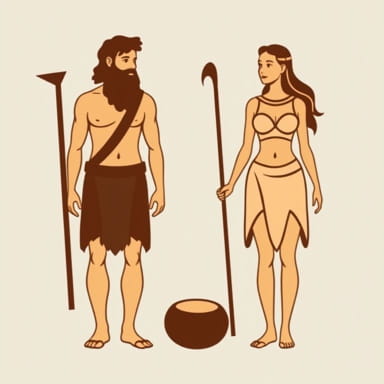
The Paleolithic Age, often referred to as the Old Stone Age, marks the earliest period of human history where our ancestors relied primarily on stone tools and lived as hunter-gatherers. During this era, which spanned roughly from 2.5 million years ago to about 10,000 years ago, the roles of men and women were crucial in shaping the survival and development of human societies. Understanding the distinct but complementary roles they played offers valuable insight into early human social structures, cooperation, and adaptation to the environment. The division of labor between men and women during the Paleolithic Age was influenced by biological, environmental, and cultural factors, and it laid the foundation for future societal norms.
Men’s Roles in the Paleolithic Age
Men in the Paleolithic period primarily took on roles that required physical strength and mobility, which were essential for hunting and defense. Hunting was one of the most critical activities for securing food, particularly large game, and it demanded cooperation, strategic planning, and skill.
Hunting and Food Procurement
- Men were generally responsible for hunting large animals such as mammoths, bison, and deer, which provided meat, hides, and bones.
- Hunting involved using stone tools, spears, and traps, often requiring teamwork and communication.
- Success in hunting directly impacted the community’s survival, making men’s roles vital.
Protection and Territorial Defense
Besides hunting, men often took on the role of protecting the group from predators or rival human groups. The ability to defend territory and resources was essential in a world where competition for food and shelter was intense.
Tool Making and Innovation
While both men and women were likely involved in tool-making, men sometimes specialized in creating hunting weapons like spear points and cutting tools. Their contributions to technological innovation helped improve hunting efficiency and safety.
Women’s Roles in the Paleolithic Age
Women’s roles in the Paleolithic Age were equally important and centered around gathering, child-rearing, and maintaining the social fabric of their communities. The work of women complemented that of men and contributed to a balanced and sustainable way of life.
Gathering Plant-Based Foods
- Women primarily gathered plant foods such as fruits, nuts, seeds, roots, and tubers, which formed a substantial part of the diet.
- Gathering required extensive knowledge of local flora, seasonal changes, and edible versus poisonous plants.
- This role was vital because plant foods provided necessary vitamins and minerals that meat alone could not supply.
Childcare and Community Maintenance
Women were responsible for nurturing and raising children, a demanding role that required constant attention and care. This task ensured the survival and continuation of the group. Women also likely played key roles in passing down knowledge, cultural traditions, and skills to the next generation.
Tool Use and Production
Women contributed to the manufacture of tools, particularly those related to food processing such as grinding stones and containers. They may also have made clothing and shelter materials using animal hides and plant fibers.
Division of Labor and Cooperation
The roles of men and women in the Paleolithic Age were distinct but highly interdependent. This division of labor was not rigid but flexible, adapting to the needs of the community and environmental conditions.
Complementary Roles
- The combination of hunting and gathering ensured a balanced diet and more reliable food sources.
- Cooperation between men and women in daily tasks fostered social bonds and community cohesion.
- Shared responsibilities in shelter building, food sharing, and child-rearing helped sustain the group.
Flexibility and Adaptation
Evidence suggests that men and women sometimes exchanged roles depending on circumstances, such as the absence of a group member or specific environmental challenges. This flexibility was essential for survival in varied and changing conditions.
Social Structure and Gender Roles
Though the Paleolithic societies were mostly egalitarian, meaning there was no rigid hierarchy or class system, the roles of men and women were shaped by practical needs rather than strict social norms. This fluidity contrasts with later periods where gender roles became more fixed.
Egalitarian Societies
- Resources and responsibilities were likely shared within the group, reducing competition and inequality.
- Decisions may have been made collectively, with respect given to both men’s and women’s contributions.
- Such social structures helped maintain harmony and ensured the survival of small groups.
Role of Women in Leadership
While there is limited direct evidence, it is possible that women held informal leadership roles within their groups, especially regarding knowledge of plants, healing, and child-rearing practices. This knowledge was critical for the group’s wellbeing and longevity.
Impact on Human Evolution and Culture
The roles of men and women during the Paleolithic Age had lasting effects on human evolution, social organization, and culture. Cooperation between genders fostered developments in communication, technology, and social bonds.
Development of Communication and Language
- Joint activities like hunting, gathering, and raising children required effective communication.
- Over time, these needs likely contributed to the development of complex language and symbolic thought.
Technological and Cultural Innovations
The combined efforts of men and women in tool-making, food processing, and shelter construction propelled technological advances. Cultural traditions such as rituals, art, and social norms likely emerged from shared experiences and cooperation.
The roles of men and women in the Paleolithic Age were foundational to the survival and success of early human societies. Men’s focus on hunting and protection, coupled with women’s gathering and nurturing roles, created a complementary system that balanced risk and sustenance. The flexibility and cooperation observed in these early societies highlight the adaptive nature of humans and the importance of shared responsibilities. Understanding these roles offers a glimpse into the origins of human culture, social structures, and gender dynamics, shaping our understanding of human history and evolution.