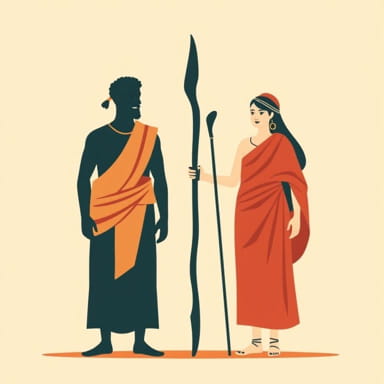
During the Neolithic Age, which began around 10,000 BCE, human societies underwent significant transformations due to the development of agriculture and the domestication of animals. This era, also known as the New Stone Age, marked a crucial shift from a nomadic hunter-gatherer lifestyle to a more settled, agrarian existence. With these changes came a new division of labor and evolving roles for men and women. These gender roles, while not uniform across all societies, began to reflect the social and economic needs of early agricultural communities. The roles of men and women in the Neolithic period were shaped by geography, technology, and culture, contributing to the foundations of social organization still seen today.
Understanding the Neolithic Revolution
The Neolithic Revolution refers to the transition from foraging to farming, a development that altered nearly every aspect of human life. With stable food sources, people began settling in permanent villages. The surplus of food allowed populations to grow and led to the creation of new jobs and social roles. This transformation played a crucial role in defining the responsibilities and daily tasks of men and women during this time.
Men’s Roles in Neolithic Societies
In most Neolithic communities, men assumed duties that required physical strength, long periods away from home, or control over emerging tools and animals. Their tasks were often tied to the broader landscape and defense of the community.
- Farming and Land Clearing: Men frequently took on the responsibility of plowing fields, cutting down trees, and preparing land for agriculture. These tasks required tools such as stone axes and early plows.
- Animal Domestication and Herding: With the domestication of cattle, sheep, and goats, men became herders, managing flocks and protecting them from predators or theft.
- Hunting and Fishing: Although agriculture reduced reliance on wild food, men still engaged in hunting and fishing, especially in communities near rivers, lakes, or forests.
- Defense and Tool Making: As villages grew, protection became necessary. Men often made weapons from stone, bone, and later, metal, and acted as warriors or guards for their community.
Women’s Roles in Neolithic Communities
Women played vital roles in sustaining the household and contributing to the community’s economic stability. Their work, often centered around the home and immediate surroundings, was essential for daily survival and cultural continuity.
- Food Processing and Cooking: Women were primarily responsible for grinding grains, preparing meals, and storing food. The advent of pottery helped with cooking and food preservation.
- Weaving and Textile Production: As agriculture provided fibers such as flax and wool, women began spinning thread and weaving fabric for clothing and blankets.
- Childcare and Education: Women raised children and taught them essential skills, including farming techniques, social norms, and language.
- Gardening and Small-Scale Farming: In many Neolithic societies, women managed gardens near the home, growing herbs, vegetables, and medicinal plants.
- Craftsmanship: Women often created pottery, baskets, and decorative items, many of which were used for trade or religious purposes.
Division of Labor by Gender
The division of labor in the Neolithic Age was not based purely on physical capability. It was influenced by practicality, available resources, and the social dynamics of each community. Men and women contributed to different spheres of life, both equally important to the survival and success of their groups. In some societies, this division led to a degree of gender equality, while in others, it marked the beginning of social hierarchies based on gender.
Collaboration and Interdependence
Despite different tasks, men and women in the Neolithic Age worked collaboratively. The successful harvest of crops or the raising of livestock depended on shared labor and coordinated effort. Marriage and family structures were often centered around these cooperative roles, with family units acting as the core of labor organization.
Spiritual and Religious Roles
Spiritual practices were central to Neolithic life, and women often held important positions in religious or healing ceremonies. Figurines of goddesses and fertility symbols suggest that women were associated with birth, agriculture, and the earth. Men, too, participated in rituals and built structures like megaliths or burial mounds.
Impact of Agriculture on Gender Roles
The rise of agriculture began to shift power dynamics. As land ownership and surplus wealth became more significant, men, who often controlled the fields and livestock, gained more economic and political influence. This led to the emergence of patriarchal systems in some early civilizations, though it wasn’t universal or immediate.
Changing Roles Over Time
Over generations, the roles of men and women continued to evolve with new technologies and societal changes. Some communities maintained balanced roles, while others developed more rigid gender structures. The seeds of social stratification, leadership, and governance began during this time, laying the groundwork for future civilizations.
Examples from Archaeological Findings
Archaeological discoveries provide insight into the daily lives of Neolithic people. Gravesites, tools, pottery, and art offer clues about gender roles and status. For instance, the discovery of burial sites where women were buried with jewelry or ceremonial objects indicates that they held respected roles in their communities. Similarly, tools found with male remains point to their active engagement in hunting, farming, and crafting.
Legacy of Neolithic Gender Roles
The roles of men and women in the Neolithic Age laid a foundation for the social structures seen in later historical periods. While not static or universal, the division of labor established during this era influenced the development of gender norms, property rights, and political power. Understanding this period helps illuminate the origins of gender roles and the interplay between environment, economy, and culture in shaping human history.
Continuity and Change
It is important to note that gender roles were not fixed or identical across all Neolithic societies. Geography, resources, and cultural beliefs all played a role in shaping the expectations of men and women. In some cases, women were powerful leaders or healers; in others, men held dominant social roles. This variation shows the complexity of early human communities and challenges the idea of a single Neolithic lifestyle.
The Neolithic Age was a transformative period in human history, characterized by the domestication of plants and animals, the development of permanent settlements, and the emergence of new social structures. Within this context, the roles of men and women were distinct but complementary. Men often took on responsibilities related to farming, defense, and tool-making, while women contributed through food preparation, textile production, childcare, and spiritual activities. These early divisions of labor were shaped by necessity and cooperation rather than strict hierarchies, although they would eventually influence gender dynamics in later civilizations. Exploring the roles of men and women during this pivotal era provides valuable insight into the evolution of human society and the origins of gendered labor.