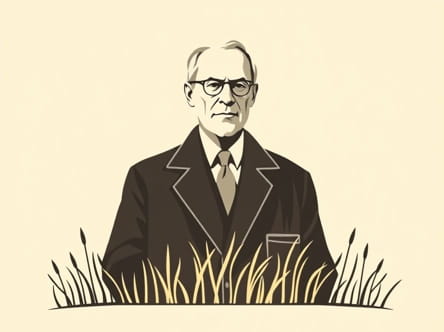
Dr. Norman Ernest Borlaug, more commonly known as Dr. N.E. Borlaug, was a renowned scientist whose pioneering work in agricultural science significantly impacted global food production. He is most famously associated with the Green Revolution a movement that drastically increased crop yields and helped save millions from starvation in developing nations. Dr. Borlaug’s legacy is intricately tied to his scientific expertise, humanitarian vision, and relentless dedication to combating hunger through innovation in plant breeding and agricultural practices.
Early Life and Educational Background
Dr. N.E. Borlaug was born on March 25, 1914, in Cresco, Iowa, USA. He grew up in a farming community, where he experienced firsthand the challenges of traditional agriculture. This upbringing planted the seeds for his lifelong mission to improve food security. He pursued higher education at the University of Minnesota, earning a Bachelor of Science in Forestry in 1937 and later a Ph.D. in Plant Pathology and Genetics in 1942.
Academic Influences and Scientific Training
During his time at university, Dr. Borlaug was mentored by leading scientists in plant biology and genetics. This academic environment played a crucial role in shaping his approach to solving food scarcity through scientific innovation. His doctoral research focused on plant diseases and how genetic resistance could be used to fight them a foundational concept that would underpin much of his later work.
Career Milestones and Contributions
Dr. Borlaug began his groundbreaking career in agricultural research when he joined the Cooperative Wheat Research and Production Program in Mexico in the 1940s. The program was a collaboration between the Mexican government and the Rockefeller Foundation, aiming to boost Mexico’s wheat production and achieve self-sufficiency.
Development of High-Yield Wheat Varieties
One of Dr. Borlaug’s most notable contributions was the development of high-yield, disease-resistant wheat varieties. These strains not only grew faster but were also more resilient to adverse weather and pathogens. His work introduced dwarf wheat, which had shorter stalks but produced more grain, allowing farmers to significantly increase production without requiring more land.
The Green Revolution
Dr. Borlaug’s innovations marked the beginning of what is now known as the Green Revolution a series of agricultural advancements that transformed food production in countries such as India, Pakistan, Mexico, and the Philippines. With the introduction of his improved wheat varieties, nations on the brink of famine experienced dramatic increases in crop yields. In India and Pakistan, for instance, wheat production nearly doubled within just a few years of adopting Borlaug’s techniques.
Dr. Borlaug’s Global Impact
Though Dr. Borlaug’s work began in Mexico, his influence rapidly expanded across the globe. His agricultural strategies became models for food programs in Asia, Latin America, and Africa. By applying scientific methods to traditional farming, he proved that hunger could be addressed with practical and scalable solutions.
Recognitions and Honors
Dr. Borlaug’s achievements earned him numerous prestigious awards, including the Nobel Peace Prize in 1970. He was recognized not only for his scientific prowess but also for his role in promoting peace by reducing hunger and preventing conflict over food scarcity. Other honors include the Presidential Medal of Freedom and the Congressional Gold Medal, placing him among a select few who have received all three awards.
Work with International Organizations
Throughout his career, Dr. Borlaug collaborated with institutions like the International Maize and Wheat Improvement Center (CIMMYT) and later became involved with the World Food Prize Foundation, which he helped establish in 1986. These organizations continue to carry forward his mission to enhance global food security through science and education.
Legacy and Continued Influence
Dr. N.E. Borlaug belongs to a unique class of scientists who combined academic knowledge with practical implementation. His legacy lives on in modern agricultural practices, especially in the ongoing development of genetically improved crops and sustainable farming techniques. His influence is also evident in the policies of international food aid and development agencies that emphasize science-based solutions to hunger.
Inspiring a New Generation
Today, Dr. Borlaug’s story serves as an inspiration to young scientists, policymakers, and humanitarian workers around the world. Educational institutions and research centers continue to teach his methods, and numerous scholarships and fellowships bear his name to encourage research in agricultural science and food security.
Dr. Borlaug’s Philosophy
At the heart of Dr. Borlaug’s philosophy was a belief in human ingenuity and the power of science to solve real-world problems. He often emphasized that technological advances in agriculture must be paired with proper education and infrastructure to have lasting impact. He was also vocal about the ethical responsibility of the scientific community to address global hunger.
Dr. N.E. Borlaug belongs to the world not just as a scientist, but as a humanitarian who profoundly changed the course of human history. His work laid the foundation for modern agricultural development, and his legacy continues to influence food policy, crop research, and global efforts to end hunger. By integrating science, compassion, and determination, Dr. Borlaug demonstrated that even the most pressing global challenges can be overcome with knowledge and dedication.
- Born in Cresco, Iowa in 1914
- Ph.D. in Plant Pathology and Genetics from University of Minnesota
- Pioneer of the Green Revolution
- Developer of high-yield, disease-resistant wheat
- Nobel Peace Prize recipient (1970)
- Founder of the World Food Prize
- Legacy lives on in modern agricultural innovation