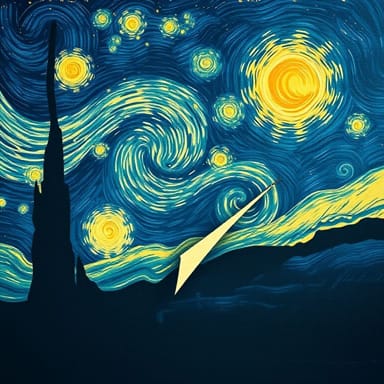
Vincent van Gogh is remembered today as one of the most important and fascinating figures in art history. Although he achieved little recognition during his lifetime, his emotionally charged and visually striking paintings have become some of the most iconic in the world. Known for his expressive brushwork, vivid colors, and deeply personal subject matter, van Gogh’s life and art continue to captivate audiences around the globe. Understanding who Vincent van Gogh was means exploring a complex blend of genius, struggle, and a passionate search for meaning through painting.
Early Life and Family Background
Birth and Childhood in the Netherlands
Vincent Willem van Gogh was born on March 30, 1853, in the village of Zundert, in the southern Netherlands. He was the eldest of six children in a religious and cultured family. His father was a Protestant minister, and his mother came from a family of bookbinders. Vincent was named after his stillborn brother, a fact that had a profound psychological effect on him.
From an early age, van Gogh was quiet, introspective, and fond of nature. He had a strong interest in drawing and literature, but his early path in life was uncertain. At different times, he worked as an art dealer, a teacher, and a lay preacher before fully committing to becoming an artist in his late twenties.
The Artistic Journey Begins
Discovering Art as a Calling
Van Gogh began his artistic career relatively late. In 1880, he decided to pursue art seriously, and he began studying drawing and painting. He was largely self-taught but also studied at art academies in Belgium and the Netherlands. His early works were dark in tone and focused on peasants, laborers, and rural scenes, inspired by the realism of artists like Jean-François Millet.
One of his early masterpieces,The Potato Eaters(1885), shows a family of peasants eating dinner by lamplight. The painting captures the hardships and dignity of rural life and reflects van Gogh’s desire to depict the human condition with sincerity and empathy.
Paris and the Influence of Impressionism
A Turning Point in Style
In 1886, van Gogh moved to Paris to live with his brother Theo, who worked as an art dealer. The city exposed him to a vibrant art scene and introduced him to the work of the Impressionists and Neo-Impressionists. He became friends with artists such as Henri de Toulouse-Lautrec, Camille Pissarro, and Paul Gauguin.
Under their influence, van Gogh’s palette brightened significantly. He began using lighter colors and experimented with new techniques, including short, quick brushstrokes and the use of pure, vibrant tones. This period marked a shift from his earlier somber style to the more colorful and emotionally intense work for which he is best known today.
Arles and the Search for Harmony
The Yellow House and Artistic Ambitions
In 1888, van Gogh left Paris for Arles, a town in the south of France, seeking tranquility and a deeper connection with nature. He hoped to create a community of artists there and invited Paul Gauguin to join him. During this time, he produced some of his most celebrated works, including:
- Sunflowers
- The Bedroom
- Café Terrace at Night
- Starry Night Over the Rhône
These paintings reveal a new level of emotional intensity and symbolic meaning. Van Gogh used color not only to depict reality but to express feeling. Yellow, for example, symbolized hope and energy for him. The warm sunlight and vivid landscapes of Arles inspired some of his most radiant work.
Mental Health and the Ear Incident
Despite his artistic productivity, van Gogh’s mental health deteriorated during his time in Arles. His relationship with Gauguin became strained, and in December 1888, after a heated argument, van Gogh famously cut off part of his own ear. He was hospitalized and later admitted to a mental asylum in Saint-Rémy-de-Provence.
Saint-Rémy and the Depth of Emotion
Creativity Amidst Suffering
During his year in the asylum, van Gogh painted some of his most moving and powerful works. Isolated from society but surrounded by nature, he found solace in painting the gardens, olive trees, cypress trees, and nearby countryside. It was here that he paintedThe Starry Night, one of the most famous and beloved images in art history.
Though plagued by hallucinations and emotional instability, van Gogh’s creative output was astonishing. He completed over 150 paintings during his time at Saint-Rémy, each one infused with passion, turbulence, and beauty.
The Final Months in Auvers-sur-Oise
Hope and Tragedy
In 1890, van Gogh moved to Auvers-sur-Oise, a village near Paris, to be under the care of Dr. Paul Gachet. Initially, he felt optimistic and continued painting at a rapid pace, capturing wheat fields, gardens, and rural life. Yet, his mental health remained fragile, and he often felt like a burden to his brother Theo.
On July 27, 1890, van Gogh walked into a field and shot himself in the chest. He died two days later at the age of 37. His brother Theo was by his side. Just months later, Theo also passed away, leaving behind a small son named Vincent, in honor of his uncle.
Legacy and Global Impact
From Obscurity to Icon
During his lifetime, Vincent van Gogh sold very few paintings and was largely unrecognized. Today, he is considered one of the greatest painters of all time. His life story has inspired books, films, exhibitions, and ongoing scholarly research. Museums like the Van Gogh Museum in Amsterdam are dedicated to preserving and showcasing his legacy.
The Emotional Power of His Work
Van Gogh’s art resonates with people because it speaks directly to the heart. His intense brushwork, bold color choices, and personal themes make his paintings deeply relatable. They reflect the struggle to find light in darkness, beauty in pain, and meaning in a chaotic world.
Lessons from Van Gogh’s Life
- Creativity can thrive even in the face of adversity.
- Emotional honesty in art can create powerful connections with others.
- True recognition may come late, but genuine expression is timeless.
Vincent van Gogh’s life and work remind us that even in solitude and suffering, the human spirit can produce something extraordinary. His paintings continue to inspire artists and art lovers, proving that beauty and truth often emerge from the most unlikely places.