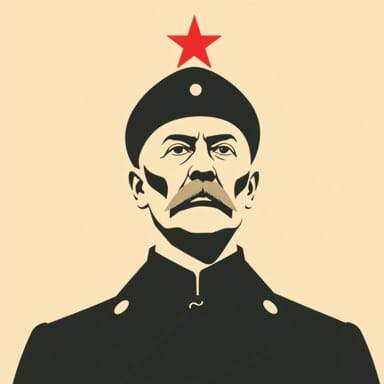
The Bolshevik Party emerged in the early 20th century as a revolutionary force that would eventually reshape the political structure of Russia and influence global politics for decades. Rooted in Marxist ideology and determined to overthrow the Tsarist regime, the Bolsheviks became a dominant political faction during the Russian Revolution. At the heart of their leadership stood a determined and uncompromising figure whose strategic decisions and charismatic leadership helped transform the party from a radical fringe movement into the ruling power of the Soviet Union. Understanding who led the Bolshevik Party, and how that leadership was exercised, is essential for grasping the broader context of the Russian Revolution and early communist governance.
Origins of the Bolshevik Party
The Russian Social Democratic Labour Party (RSDLP)
The Bolshevik Party was initially part of the Russian Social Democratic Labour Party, formed in 1898 with the aim of uniting various revolutionary groups under a Marxist framework. In 1903, during the party’s second congress, ideological and organizational disagreements caused a major split. Two main factions emerged: the Mensheviks and the Bolsheviks. The term Bolshevik means majority in Russian, although the faction did not always have majority support.
Philosophical Divides
The central disagreement was over the nature of party membership and the organization’s role. The Bolsheviks, led by Vladimir Lenin, favored a tightly controlled, professional revolutionary group. The Mensheviks, led by Julius Martov, preferred a more democratic, mass-membership model. This philosophical divide defined their future paths and political strategies.
Vladimir Lenin: Leader of the Bolshevik Party
Early Life and Revolutionary Ideas
Vladimir Ilyich Ulyanov, better known by his alias Lenin, was born in 1870 in Simbirsk, Russia. His older brother was executed for plotting against Tsar Alexander III, which deeply impacted Lenin and spurred his revolutionary convictions. He became a dedicated Marxist in his youth and went into exile, where he wrote and organized against the autocratic regime.
Founding Leadership
Lenin quickly emerged as the central figure of the Bolshevik faction. His writings, including What Is to Be Done?, articulated the need for a vanguard party an elite group of revolutionaries who would guide the working class to political power. Lenin’s sharp intellect, organizational skills, and uncompromising nature solidified his status as the Bolshevik Party’s undisputed leader.
Role in the 1917 Revolutions
Lenin played a crucial role during both the February and October Revolutions of 1917. After returning from exile in April 1917, he delivered the April Theses, demanding peace, land, and bread and urging a second revolution. By October, under his leadership, the Bolsheviks successfully overthrew the Provisional Government and seized power.
Lenin’s Leadership Style
Centralized Control
Lenin believed that a successful revolution required centralized authority. He was skeptical of democratic processes within the party if they threatened unity. This led to a highly centralized and hierarchical party structure. While this allowed for quick and decisive action, it also laid the groundwork for authoritarian rule.
Strategic Alliances
Lenin was a pragmatic leader who made temporary alliances when beneficial. He signed the Treaty of Brest-Litovsk with Germany to end Russia’s involvement in World War I, despite internal opposition. He also introduced the New Economic Policy (NEP) in 1921, allowing limited private enterprise to stabilize the economy, a temporary retreat from strict communist policies.
Suppression of Opposition
Under Lenin’s leadership, the Bolsheviks suppressed political dissent through censorship, arrests, and executions. The Cheka, a secret police force, was established to root out enemies of the revolution. While some viewed these actions as necessary for consolidating power, others saw them as the seeds of totalitarianism.
Impact of Lenin’s Leadership on the Bolsheviks
Transformation into the Communist Party
In 1918, the Bolsheviks renamed themselves the Russian Communist Party (Bolsheviks), signaling their intent to create a one-party socialist state. Lenin’s ideological direction was instrumental in this transformation. The party increasingly distanced itself from other leftist groups and began to rule with absolute authority.
Legacy in the Soviet Union
Lenin’s policies and leadership style set the foundation for the Soviet state. He created institutions that would persist long after his death, including the one-party system, centralized economy, and secret police. His image was later mythologized by his successors, especially by Joseph Stalin, who used Lenin’s legacy to justify his own policies.
Other Influential Bolshevik Leaders
Leon Trotsky
Leon Trotsky was another key figure in the Bolshevik Party, particularly noted for organizing the Red Army during the Russian Civil War. Though brilliant and influential, he ultimately fell out of favor with Stalin after Lenin’s death and was exiled and later assassinated in Mexico.
Joseph Stalin
While not as prominent during the initial revolution, Joseph Stalin held key administrative roles. After Lenin’s death in 1924, he gradually accumulated power and became the uncontested leader of the Soviet Union. Stalin’s rule marked a significant shift from Lenin’s policies, characterized by brutal purges and absolute dictatorship.
So, who was the leader of the Bolshevik Party? The clear and definitive answer is Vladimir Lenin. He was not only the founder of the Bolshevik faction but also its strategic mind and ideological compass. His leadership transformed the party from a revolutionary group into the ruling authority of a vast empire. Lenin’s influence shaped the course of Russian and indeed global history in the 20th century. Although other figures like Trotsky and Stalin played important roles, it was Lenin’s vision, writings, and political acumen that made him the central figure of the Bolshevik movement. Understanding his role helps us better grasp the dynamics of revolution, ideology, and power in the modern era.