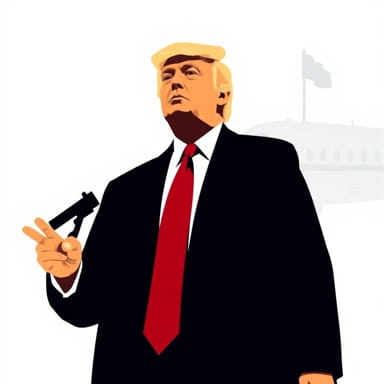
The past year has been marked by several serious threats and assassination attempts against former President Donald Trump. These dramatic events unfolding between 2024 and 2025 raised urgent questions about political violence, security protocols, and the broader climate in which such acts occur. The incidents from a shooting at a Pennsylvania rally to a foiled attack at MaraLago revealed startling security lapses and prompted indepth investigations. Understanding the timeline, motivations, and aftermath offers insight into how political safety is managed in an era marked by polarization and high stakes.
The Butler, Pennsylvania Rally Shooting – July 2024
On July 13, 2024, during a campaign rally near Butler, Pennsylvania, a 20yearold gunman, Thomas Matthew Crooks, opened fire from a rooftop using an AR15style rifle. The bullet grazed Trump’s ear, killed one bystander, and injured two others before Crooks was neutralized by Secret Service and local law enforcement efforts.
Security Failures Exposed
- Senate and GAO investigations found the Secret Service ignored prior intelligence about a possible plot.
- Communication breakdowns occurred between federal agents and local police.
- A building with a clear line of sight was left unguarded, and countersniper teams were improperly deployed.
Heroic Response and Aftermath
Army veteran Aaron Zaliponi may have disabled the shooter’s weapon shortly after shots were fired, potentially preventing further harm. Congress and the Secret Service later launched investigations, resulting in reforms, disciplinary measures, and leadership changes, including the resignation of Secret Service Director Kimberly Cheatle.
Second Attempt at MaraLago, September 2024
On September 15, 2024, another assassination attempt unfolded at Trump’s golf club in West Palm Beach, Florida. Ryan Wesley Routh, armed with an SKSstyle rifle, was discovered hiding near a tree line. Secret Service agents shot and apprehended him before he could fire.
Legal Developments
- Routh was federally charged with attempted murder for the incident and later faced additional charges by Florida authorities.
- Prosecutors and state officials cited obstacles during the previous administration, and Florida’s governor launched an independent inquiry.
Wider Threats and International Concerns
In addition to these domestic events, external threats emerged. Intelligence reports and news outlets revealed that Iran-linked individuals and online networks discussed carrying out assassinations against Trump, particularly at MaraLago. A crowdfunding campaign reportedly raising $40¯million for this purpose was linked to extremist rhetoric, further stoking international tensions.
In another disturbing case, the Department of Justice charged operatives allegedly tied to Iran’s IRGC in a murder-for-hire plot targeting Trump confirmed through undercover recordings and FBI intelligence.
Political and Legal Fallout
These events sparked widespread political uproar. Congressional investigations by the Senate Homeland Security and Permanent Subcommittee on Investigations revealed ongoing intelligence failures and demanded accountability. Senator Rand Paul decried the negligence revealed by the Butler investigation.
Secret Service Reforms
In the aftermath, the agency implemented comprehensive reforms:
- Enhanced interagency coordination and unified command structures.
- Deployment of drones, anti-drone systems, and reinforced communication equipment.
- Establishment of clear disciplinary protocols, with six agents suspended for lapses.
- Appointment of agent Sean M. Curran who protected Trump during the Butler shooting as Secret Service Director in January 2025.
Societal and Campaign Impacts
The Butler incident became a pivotal campaign moment. Graphic images of Trump bloodied but determined circulated widely, reinforcing his public persona and galvanizing portions of his base.
Meanwhile, the security failures reignited debate over gun control, political discourse, and the adequacy of protection for public figures. National coverage included editorials calling for stricter measures to curb political violence.
Conclusion and Ongoing Vigilance
The assassination attempts against Donald Trump, though unsuccessful, exposed critical vulnerabilities in political protections. From unexpected domestic threats to overseas plots, the mix of incidents reflects a turbulent security environment. Congressional inquiries and Secret Service reforms aim to avert recurrence, but the threats remain a dangerous reminder: high-profile political figures can become targets in an age of polarization. The legacy of these attacks endures not only as cautionary tales of risk but also as catalysts for change in how officials are safeguarded in modern democratic spaces.