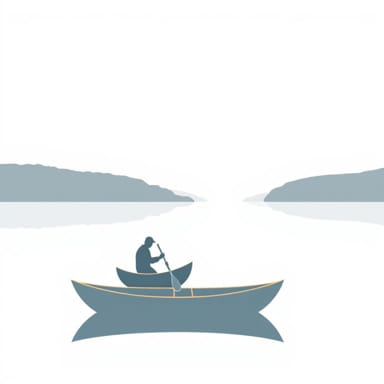
In the world of ancient and traditional watercraft, few boats are as fascinating or as culturally unique as the coracle. Though the term may be unfamiliar to many today, the coracle boat holds a long and storied history across several parts of the world, especially in regions such as Wales, Ireland, Scotland, and parts of India. Known for its distinct round or oval shape, lightweight structure, and woven frame, the coracle is more than just a simple vessel it is a symbol of ingenuity and resourcefulness. Understanding the features, history, and legacy of the coracle offers a glimpse into how humans have interacted with rivers and lakes over centuries.
Origins and Etymology of the Coracle
The word ‘coracle’ is derived from the Welsh wordcorwgl, which refers to a small, round boat. While commonly associated with Wales, coracles have been used in various cultures, often under different names and slight design variations. Historical references to similar boats can be found in ancient texts, including writings by Julius Caesar, who described them during his campaigns in Britain. The concept of a portable, easy-to-maneuver vessel made from natural materials is one that has appeared independently in several parts of the world.
Traditional Construction Techniques
Coracle boats are traditionally crafted using a simple yet effective technique. The basic construction involves creating a framework of interwoven wooden strips, often made from willow or ash, which are lightweight and flexible. This frame is then covered with a waterproof material. In earlier times, this covering was typically made from animal hide, such as horse or cow skin, which was treated to resist water. In modern adaptations, canvas or plastic sheeting coated with bitumen is sometimes used to replicate the waterproof layer.
Key Features of a Coracle:
- Lightweight and portable
- Oval or circular in shape
- Made using local, natural materials
- Operated using a single paddle
- Designed for calm inland waters
The lightweight nature of the coracle means that it can often be carried on the back of a single person, an attribute that made it incredibly practical for fishing communities who needed to move frequently along rivers.
Regional Variations and Global Presence
While the coracle is most commonly associated with Wales and the British Isles, similar boats have existed in other parts of the world. In India, for instance, the coracle is still widely used in the southern states of Karnataka, Tamil Nadu, and Andhra Pradesh. These Indian coracles, known locally as ‘parisal,’ are often larger and used to ferry people across rivers. In Vietnam and Cambodia, a similar round boat known as a ‘thung chai’ is used by coastal communities for fishing and transport.
Despite regional differences, the core design philosophy remains consistent: a simple, circular boat that can be made quickly and used effectively in shallow or calm waters. These boats have proven their usefulness across various cultures due to their low cost, efficiency, and adaptability to local materials and needs.
The Role of Coracles in Local Economies and Culture
Historically, coracles were vital to the livelihood of riverine communities. In Wales, for example, coracle fishing was a recognized profession. Fishermen would use these boats to catch salmon and sea trout in rivers like the Teifi and the Tywi. The coracle allowed fishermen to glide silently across the water, casting and retrieving nets without disturbing the fish.
Today, while industrial fishing and modern boats have reduced the reliance on coracles, they still play a role in tourism and cultural preservation. Visitors to parts of Wales or India can often take a ride in a coracle, guided by local fishermen who explain the history and technique behind the vessel. These experiences not only support local economies but also keep traditional skills and knowledge alive.
Operating a Coracle
Rowing a coracle is a skill in itself. Unlike traditional boats that use oars on both sides, a coracle is typically maneuvered using a single paddle, wielded in a figure-eight motion at the front of the boat. This unique rowing style allows for precise control and minimal disruption to the water surface an important feature for stealthy fishing.
However, coracles are not well-suited for rough waters. Their flat-bottomed design makes them ideal for calm rivers and lakes, but less stable in fast-moving or open waters. This limitation means that their use is often restricted to specific environments where they perform best.
Symbolism and Heritage
For many communities, the coracle is not just a tool it is a symbol of cultural identity. In Wales, the coracle is often seen as a representation of the country’s resilience and connection to nature. Museums, festivals, and local heritage groups work to preserve the craft of coracle-making, teaching new generations how to build and use these traditional boats.
In India, the coracle continues to be a symbol of rural life and river culture. Often painted with bright colors or adorned with religious symbols, these boats reflect the artistic and spiritual aspects of the communities that use them.
Modern Relevance and Conservation
Although their practical use has declined in many regions, coracles remain relevant in today’s world through cultural tourism, historical reenactments, and environmental education. Conservation groups and historical societies are now working to document and preserve coracle-building techniques. Workshops and demonstrations are held at museums and festivals to keep the tradition alive.
Moreover, as the world grapples with environmental concerns and the need for sustainable living, the coracle serves as a powerful example of how traditional knowledge and natural materials can provide solutions that are both practical and eco-friendly.
The story of the coracle boat is one of resilience, tradition, and adaptability. From the rivers of Wales to the lakes of southern India, coracles have served as vital tools for fishing, transport, and community life for centuries. Their unique design and cultural significance continue to capture the imagination of people around the world. As interest in traditional crafts and sustainable practices grows, the coracle remains a poignant reminder of humanity’s deep and resourceful relationship with water.