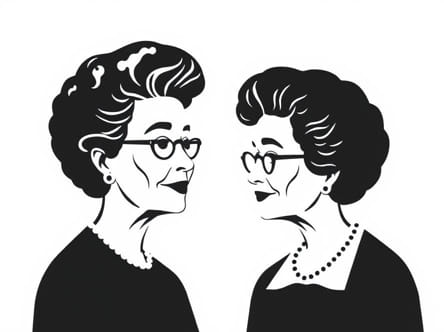
In the struggle for civil rights and gender equality in the United States, few figures have had as profound an impact as Pauli Murray and Betty Friedan. Both women emerged as transformative leaders during the twentieth century, though their approaches, backgrounds, and philosophies differed in many ways. Together, they helped shape the trajectory of American social movements, laying the foundation for feminism, racial justice, and broader human rights. Their unique contributions and occasional tensions reflect the complexity and richness of activism in modern history. Understanding their lives not only deepens our knowledge of the civil rights and women’s movements but also illustrates the ways in which race, gender, and class intersected in the long journey toward equality.
Pauli Murray: Trailblazer in Law, Race, and Gender Equality
Early Life and Education
Born in 1910 in Baltimore, Maryland, and raised in Durham, North Carolina, Pauli Murray was an African American who defied categorization. She identified early on with the struggle against racial segregation, often challenging discriminatory laws through legal arguments and protest. Murray pursued higher education against all odds, eventually graduating from Howard University Law School at the top of her class. She later earned a master’s degree from the University of California, Berkeley, and a doctorate from Yale Law School becoming the first African American to earn such a degree at Yale.
Legal Contributions and Civil Rights Work
Murray’s influence on American law cannot be overstated. Her legal writings, particularly the 1950 bookStates’ Laws on Race and Color, were used by Thurgood Marshall and the NAACP in the landmarkBrown v. Board of Educationcase. She was among the first to argue that the 14th Amendment’s Equal Protection Clause applied not only to race but also to gender discrimination. Her theories prefigured later legal strategies in both the civil rights and women’s movements.
Gender Identity and Faith
Though she did not have the vocabulary during her lifetime to fully express her gender identity, Pauli Murray often struggled with feelings of being ‘in between’ traditional categories. Later in life, she became the first Black woman ordained as an Episcopal priest, combining faith and activism in a unique way. Murray’s writings and personal reflections demonstrate a nuanced understanding of identity, making her an icon for both civil rights and LGBTQ+ history.
Betty Friedan: Voice of the Feminine Mystique
The Feminine Mystique and Second-Wave Feminism
Born in 1921 in Peoria, Illinois, Betty Friedan became one of the most recognized voices of second-wave feminism. Her 1963 book,The Feminine Mystique, challenged the widespread belief that women found complete fulfillment as housewives and mothers. Friedan called this limited role the problem that has no name, and her words sparked widespread debate and mobilization. The book sold millions of copies and is often credited with launching the second wave of the feminist movement in America.
Founding the National Organization for Women (NOW)
In 1966, Friedan helped establish the National Organization for Women (NOW), serving as its first president. NOW advocated for equal rights in employment, education, and politics, using litigation and public campaigns to fight gender discrimination. Under Friedan’s leadership, NOW pushed for enforcement of Title VII of the Civil Rights Act and the passage of the Equal Rights Amendment (ERA).
Advocacy and Later Years
Though Friedan remained active in feminist circles, her later work focused more on issues of aging, family, and the complexities of women’s roles in society. Her 1981 bookThe Second Stageargued for a more inclusive and less confrontational feminism that embraced both family and career. While some saw this as a retreat, others viewed it as an evolution of her earlier ideas.
Points of Intersection and Tension
Shared Goals but Different Lenses
Both Pauli Murray and Betty Friedan were deeply invested in the fight for gender equality, but they viewed the movement through different lenses. Murray emphasized the intersectionality of race and gender long before the term was popularized. She believed the women’s movement needed to address the specific struggles of Black women, who were marginalized both within feminist spaces and the broader civil rights movement. Friedan, on the other hand, often focused on the challenges of white, middle-class women and was criticized for sidelining issues faced by women of color and working-class women.
Feminist Strategy and Inclusion
While Friedan was a powerful strategist and communicator, her advocacy sometimes lacked the inclusivity that Murray championed. Murray pushed for a broader coalition that embraced racial, economic, and gender justice. Her vision of equality was deeply connected to her own identity and experiences as a Black woman and legal scholar. This difference in approach created some ideological tension but also highlighted the need for a more expansive feminist movement.
Legacy and Lasting Impact
Pauli Murray’s Enduring Influence
Murray’s contributions to civil rights law, her early articulation of gender equality as a legal issue, and her deep reflections on identity have earned her posthumous recognition. She is now acknowledged as one of the founding figures of both the civil rights and feminist movements. Her work inspired future legal advocates such as Ruth Bader Ginsburg, who cited Murray’s arguments in key Supreme Court cases. In recent years, Pauli Murray has been the subject of renewed attention, including documentaries and academic studies that explore her multifaceted legacy.
Betty Friedan’s Feminist Awakening
Friedan’s legacy as a feminist thinker remains significant. Her writing captured the discontent of millions of American women in the postwar era, and her organizing efforts institutionalized the feminist movement in new and lasting ways. Although her work has been critiqued for its narrow focus, it laid the groundwork for broader feminist dialogues in the decades that followed. Friedan’s courage in challenging the status quo helped transform public discourse about women’s roles in society.
A Shared Struggle with Unique Voices
Pauli Murray and Betty Friedan were two of the most influential figures in the history of American social reform. While they differed in their approaches and personal experiences, both dedicated their lives to challenging inequality and reshaping society. Murray brought legal precision and a deep understanding of intersectionality to the fight for justice, while Friedan gave voice to the silent frustrations of housewives across the nation. Together, they expanded the possibilities for activism and helped pave the way for future generations of women, civil rights advocates, and human rights defenders. Their legacies remind us that real progress often emerges from a chorus of diverse voices, each contributing uniquely to the larger goal of equality.