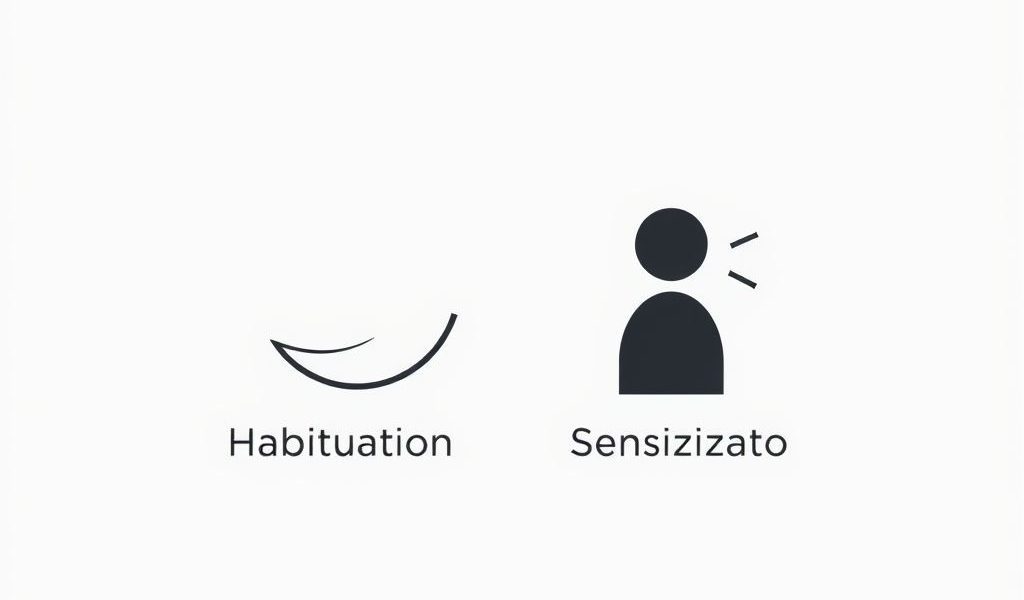
In the realm of behavioral psychology and neuroscience, understanding how organisms adapt to their environment is crucial. One foundational concept is non-associative learning, a form of learning that does not require the organism to form associations between different stimuli. Instead, it involves a change in the strength of a response to a single type of stimulus. Two primary types of non-associative learning are habituation and sensitization. These processes occur across a wide range of species and play a fundamental role in shaping how individuals perceive and react to the world around them. By exploring these mechanisms in depth, we can better understand how behavior evolves and adapts over time.
What Is Non-Associative Learning?
Non-associative learning refers to changes in behavioral response after repeated exposure to a single stimulus. Unlike associative learning, where an individual learns the relationship between two stimuli (such as in classical conditioning), non-associative learning focuses on the effect of one repeated stimulus.
There are two core types of non-associative learning:
- Habituation: A decrease in response after repeated exposure to a benign stimulus.
- Sensitization: An increase in response after exposure to a strong or noxious stimulus.
Both types serve critical functions in survival and adaptation, helping organisms allocate attention and energy efficiently in a dynamic environment.
Habituation: Learning to Ignore
Definition and Process
Habituation is the process through which an organism reduces its response to a repeated, harmless stimulus. It allows individuals to ignore irrelevant or non-threatening inputs in their surroundings. For example, city dwellers often become habituated to the constant noise of traffic or construction and no longer notice it.
Neural Mechanisms
On a neurological level, habituation involves a decrease in synaptic transmission within the sensory pathways. Over time, neurons become less responsive, and the organism stops reacting to the stimulus. This process is particularly evident in simpler nervous systems, such as those of the sea slug Aplysia, where fewer synapses make it easier to track neural changes.
Examples in Daily Life
- Ignoring the ticking of a clock in a quiet room.
- No longer reacting to the sound of a refrigerator motor.
- Getting used to a strong perfume or cologne worn by someone nearby.
Habituation is vital for efficiency, allowing the brain to focus on new, potentially important stimuli rather than wasting resources on familiar, harmless inputs.
Sensitization: Heightened Awareness
Definition and Process
Sensitization is the opposite of habituation. It refers to an increased response to a stimulus following a particularly strong or irritating exposure. This form of learning prepares the organism to respond quickly to threats or intense environmental changes. For instance, after receiving an electric shock, a person may become overly alert to small movements or sounds.
Neural Mechanisms
In sensitization, neural pathways become more active rather than less. This usually involves a cascade of biochemical events that enhance neurotransmitter release, leading to a stronger response. In Aplysia, for example, a tail shock can lead to heightened withdrawal reflexes even in response to light touches.
Examples in Real Life
- After a car accident, a person may feel a rush of fear at the sound of screeching tires.
- After being stung by a bee, an individual may flinch at the sight of any flying insect.
- Chronic pain can lead to a sensitized nervous system that reacts strongly to mild touch.
Sensitization serves as a protective mechanism, ensuring that organisms remain alert in the face of potential danger.
Comparison Between Habituation and Sensitization
Key Differences
Though both are forms of non-associative learning, habituation and sensitization differ significantly in terms of outcome and purpose:
- Response Direction: Habituation decreases response; sensitization increases response.
- Stimulus Type: Habituation usually occurs with weak or neutral stimuli; sensitization happens after strong or harmful stimuli.
- Adaptation Goal: Habituation conserves energy; sensitization enhances survival in threatening contexts.
Interaction of Both Processes
Interestingly, these two processes can occur together or sequentially depending on the context. An individual may initially become sensitized to a repeated noise but eventually habituate to it if it proves non-threatening over time.
Applications in Psychology and Neuroscience
Clinical Relevance
Understanding habituation and sensitization has critical implications in therapy and medicine. For example, individuals with anxiety disorders may experience heightened sensitization to certain cues, making them overly reactive. Conversely, exposure therapy works by facilitating habituation to fear-inducing stimuli, reducing emotional responses over time.
Educational Settings
In learning environments, teachers may use habituation strategies to help students focus. Repetition of non-disruptive environmental cues (like background music) can help students tune out distractions and concentrate on tasks.
Neuroplasticity and Research
Research into non-associative learning informs our understanding of neuroplasticity the brain’s ability to change and adapt. Studying how habituation and sensitization operate helps scientists investigate memory formation, synaptic efficiency, and even neurodegenerative conditions.
Non-Associative Learning in Animals and Humans
Cross-Species Observations
Non-associative learning is observed in a variety of species, from simple invertebrates to complex mammals. Insects, rodents, birds, and primates all exhibit forms of habituation and sensitization. These behaviors are crucial for ecological survival, allowing animals to adjust to changing environments without forming complex associations.
Human Behavior Examples
Humans rely heavily on non-associative learning in daily life. Whether it’s becoming desensitized to background noise or becoming more cautious after a painful experience, habituation and sensitization are part of our basic cognitive toolkit. These learning processes are especially active in infancy, where babies gradually habituate to recurring stimuli and become sensitive to novel ones.
Non-associative learning through habituation and sensitization is a foundational concept in both psychology and neuroscience. These processes allow organisms to efficiently adapt their behavior to their environment, either by tuning out unimportant stimuli or ramping up responses to potential threats. Their presence across many species and contexts demonstrates their evolutionary importance. As researchers continue to explore these phenomena, they reveal deeper insights into how we learn, respond, and evolve in an ever-changing world.