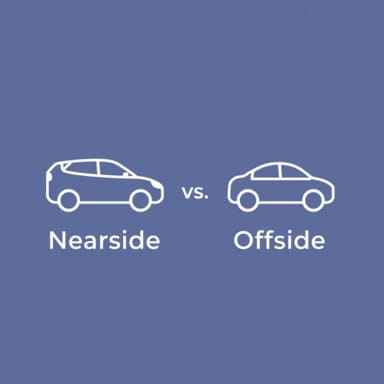
In the world of automotive maintenance and mechanics, terms like nearside to nearside and offside to offside often arise, especially when referring to the layout of a vehicle’s components or the method of replacing parts. These phrases can confuse people who are unfamiliar with regional vehicle terminology, especially in countries where right-hand and left-hand drive configurations differ. Understanding the distinction between nearside and offside and what it means when something is referred to as nearside to nearside versus offside to offside is essential for anyone working with or owning a vehicle, especially in nations that follow British automotive terminology. This topic explores the meaning, relevance, and application of these terms in practical automotive contexts.
Understanding Nearside and Offside
Definitions Based on Driving Orientation
The terms nearside and offside are commonly used in the United Kingdom and other Commonwealth countries to describe the sides of a vehicle:
- Nearside (NS): This refers to the side of the vehicle closest to the curb or sidewalk when driving. For right-hand drive vehicles (typical in the UK), this is the left side.
- Offside (OS): This is the side of the vehicle furthest from the curb essentially the driver’s side. For right-hand drive cars, this is the right side.
In countries with left-hand drive vehicles, the positions are flipped, but the terminology often remains rooted in the context of right-hand drive. This is why it’s important to understand local standards before interpreting these terms.
Why These Terms Matter
These directional designations are crucial in diagnosing problems, ordering the correct parts, and performing symmetrical replacements. Mechanics use them to ensure consistency when servicing or replacing components like brake hoses, suspension arms, or headlamps.
Nearside to Nearside vs Offside to Offside
Component Replacement in Pairs
Nearside to nearside and offside to offside are expressions that typically come up when replacing automotive parts in pairs. Rather than replacing a component only on one side of the vehicle, technicians often replace the same part on both the nearside wheels or both offside wheels. This practice ensures uniformity, balance, and safety.
For instance, if a front nearside suspension spring is worn or broken, replacing only that spring may create an imbalance. Mechanics will then recommend replacing both the front nearside and rear nearside springs (nearside to nearside) or both front springs (front nearside and front offside), depending on the scenario and component involved.
Comparison in Symmetry
The contrast between nearside-to-nearside and offside-to-offside replacements often comes down to symmetry and function:
- Nearside to Nearside: This approach may be used when replacing components that work independently on the curb-facing side, such as door locks or step boards.
- Offside to Offside: Similarly, this method applies to elements needing consistent performance on the driver-facing side, such as wing mirrors or wiring harnesses.
However, in most safety-critical applications like suspension, brakes, and steering it’s more common to replace components left-to-right rather than same-side pairs.
When and Why to Replace Same-Side Parts
Same-Side Pairing Examples
There are a few niche cases where replacing components nearside-to-nearside or offside-to-offside is recommended or necessary:
- Lighting Assemblies: Some vehicles have unique light fittings or sensors only on one side, making it more practical to replace or upgrade both fixtures on the same side.
- Side Skirts or Body Trims: Aesthetic parts may be matched side-to-side for design continuity.
- Brake Hoses or Pipes: In vehicles with longer hoses on one side (like nearside rear), mechanics may recommend replacing the equivalent on the same side to ensure equal age and wear.
Mechanical Balance Considerations
Even though nearside-to-nearside replacement is rare in mechanical or safety-critical systems, it can be justified if wear patterns indicate consistent usage or degradation on one side due to environmental exposure (such as more dirt and water splash on the nearside).
Importance of Cross-Side Symmetry
Most Common Practice: Left-to-Right Matching
In most automotive systems, it’s more common to replace components left-to-right (nearside and offside together) rather than nearside-to-nearside. Examples include:
- Shock Absorbers: Replacing only one side can create instability. Therefore, both left and right shocks (front or rear) are usually changed together.
- Brakes: Brake pads, discs, and hoses are typically replaced in axle pairs to prevent uneven braking.
- Tyres: For optimal traction and performance, tyres are replaced in front or rear pairs.
This approach prevents differences in responsiveness, wear rate, and safety.
Potential Confusion in Terminology
Regional Variations in Usage
It’s worth noting that nearside and offside may not be familiar terms in all countries. In the United States and Canada, these terms are rarely used; instead, driver side and passenger side are more common. Misunderstandings can occur if these terms are used without context in global discussions or part orders.
Tips to Avoid Errors
- Always specify the side based on driver orientation if ordering internationally.
- Use terms like ‘left-hand side’ or ‘right-hand side’ with clarification on driving position.
- Include vehicle identification number (VIN) when ordering side-specific parts.
Best Practices for Replacements
General Rules of Thumb
When working with side-specific vehicle components, here are a few best practices:
- If one side fails due to wear or corrosion, assume the other side is not far behind.
- When in doubt, replace parts symmetrically across the axle or the entire side.
- Always inspect opposite-side components during repair even if not replacing them immediately.
- Use manufacturer guidance for recommended part pairing.
Communicating Clearly with Mechanics
If you’re discussing repairs or replacements with a technician, use both technical terms and common references. For example: Please check the nearside (left, passenger side) rear brake hose. Clear communication ensures you get the correct work done without misinterpretation.
The distinction between nearside to nearside and offside to offside replacements is more than just terminology it reflects decisions in vehicle maintenance that affect safety, performance, and longevity. While symmetrical replacements across both sides of the vehicle are more common in mechanical systems, there are specific use cases where same-side replacements make sense. Understanding these terms, especially in the context of regional driving standards, helps both professionals and car owners make informed decisions. Whether you are ordering parts, diagnosing a problem, or simply learning more about your car, grasping the differences between nearside and offside and when to replace parts accordingly can make all the difference in effective vehicle care.