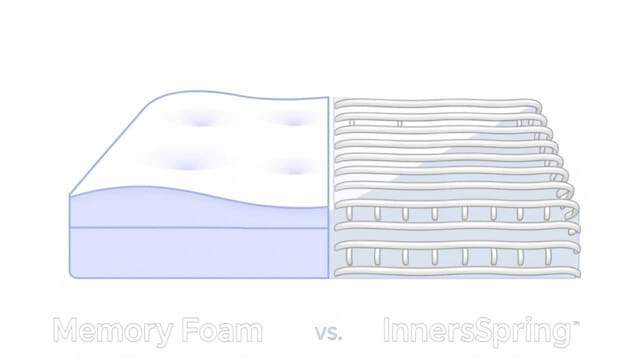
Choosing the right mattress can significantly impact your sleep quality and overall health. When it comes to mattress types, two of the most popular options are memory foam and innerspring. Each offers distinct benefits and drawbacks, making the decision more than just a matter of comfort. Understanding how memory foam vs innerspring mattresses compare can help you make a more informed purchase. Whether you prioritize support, breathability, or motion isolation, knowing the differences can help you select the ideal mattress for your specific needs.
Understanding Memory Foam Mattresses
What Is Memory Foam?
Memory foam is a type of polyurethane foam originally developed by NASA to absorb shock and improve seat cushioning. Today, it’s commonly used in mattresses because of its pressure-relieving properties. Memory foam contours to the shape of your body, evenly distributing weight and reducing pressure points on areas like shoulders, hips, and lower back.
Benefits of Memory Foam
- Pressure relief: Excellent for people with joint pain or arthritis
- Motion isolation: Ideal for couples as it limits motion transfer
- Body contouring: Adapts to body shape, providing personalized support
- Allergy-friendly: Typically resistant to dust mites and allergens
Downsides of Memory Foam
- Heat retention: Can sleep hot unless infused with cooling gels
- Initial odor: May emit an off-gassing smell when new
- Less bounce: Not ideal for those who prefer a responsive surface
Memory foam mattresses come in various firmness levels and may feature multiple foam layers for added comfort and support. Some advanced models also incorporate gel or copper infusions for cooling effects.
Understanding Innerspring Mattresses
What Is an Innerspring Mattress?
Innerspring mattresses are constructed with a core of steel coils, which serve as the main support system. These beds are usually topped with a comfort layer made of foam, fiber, or even a thin layer of memory foam. Innerspring designs have been around for decades and remain a popular choice for those who prefer traditional support and a bouncier feel.
Benefits of Innerspring Mattresses
- Good airflow: Coil construction promotes better breathability
- Responsive support: Provides a bouncier, more traditional feel
- Budget-friendly: Typically more affordable than memory foam options
- Widespread availability: Easy to find in stores and online
Downsides of Innerspring
- Less motion isolation: Not ideal for light sleepers or couples
- Shorter lifespan: Coils can wear down over time and lose support
- Potential noise: Older models may start to squeak or creak
Innerspring mattresses can vary in quality depending on the type and number of coils used. Pocketed coils offer better motion isolation than traditional continuous coil designs, while some high-end models combine innerspring cores with memory foam or latex layers for hybrid comfort.
Comparing Memory Foam vs Innerspring
When deciding between memory foam and innerspring, several key factors should be considered. These factors affect not only comfort but also longevity and suitability for your sleeping habits.
Comfort and Support
Memory foam excels in contouring support and pressure relief. It adapts to your body, which can help relieve pain and align your spine. Innerspring, on the other hand, offers firmer support and is more responsive, making it easier to move around or get out of bed.
Motion Isolation
Memory foam mattresses absorb movement exceptionally well, making them ideal for couples. If one person tosses and turns during the night, the other is less likely to be disturbed. In contrast, innerspring mattresses often transfer more motion across the bed.
Temperature Regulation
Innerspring mattresses tend to sleep cooler because the open coil structure allows air to circulate freely. Memory foam, unless specially designed with cooling technology, tends to trap heat. Hot sleepers may prefer innerspring or hybrid models that offer better airflow.
Durability
High-quality memory foam mattresses usually last longer than traditional innerspring beds. Foam resists sagging and does not develop the same wear patterns that coils might over time. However, cheap memory foam can deteriorate quickly. Likewise, low-quality innerspring beds may lose their structure faster than expected.
Edge Support
Innerspring mattresses generally offer better edge support due to the reinforced perimeter of the coil system. Memory foam can compress more around the edges, which may be a drawback if you often sit or sleep near the edge of the bed.
Best Fit for Different Types of Sleepers
Depending on your sleeping style, one mattress type may be better suited to your needs than the other.
Side Sleepers
Memory foam is often the better choice for side sleepers. It cushions pressure points at the hips and shoulders while promoting spinal alignment. The contouring ability of foam makes it ideal for this sleep position.
Back Sleepers
Both memory foam and innerspring can work well for back sleepers, depending on the firmness level. Memory foam offers pressure relief, while innerspring provides solid lumbar support.
Stomach Sleepers
Stomach sleepers usually require a firmer surface to keep the spine aligned. Innerspring mattresses may offer the firmness needed to prevent the lower back from sinking too deeply, which can happen with softer foam beds.
Combination Sleepers
People who switch positions throughout the night may prefer innerspring beds for their responsiveness. It’s easier to shift positions on a bouncier surface compared to memory foam, which can feel more enveloping.
Cost and Value
Innerspring mattresses are often more affordable upfront than memory foam options. However, memory foam may offer better long-term value due to its durability and performance. Budget-conscious buyers might start with an innerspring mattress, while those willing to invest more may opt for high-quality memory foam for greater comfort and lifespan.
Hybrid Mattresses: A Compromise Solution
For those who can’t decide between memory foam vs innerspring, a hybrid mattress might offer the best of both worlds. Hybrid mattresses typically combine a pocketed coil support system with layers of memory foam or latex on top. This creates a balance of contouring comfort and responsive support, along with better airflow and motion control.
When comparing memory foam vs innerspring mattresses, the right choice depends on personal preferences, sleeping style, and budget. Memory foam provides excellent pressure relief and motion isolation, making it perfect for those seeking comfort and support. Innerspring mattresses offer better airflow, responsiveness, and are often more affordable. Understanding the strengths and limitations of each mattress type can help you make a confident and informed decision. Whether you prioritize cool sleeping, reduced motion, or enhanced support, selecting the right mattress will greatly improve your sleep experience and overall well-being.