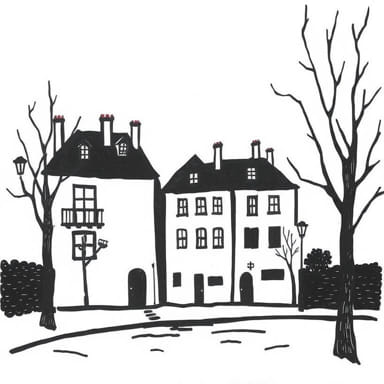
The White Period of Maurice Utrillo stands as one of the most defining chapters in the life and artistic journey of this French painter, known for his evocative depictions of urban Parisian scenes. This phase, which unfolded during the early decades of the 20th century, was marked by a shift in style, mood, and technique, distinguished by pale, whitewashed tones and a striking portrayal of Montmartre’s architecture. Utrillo’s White Period reveals not only his growth as an artist but also reflects the deep emotional and psychological undertones that shaped his creative output. These works remain highly regarded by collectors, historians, and art enthusiasts alike for their haunting stillness and structural precision.
Who Was Maurice Utrillo?
Early Life and Background
Maurice Utrillo was born in 1883 in the Montmartre district of Paris, a bohemian neighborhood rich with artistic energy. He was the son of the artist Suzanne Valadon, who later became one of the first women admitted to the Société Nationale des Beaux-Arts. Utrillo never knew his biological father, and he carried his maternal surname for most of his life. Raised amidst painters, poets, and musicians, Utrillo was exposed to the world of creativity from an early age, though he struggled with personal demons, particularly alcoholism and mental health issues.
Turning to Painting as Therapy
In his early twenties, Utrillo began painting as a form of therapy under the guidance of his mother. She recognized his talent and encouraged him to pursue art more seriously. What began as a means to manage his emotional state gradually evolved into a lifelong passion. Despite his lack of formal academic training, Utrillo’s natural ability to depict the Parisian environment soon attracted attention, particularly during the years of his White Period.
Understanding the White Period
Timeframe and Characteristics
The White Period of Maurice Utrillo spanned roughly from 1909 to 1914. During these years, his works became instantly recognizable for their subdued palette, dominated by shades of white, gray, beige, and soft pastels. These colors were often achieved using plaster mixed with paint, a technique that gave his canvases a unique texture and reflective quality. His subject matter remained consistent cityscapes, churches, streets, and walls but the mood of his paintings took on a haunting, almost melancholic stillness.
Montmartre and Urban Solitude
Montmartre, where Utrillo lived for much of his life, became the primary focus of his art. However, his renderings of the neighborhood during the White Period are stripped of people and activity. Instead, they feature empty streets, looming buildings, and stark façades. This choice likely reflects Utrillo’s own isolation and inner turmoil during these years. The viewer is invited not only to see Montmartre but to feel its emotional weight.
Technical Aspects of the White Period
Use of Plaster and Texture
One of the most distinctive techniques of Maurice Utrillo’s White Period was his use of plaster, which he mixed with his paint to create a chalky, matte surface. This gave his paintings a fresco-like appearance that set them apart from more traditional oil paintings of the time. The heavy texture also emphasized the solidity of architectural forms, making buildings feel more monumental and permanent.
Composition and Perspective
Utrillo’s compositions during this period often followed a straightforward, almost naive approach to perspective. He rarely used complex vanishing points, instead favoring direct, symmetrical views of buildings and streets. This simplicity adds to the charm and accessibility of his work, creating a dreamlike sense of space where geometry and light coexist in harmony. The limited human presence in these works enhances the quiet, reflective atmosphere.
Notable Works from the White Period
Some of the most iconic paintings produced during Maurice Utrillo’s White Period include:
- Rue des Abbesses A quiet street scene with light-drenched buildings and muted tones.
- Church of Saint-Pierre de Montmartre One of his most recognized works featuring religious architecture with an ethereal glow.
- Place du Tertre A representation of Montmartre’s famous square, portrayed in a state of stillness and solitude.
- Rue Norvins A beautifully restrained work capturing the essence of a Montmartre street in winter-like clarity.
These paintings not only exemplify Utrillo’s style but also serve as historical documents that preserve the quiet essence of early 20th-century Paris.
Influence and Reception
Recognition in the Art World
Although Utrillo’s White Period was not fully appreciated during his lifetime, it eventually became one of the most celebrated phases of his career. Collectors and critics praised the emotional depth and architectural precision of these works. His paintings were exhibited in prestigious galleries and salons across Europe, contributing to his rise as a significant modernist artist.
Legacy in Urban Landscape Art
Utrillo’s influence can be seen in later generations of artists who depicted urban environments. His blend of realism and emotional abstraction laid the groundwork for cityscape art that emphasizes mood as much as accuracy. Even today, his White Period paintings are frequently referenced by artists and scholars exploring the intersection of personal narrative and architectural space.
Personal Struggles and Artistic Persistence
Ongoing Mental Health Issues
Despite his artistic success, Maurice Utrillo continued to struggle with mental health throughout his life. He was institutionalized multiple times and relied on the care of his mother and close friends to manage his condition. Yet, these challenges did not stop him from painting. In fact, many believe that his psychological state directly contributed to the emotional resonance of his White Period works.
Art as a Lifeline
For Utrillo, painting was more than a profession it was a form of survival. The process of creating quiet, reflective scenes offered him a sense of structure and peace. This therapeutic aspect is palpable in his White Period paintings, which often appear meditative and introspective. His dedication to art, even in the face of personal adversity, remains an inspiration.
The White Period’s End and Artistic Evolution
Shifting Style and Color Palette
After 1914, Maurice Utrillo’s style began to shift. He started incorporating more color and detail into his works, entering what some call his ‘Color Period.’ Although these later paintings also garnered acclaim, many critics and collectors continue to view the White Period as his most powerful and emotionally resonant phase.
Preserving the Memory of a Vanishing Paris
Through his White Period works, Utrillo preserved a version of Paris that was already beginning to fade. As modernization transformed the city, his paintings captured the quiet dignity of its older neighborhoods. Today, they serve as both artistic masterpieces and cultural artifacts that remind us of a simpler, quieter time.
Maurice Utrillo’s White Period is a profound chapter in the story of modern art, reflecting the delicate balance between emotional depth and structural precision. Through muted tones, textured surfaces, and solitary urban landscapes, Utrillo offered a deeply personal view of Montmartre and Paris at large. These works continue to captivate audiences with their haunting stillness and timeless beauty, marking Utrillo not only as a chronicler of a bygone era but as a resilient artist whose vision transcended personal struggle. His White Period remains a testament to the healing power of art and its ability to communicate the unspoken corners of the human experience.