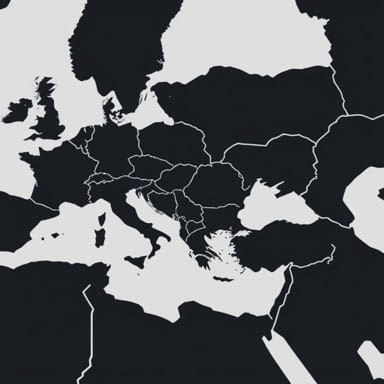
During the reign of Emperor Justinian I in the 6th century, the Byzantine Empire reached one of its greatest territorial extents. A map of the Byzantine Empire under Justinian reveals an ambitious project of reconquest and consolidation, aiming to restore the glory of the former Western Roman Empire. From the eastern Mediterranean to parts of Western Europe, North Africa, and Italy, the empire’s boundaries dramatically expanded. This vast realm not only symbolized military triumph but also represented the emperor’s vision of a united Christian Roman world. Understanding the scope of Justinian’s empire helps contextualize his military campaigns, administrative reforms, and cultural legacy within the broader history of the Eastern Roman Empire.
Geographical Extent of the Byzantine Empire Under Justinian
At its height under Justinian I (ruled 527565 CE), the Byzantine Empire covered a significant portion of the old Roman Empire’s territory. The empire’s heart remained in the Eastern Mediterranean, with its capital in Constantinople. However, Justinian’s generals launched campaigns that expanded its reach far beyond.
- In the east: The empire included the Levant, Asia Minor (modern-day Turkey), and Egypt, which were already part of the Byzantine core.
- In the west: Through military campaigns, Justinian reclaimed parts of North Africa, Italy, and southern Spain, temporarily bringing them back under imperial rule.
- In the Balkans: The empire held territories in the southeastern parts of Europe, although these regions were often threatened by Slavic and other invasions.
Maps of this era often show the empire stretching from the Atlantic shores of the Iberian Peninsula to the borders of Persia, highlighting both the magnitude and fragility of Justinian’s gains.
Key Military Campaigns That Shaped the Map
Much of the change in the Byzantine Empire’s borders during Justinian’s reign resulted from the efforts of his capable general, Belisarius, and others. These military campaigns played a crucial role in shaping the empire’s map during the mid-6th century.
Reconquest of North Africa
In 533 CE, Belisarius launched a successful campaign against the Vandal Kingdom in North Africa. Within a year, the Byzantines had recaptured the former Roman provinces in the region, including modern-day Tunisia and parts of Algeria. The reconquest of Carthage was especially symbolic, as it had been a major center of the Western Roman Empire.
Gothic War in Italy
Perhaps the most challenging campaign was in Italy, where the Byzantine forces fought the Ostrogoths in a prolonged conflict known as the Gothic War (535554 CE). Though ultimately successful, the war devastated the Italian peninsula. Cities like Rome changed hands multiple times, and the long struggle left the region weakened and vulnerable to later invasions.
Conquest of Southern Spain
By the late 550s, Byzantine forces had made gains in southern Hispania (modern-day Spain), establishing a foothold in the region. Though limited in scope, this conquest symbolized the ambition to reclaim as much of the Roman legacy as possible. The territory remained under Byzantine control for several decades.
Strategic Importance of Justinian’s Conquests
Justinian’s territorial expansions were not merely military triumphs. They were deeply rooted in ideology and strategy. The emperor saw himself as the rightful ruler of all Roman lands, and his campaigns were part of a broader effort to unify Christendom under imperial leadership.
- Economic incentives: North Africa and Egypt were rich in grain and trade, making them economically vital regions for the empire.
- Religious unity: Justinian promoted Chalcedonian Christianity and saw the expansion as a way to enforce religious orthodoxy across former Roman lands.
- Political symbolism: Holding cities like Rome and Carthage helped legitimize Justinian’s rule as the successor of ancient Roman emperors.
These motivations help explain why Justinian devoted immense resources to these campaigns, even when the cost was high and the results difficult to maintain.
Limitations and Challenges of Expansion
Despite the success of his campaigns, the map of the Byzantine Empire under Justinian reflected overextension. Maintaining control over such a vast area presented logistical and financial challenges, and many of the newly acquired territories faced constant threats from external forces.
- Plague of Justinian: In the 540s, a devastating pandemic reduced the population, weakening the military and economy.
- Threats from Persia: On the eastern frontier, the Sassanian Empire remained a powerful adversary, demanding constant attention and resources.
- Internal instability: High taxes, religious tensions, and administrative strain made it difficult to govern distant provinces effectively.
Although maps from Justinian’s era may appear impressive, they also hint at the fragility of the imperial project. Many of the reclaimed lands were lost within decades after his death.
Legacy Reflected in Historical Maps
Maps depicting the Byzantine Empire under Justinian often emphasize the height of imperial ambition. They illustrate how an emperor of the Eastern Roman Empire attempted to reconstruct the western half, not only through war but also through law, architecture, and religion.
Codification of Roman Law
One of Justinian’s greatest achievements, theCorpus Juris Civilisor Justinian Code, helped to unify legal systems across the vast empire. The law code reflected a centralized state authority and served as a foundation for future legal systems in Europe.
Architectural Achievements
The reign of Justinian also saw monumental building projects, including the construction of the Hagia Sophia in Constantinople. These projects reinforced imperial ideology and showcased the power and reach of the Byzantine state.
Religious Influence
Justinian saw himself as both emperor and defender of the faith. His religious policies were often reflected in administrative divisions across the empire. Maps from this time sometimes emphasize ecclesiastical jurisdictions alongside political boundaries.
The map of the Byzantine Empire under Justinian is more than a record of military success; it is a symbol of a ruler’s vision to restore the grandeur of Rome. From the shores of the Atlantic to the deserts of Egypt and the mountains of Armenia, Justinian’s empire stretched far and wide. However, its vastness also revealed its vulnerability. Plagued by disease, overextension, and internal dissent, the empire would soon retract, losing much of what had been gained. Yet the era remains one of the most celebrated periods in Byzantine history, and the territorial map during Justinian’s rule stands as a lasting testament to his ambition, energy, and enduring legacy.