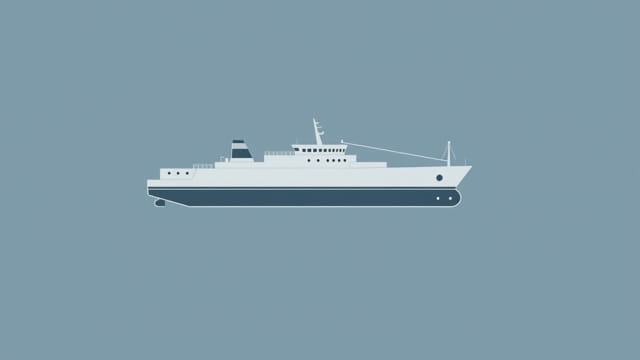
The Great Lakes have long played a critical role in North America’s shipping industry, connecting cities and industries with a vast inland waterway system. Among the many vessels that travel these freshwater seas, none capture the imagination quite like the longest Great Lakes freighter. These massive ships are marvels of engineering, designed to carry huge volumes of cargo such as iron ore, coal, grain, and limestone. Understanding their history, size, design, and operational significance helps us appreciate the magnitude of the shipping industry that continues to power economies on both sides of the US-Canada border.
The Legendary Paul R. Tregurtha
The title of the longest Great Lakes freighter belongs to thePaul R. Tregurtha. Measuring an astounding 1,013.5 feet in length (or 308.9 meters), this massive vessel has held the record since its launch in 1981. Operated by Interlake Steamship Company, the ship is often referred to as the ‘Queen of the Lakes,’ a title traditionally given to the longest active freighter on the Great Lakes.
Originally named the William J. DeLancey, the ship was renamed in 1990 to honor Paul R. Tregurtha, a key executive in the shipping and coal industries. The vessel primarily carries iron ore pellets from mining operations in Minnesota to steel mills in the lower Great Lakes, especially in Indiana and Ohio.
Specifications and Design
The Paul R. Tregurtha is built with a self-unloading system, making it highly efficient for industrial cargo handling. Some of its key specifications include:
- Length: 1,013.5 feet
- Beam (width): 105 feet
- Depth: 56 feet
- Capacity: Up to 68,000 gross tons of cargo
- Power: Twin diesel engines generating over 16,000 horsepower
The freighter’s size is not just for show it enables the transport of massive quantities of raw materials essential to North American manufacturing. The Paul R. Tregurtha can unload at a rate of 10,000 tons per hour, thanks to its onboard conveyor belt system and 250-foot boom.
Operational Route and Significance
The freighter operates primarily between Lake Superior and Lake Erie, navigating through the Soo Locks at Sault Ste. Marie, Michigan. This journey connects mining towns like Duluth and Two Harbors with industrial centers such as Cleveland, Detroit, and Gary.
Because of its enormous size, the Paul R. Tregurtha is restricted to specific routes and can only travel where the channels and locks are deep and wide enough to accommodate it. During the Great Lakes shipping season typically from late March to mid-January the freighter completes dozens of trips, each vital to keeping the region’s industries stocked with materials.
Economic and Industrial Impact
Freighters like the Paul R. Tregurtha are crucial to regional economies. A single trip can carry enough iron ore to produce steel for more than 50,000 automobiles. Without the shipping capacity of such large vessels, industries would have to rely on thousands of trucks or railcars, significantly increasing transportation costs and environmental impact.
In addition to raw materials, these ships support thousands of jobs in ship maintenance, port operations, and shipping logistics. Their efficient transport capabilities also help reduce road congestion and greenhouse gas emissions compared to land-based transport methods.
Technological Upgrades and Maintenance
Keeping a ship of this size operational requires constant maintenance and occasional retrofitting. In recent years, the Paul R. Tregurtha has received several upgrades to improve fuel efficiency and reduce emissions. This includes the installation of exhaust scrubbers and more efficient propulsion systems.
Each winter, the ship undergoes routine maintenance in dry dock, where engineers inspect the hull, repaint surfaces, and upgrade navigational systems. These upgrades ensure the vessel remains compliant with environmental regulations while extending its operational life.
Challenges of Operating the Longest Freighter
Navigating a ship over 1,000 feet long is no easy feat. The captain and crew must be highly skilled, especially when maneuvering through narrow channels, tight docks, or ice-covered waters. Weather is a constant factor on the Great Lakes, with sudden storms and high winds presenting major challenges for navigation and safety.
During the winter months, ice can become thick enough to suspend operations altogether. Icebreakers are sometimes deployed to clear paths for essential shipments, especially in early spring or late fall. Because the Paul R. Tregurtha is such a large vessel, it often requires icebreaker assistance sooner than smaller ships.
Comparison with Other Great Lakes Freighters
While the Paul R. Tregurtha holds the record, other notable freighters come close in size and cargo capacity. These include:
- James R. Barker: 1,004 feet long, also operated by Interlake Steamship Company
- Edwin H. Gott: 1,004 feet long with one of the most powerful engines on the lakes
- American Spirit: 1,004 feet, owned by American Steamship Company
Each of these vessels plays a major role in transporting bulk cargo across the region. However, none have surpassed the Paul R. Tregurtha in overall length, keeping it at the top of the list for decades.
Future of Freighter Design on the Great Lakes
As technology advances and environmental regulations tighten, future freighters may not focus solely on size but rather on efficiency and sustainability. Hybrid propulsion systems, automated navigation, and improved hull designs are already being tested. However, the economic advantage of large-capacity freighters like the Paul R. Tregurtha ensures that mega-ships will continue to operate for years to come.
Legacy of the Paul R. Tregurtha
The Paul R. Tregurtha is more than just the longest freighter on the Great Lakes it’s a symbol of industrial strength, engineering prowess, and economic resilience. For over 40 years, it has faithfully served the region’s critical industries and remains a proud example of North American maritime heritage.
Visitors to ports like Duluth or Detroit often marvel at the sheer scale of the ship as it glides silently into dock. It has become a familiar sight to residents, workers, and shipping enthusiasts alike. As long as bulk materials remain in high demand, the Paul R. Tregurtha and ships like it will continue to dominate the freshwater highways of the Great Lakes.
the legacy of the longest Great Lakes freighter is not merely about record-breaking dimensions. It reflects a larger story of human ingenuity, regional identity, and the unrelenting need to move goods efficiently across great distances. The Paul R. Tregurtha stands as a testament to what modern maritime logistics can achieve and why it matters.