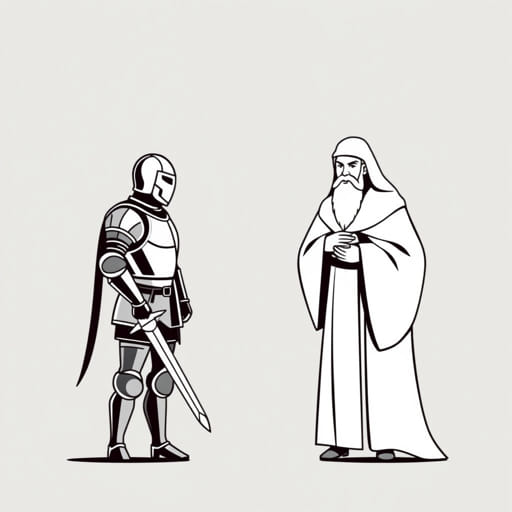
In tales of ancient kingdoms and holy visions, few moments stand out more dramatically than when a knight interrupts a prophet during a divine pronouncement. Such scenes are charged with symbolism, tension, and cultural meaning. A knight trained in loyalty, warfare, and the code of chivalry interfering with a prophet, who serves as the mouthpiece of spiritual insight and destiny, reveals not only a breach of respect but a deeper disdain for divine guidance. This narrative dynamic has appeared in literature, oral tradition, and artistic depictions, capturing the clashing ideals of earthly power versus spiritual truth. But what does this interruption really mean, and why does it show such profound disdain?
The Archetype of the Knight
Knights have long been portrayed as paragons of strength, honor, and martial skill. Whether in Arthurian legends or medieval epics, the knight serves the realm through battle, loyalty to king or queen, and a strict adherence to the chivalric code. However, this code is not infallible. In many stories, knights also embody pride, impulsiveness, and a tendency to act before fully understanding the situation.
The knight interrupting a prophet may be seen as acting from a place of perceived authority or urgency, believing that action must trump prophecy. But in doing so, the knight often reveals a lack of reverence for forces beyond the physical realm namely, the spiritual or divine. This disdain may not always be overt, but it is embedded in the act of refusing to listen.
What the Knight Represents
- Order and strength The knight defends the realm using physical power and obedience to hierarchy.
- Human ambition Often driven by loyalty to leaders or personal pride, the knight acts decisively, even recklessly.
- Impatience with mysticism Some knights see prophets as distractions from practical concerns, believing in swords more than signs.
When a knight interrupts a prophet, it can symbolize the failure of worldly power to grasp the depth of divine wisdom. It is more than just a rude gesture it becomes a spiritual offense.
The Role of the Prophet
In contrast to the knight’s physicality, the prophet represents a connection to the metaphysical. Prophets are seen as vessels of divine truth, interpreters of fate, and voices of gods or higher powers. They are rarely political figures, and often live on the fringes of society. Their role is not to enforce laws or lead armies, but to deliver visions, warnings, or instructions from a higher plane.
Prophets are often misunderstood, ignored, or scorned. Their speech may challenge rulers, predict disasters, or demand uncomfortable changes. In many traditions, the prophet’s message is not welcomed precisely because it runs counter to the desires of those in power.
The Prophet’s Significance
- Messenger of divine will Prophets are believed to speak on behalf of supernatural forces.
- Harbinger of change Their words often signal transformation, upheaval, or justice.
- Symbol of truth over power Prophets do not seek control but truth, no matter the cost.
To interrupt a prophet is not merely to silence a person it is to reject the divine message they carry. This interruption becomes a form of rebellion against a higher authority.
Disdain Through Interruption
Disdain is a deep feeling of contempt or scorn. When a knight interrupts a prophet, the action communicates more than urgency; it conveys dismissal. The knight does not value the prophet’s words or the spiritual foundation they represent. Instead, the knight prioritizes worldly concerns, tactics, and immediate decisions over long-term vision or divine warning.
This dynamic reflects a broader theme in mythology and storytelling: the tension between those who rely on force and those who rely on wisdom. The interruption marks a power struggle between body and soul, kingdom and cosmos, now and eternity.
Common Interpretations
- Pride before the fall The knight’s arrogance in silencing the prophet often precedes a downfall.
- Failure to listen Many tragedies unfold in stories where the prophet’s warning is ignored or mocked.
- Conflict of values The moment captures the divide between action-oriented heroism and introspective foresight.
These interpretations highlight why such scenes are powerful symbols in literature and lore. They show how even the most noble warrior can fall victim to pride and shortsightedness when they dismiss the wisdom of the unseen.
Examples in Myth and Literature
One of the most iconic examples of this dynamic can be seen in medieval literature and Biblical stories. In many legends, a knight or noble figure disregards a seer or prophet, leading to doom:
- In Arthurian tales, Sir Mordred and others often ignore the warnings of Merlin, leading to ruin.
- In the Old Testament, kings like Saul show contempt for prophets like Samuel, with devastating consequences.
- In classical myths, warriors who dismiss oracles like Achilles or Oedipus suffer fates that could have been avoided.
These stories persist across cultures because they reflect an eternal truth: ignoring wisdom in favor of ego leads to disaster. The knight’s interruption becomes a lesson not only in manners but in morality.
Modern Echoes
Even in modern storytelling films, novels, and games the theme endures. Military leaders or political figures often reject the warnings of scientists, mystics, or visionaries. While not called prophets today, these figures serve a similar narrative role, and the pattern of disdain repeats.
Why This Dynamic Still Resonates
In a world where fast action is often rewarded more than deep thought, the knight-prophet conflict continues to feel relevant. The interruption scene forces audiences to ask: Whom do we listen to? Do we value strength over insight? Are we so focused on immediate goals that we fail to consider larger truths?
The story of a knight interrupting a prophet and showing disdain remains compelling because it challenges human nature. It reminds us that knowledge, especially uncomfortable truth, must not be silenced no matter how powerful we believe we are.
Lessons to Take Away
- True strength includes humility to listen.
- Disdain for wisdom often leads to ruin.
- Prophets speak not to flatter, but to forewarn.
Whether told around fires, sung in epics, or played out in screenplays, the tale of the knight and the prophet endures as a warning. It reminds us that might is not always right, and that sometimes, the quiet voice must be heard over the clanging of armor.