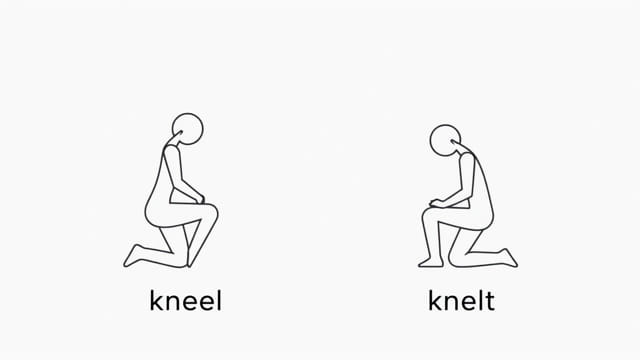
Understanding the difference between ‘kneel’ and ‘knelt’ is essential for both English learners and native speakers who want to use verbs correctly in writing and conversation. These two forms come from the same verb, but they serve different grammatical purposes. Learning when to use each form will help improve the clarity and accuracy of your language. Whether you’re writing a formal essay or telling a story, knowing how to distinguish between verb tenses plays a crucial role. Let’s explore the meanings, functions, and examples of ‘kneel’ and ‘knelt’ in the English language.
Definition and Verb Type
What Does ‘Kneel’ Mean?
‘Kneel’ is a verb that means to go down or rest on one’s knees. People often kneel as a sign of respect, prayer, submission, or during certain physical activities. For instance, someone might kneel to propose marriage, to pray, or to tie their shoes.
- Base form: kneel
- Verb type: Irregular verb (with alternative regular form in some cases)
What Does ‘Knelt’ Mean?
‘Knelt’ is the past tense and past participle form of ‘kneel.’ It refers to the action of kneeling that has already taken place. For example, you could say, ‘She knelt by the bed to pray.’
- Past tense: knelt (also ‘kneeled’ in American English, though less common)
- Verb type: Irregular past form
Grammatical Role and Usage
When to Use ‘Kneel’
Use ‘kneel’ when talking about actions happening in the present or future. It can also appear in the infinitive form (‘to kneel’) or in commands.
Examples:
- ‘Please kneel during the ceremony.’
- ‘I always kneel when I pray.’
- ‘He will kneel before the king tomorrow.’
When to Use ‘Knelt’
Use ‘knelt’ when referring to actions that happened in the past. It is suitable for both simple past tense and perfect tenses (present perfect, past perfect, etc.).
Examples:
- ‘She knelt beside her injured dog.’
- ‘They had knelt in silence for several minutes.’
- ‘We have knelt many times in protest.’
Regular vs. Irregular Past Forms
While ‘knelt’ is the most widely accepted past form of ‘kneel,’ especially in British English, you might also come across the word ‘kneeled,’ particularly in American English. Both are correct, but ‘knelt’ is considered the more traditional and more frequently used form.
For example:
- ‘He knelt before the altar.’ (more common)
- ‘He kneeled before the altar.’ (less common, but still acceptable)
The difference is stylistic and regional. Writers should consider their audience when choosing which form to use.
Verb Conjugation Chart
To better understand how ‘kneel’ and ‘knelt’ function across tenses, look at the table below:
- Base form: kneel
- Third person singular: kneels
- Present participle: kneeling
- Past simple: knelt or kneeled
- Past participle: knelt or kneeled
Common Expressions with ‘Kneel’ and ‘Knelt’
There are several phrases in English that include these verb forms. Here are some of the most common ones:
- ‘Kneel down’ Often used when giving instructions.
- ‘Knelt in prayer’ A common phrase in religious contexts.
- ‘Knelt before someone’ Indicates submission or honor.
Examples in sentences:
- ‘The knight knelt before the queen to be honored.’
- ‘The child was told to kneel down and apologize.’
Confusion and Clarification
Why Do People Confuse ‘Kneel’ and ‘Knelt’?
People often confuse these forms because they are so closely related, and the word ‘kneel’ might seem appropriate in any situation. However, it’s important to identify whether you are talking about a past or present action. Using the wrong tense can lead to unclear communication or grammatical mistakes.
Tips to Avoid Mistakes
- Ask yourself: Is the action happening now or in the past?
- If the action is in the past, use ‘knelt.’
- Practice using both forms in sentences to build familiarity.
Regional and Dialectal Differences
As previously mentioned, the use of ‘kneeled’ instead of ‘knelt’ is more common in American English. British English tends to favor ‘knelt’ almost exclusively. Despite this, both forms are recognized and accepted in most dictionaries and grammar references.
In spoken American English, ‘kneeled’ might be heard more frequently in casual conversations, while ‘knelt’ appears more in literature and formal writing. Learners should feel comfortable using either form but may want to stick to ‘knelt’ for broader international understanding.
Impact on Writing and Speaking
Choosing the correct form of a verb, such as ‘kneel’ vs. ‘knelt,’ helps convey your message clearly and shows a strong command of English grammar. Whether you’re writing a personal letter, composing a story, or giving a speech, verb accuracy contributes to effective communication.
Good Writing Practices
- Always revise your verb tenses during proofreading.
- Read aloud to see if the sentence sounds correct.
- Use grammar tools or dictionaries if unsure about irregular verbs.
In summary, ‘kneel’ and ‘knelt’ are two forms of the same verb but are used in different tenses. ‘Kneel’ refers to present or future actions, while ‘knelt’ is used for past events. Though ‘kneeled’ is also acceptable, ‘knelt’ is the preferred and more widely used form, especially in formal or British English. Understanding this distinction is key for anyone looking to master English grammar and improve both spoken and written expression. By practicing these verb forms and recognizing their correct usage, you’ll become a more confident and accurate English speaker and writer.