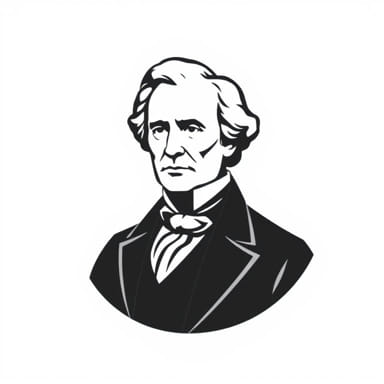
In 1839, former president John Quincy Adams took a courageous and controversial step in American political history by putting forth an antislavery proposal that challenged both the norms of Congress and the volatile issue of slavery. Known for his moral integrity and staunch opposition to slavery, Adams had long used his position in the House of Representatives to resist the expansion of slavery and fight for the right to petition. His 1839 antislavery proposal stands out as a key moment in the growing tension between abolitionists and pro-slavery legislators. This act not only sparked outrage but also paved the way for deeper discussions about civil liberties and human rights in a divided nation.
Background: John Quincy Adams and His Return to Politics
After serving as the sixth president of the United States from 1825 to 1829, John Quincy Adams returned to public service in 1831 when he was elected to the U.S. House of Representatives. Uniquely, he remains the only former president to serve in Congress after his presidency. In the House, Adams became a fierce advocate for civil rights, freedom of speech, and particularly, the antislavery movement.
Adams’s position in Congress coincided with a time of growing abolitionist sentiment in the North and rising defensiveness from the South. The abolitionist movement, though still in its early stages, was gaining traction, and petitions to end slavery in the District of Columbia were pouring into Congress. Southern legislators, in response, enacted what became known as the gag rule, which automatically tabled any petition related to slavery without discussion or debate.
The 1839 Proposal: Challenging the Gag Rule
The Context of the Gag Rule
Introduced in 1836, the gag rule was designed to silence the increasingly vocal abolitionist petitions flooding the House. It was a clear violation of the First Amendment, which guarantees the right to petition the government for a redress of grievances. Adams, a seasoned constitutional scholar and defender of civil liberties, found the gag rule deeply offensive to democratic principles. He made it his mission to dismantle it.
The Antislavery Proposal
In 1839, Adams introduced a resolution that sought to challenge not only the gag rule but the very institution of slavery itself. He proposed a constitutional amendment to abolish slavery in any new territory that might be acquired by the United States. Although the proposal did not directly outlaw slavery in existing states or even in the District of Columbia, it was a bold step in halting the spread of slavery westward.
This proposal directly addressed one of the most contentious issues of the time: the expansion of slavery into new territories. Adams believed that if slavery were prevented from expanding, it would eventually become unsustainable and die out. His resolution also served to provoke debate and keep the issue of slavery at the forefront of congressional discussions.
Reactions and Opposition
Southern Backlash
Southern congressmen reacted furiously to Adams’s proposal. They saw any discussion of slavery as an existential threat to their social and economic systems. To them, Adams’s antislavery stance represented Northern aggression and a dangerous challenge to states’ rights. Some even accused him of inciting rebellion and called for disciplinary action against him, including censure and expulsion from the House.
Persistence Despite Criticism
Despite the backlash, Adams remained undeterred. He was willing to endure personal attacks and threats to his political career to uphold his principles. His unwavering commitment to antislavery ideals and civil liberties earned him both admiration and enmity. He skillfully used parliamentary rules to introduce petitions and antislavery motions, often catching his opponents off guard and forcing them into defensive positions.
Legacy and Impact of the Proposal
Strengthening the Antislavery Movement
While Adams’s 1839 antislavery proposal did not pass, its significance lies in the attention it brought to the issue. It galvanized abolitionist efforts, inspired public debate, and challenged the silence that the gag rule sought to impose. By refusing to be silenced, Adams became a symbol of resistance and a champion for freedom of expression and human dignity.
Repeal of the Gag Rule
Adams’s relentless opposition to the gag rule bore fruit in 1844 when the House voted to repeal it. This victory marked a significant triumph for constitutional rights and free speech. Adams’s role in that repeal was pivotal, as he had worked tirelessly for nearly a decade to bring about its downfall. His success demonstrated the power of persistence in the face of institutional suppression.
Foreshadowing Civil War Debates
The 1839 proposal also foreshadowed the fierce national debates that would eventually lead to the Civil War. By placing the question of slavery’s expansion on the national agenda, Adams helped lay the groundwork for future legislative confrontations, including the Missouri Compromise, the Kansas-Nebraska Act, and the eventual conflict over secession. His actions highlighted the deep divisions in the nation and the moral urgency of confronting slavery head-on.
Adams’s Courageous Legacy
John Quincy Adams’s 1839 antislavery proposal remains a testament to his courage, vision, and unwavering moral compass. At a time when many politicians avoided discussing slavery for fear of political fallout, Adams stood firm. His proposal may not have resulted in immediate change, but it served as a powerful expression of conscience and a rallying cry for those fighting for justice. He saw the fight against slavery not merely as a political issue, but as a matter of national integrity and human rights.
Through his persistence in challenging the gag rule and promoting antislavery ideals, Adams helped transform the House of Representatives into a platform for moral discourse. His legacy endures as a reminder that even in the face of overwhelming opposition, a single voice when guided by principle can make a lasting impact on the course of history.