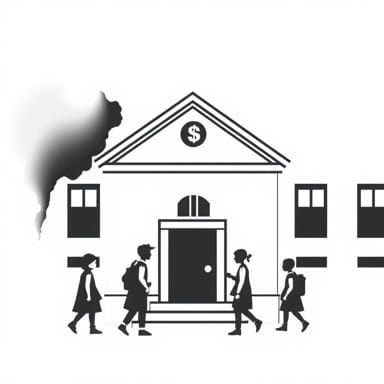
In the United States, especially in the South, a system of laws and customs known as the Jim Crow laws created a legal framework that enforced racial segregation for nearly a century. One of the most deeply felt effects of these laws was the segregation of public schools, which denied African American children equal access to quality education. Segregated schools under the Jim Crow system were emblematic of a society structured by racial inequality, where the color of one’s skin determined their educational opportunities and life outcomes. Understanding how Jim Crow laws segregated schools sheds light on the broader civil rights struggle and the legacy of systemic racism in American education.
Origins of Jim Crow and the Doctrine of ‘Separate but Equal’
The term ‘Jim Crow’ originally came from a 19th-century minstrel show character used to mock African Americans, but it evolved into a term that symbolized the institutionalized racism in the post-Reconstruction South. The legal foundation of school segregation was cemented in the landmark 1896 Supreme Court decisionPlessy v. Ferguson, which upheld the constitutionality of racial segregation under the doctrine of ‘separate but equal.’ This decision provided legal justification for segregated public facilities, including schools, as long as the separate facilities were deemed equal in quality. However, in practice, the schools for Black children were grossly underfunded and inferior in every measurable way.
The Structure of Segregated Education
Segregated schools under Jim Crow were divided entirely along racial lines. White children attended schools with modern buildings, new textbooks, trained teachers, and well-equipped classrooms. In contrast, Black students were confined to poorly constructed schools, often in dilapidated buildings with outdated supplies and overcrowded classrooms. The funding allocated to white schools far exceeded that given to Black schools, creating a wide educational gap.
- Facilities: Black schools often lacked libraries, science labs, and proper heating or plumbing.
- Teachers: African American teachers were paid significantly less and had fewer opportunities for training or advancement.
- Textbooks: Schools for Black students received hand-me-down books discarded by white schools.
- Transportation: School buses were almost exclusively used for white children, forcing many Black students to walk long distances.
Psychological and Social Impact on Black Students
Segregated education was not only a denial of material resources but also a tool for reinforcing racial inferiority. Black children were taught, implicitly and explicitly, that their lives and education mattered less. The separation sent a message that they were not worthy of equal treatment, creating a deep psychological burden. The stigma of being forced into inferior schools contributed to feelings of low self-worth and exclusion from the mainstream American dream.
Educational segregation also perpetuated cycles of poverty. With substandard education, Black students were less likely to access higher education or skilled employment, limiting economic mobility and reinforcing systemic inequality. The Jim Crow system ensured that generations of African Americans remained disadvantaged by design.
Resistance and Legal Challenges
Despite the overwhelming obstacles, African American communities fought against educational segregation. Parents, teachers, and civil rights organizations tirelessly campaigned for equal funding, better facilities, and, ultimately, the end of segregated schooling. Legal challenges were mounted across various states, gradually building momentum against the separate-but-equal doctrine.
The Role of the NAACP
The National Association for the Advancement of Colored People (NAACP) played a crucial role in challenging school segregation. Under the leadership of legal minds like Charles Hamilton Houston and Thurgood Marshall, the NAACP Legal Defense Fund filed lawsuits demonstrating the inherent inequality in segregated education. Their strategic litigation efforts aimed to prove that separate educational facilities could never be truly equal.
Brown v. Board of Education: A Turning Point
The most decisive blow to school segregation came in 1954 with the Supreme Court’s decision inBrown v. Board of Education of Topeka. In a unanimous ruling, the Court declared that separate educational facilities are inherently unequal, effectively overturningPlessy v. Fergusonin the context of public education. This decision marked the beginning of the end for legally sanctioned school segregation.
However, the ruling did not lead to immediate desegregation. Many Southern states resisted compliance, employing tactics such as ‘massive resistance,’ closing public schools, or creating private segregation academies for white students. Enforcement of desegregation would require federal intervention and persistent activism over the next several decades.
Ongoing Struggles and Uneven Progress
AlthoughBrown v. Boardwas a landmark decision, the practical dismantling of segregated schools was slow and uneven. In some regions, meaningful integration did not occur until the 1970s, and even then, the outcomes were mixed. White flight to suburban schools and continued funding disparities left many predominantly Black schools under-resourced even after formal segregation ended.
The legacy of Jim Crow laws in education continues to affect American schools today. Many urban school districts remain racially and economically segregated due to residential patterns and inequitable funding systems. These modern forms of segregation highlight the long-lasting impact of the Jim Crow era on public education.
Educational Activism and Modern Implications
Activists and educators continue to address the disparities rooted in segregationist policies. School reform efforts, affirmative action, and funding equity initiatives aim to close the educational gap between students of different racial and economic backgrounds. The memory of Jim Crow’s segregated schools serves as a powerful reminder of the dangers of institutionalized racism and the importance of educational equity.
Lessons from History
Understanding how Jim Crow laws segregated schools teaches critical lessons about justice, equity, and resilience. It underscores the necessity of vigilance in protecting civil rights and ensuring that all children, regardless of race, receive the opportunity to learn in supportive and well-resourced environments. The struggle for educational equality, begun in the era of Jim Crow, continues to shape debates about race, class, and the future of democracy in America.
Jim Crow laws and the segregation of schools were not only legal constructs but powerful tools of social control that shaped the lives of millions. The deliberate denial of equal education to African American children left scars that still influence the U.S. education system today. From the grassroots resistance of Black communities to the transformative decision ofBrown v. Board of Education, the fight against educational segregation is a testament to the enduring pursuit of justice. Reflecting on this dark chapter in American history helps ensure that future generations never repeat its mistakes and continue striving for a more equitable society.