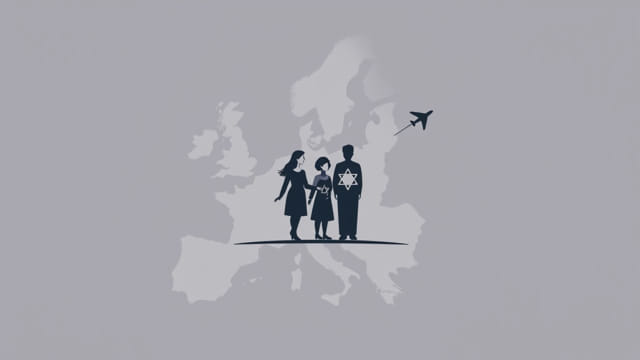
Jewish emigration from Europe has a long and complex history shaped by persecution, discrimination, economic hardship, and, in some cases, the search for better opportunities and freedom. For centuries, Jewish communities in various parts of Europe faced social marginalization, religious intolerance, and violent expulsions. Waves of migration took place at different times, influenced by changing political regimes, wars, and national movements. Understanding the history of Jewish emigration provides valuable insight into the broader themes of displacement, identity, and survival.
Early Expulsions and Forced Migration
Medieval Period Expulsions
The history of Jewish migration in Europe can be traced back to the medieval period, when Jews were expelled from several countries. In 1290, Jews were expelled from England by King Edward I. France followed in 1306, and Spain in 1492 under the Catholic Monarchs Ferdinand and Isabella. These expulsions were often motivated by religious zeal, scapegoating, or a desire to seize Jewish property.
Effects of the Spanish Expulsion
The 1492 Alhambra Decree led to the exodus of tens of thousands of Sephardic Jews from Spain. Many fled to the Ottoman Empire, North Africa, and parts of Italy and the Netherlands, where they could practice their religion more freely. This migration reshaped Jewish communities and helped spread Jewish culture across the Mediterranean and Middle East.
Emigration During the 19th Century
Russian Pogroms and Persecution
In the late 19th century, the Russian Empire witnessed a wave of anti-Jewish violence known as pogroms. These violent riots targeted Jewish homes, businesses, and communities, particularly in present-day Ukraine, Belarus, and Poland. The Russian government’s policies, including the Pale of Settlement and restrictions on education and employment, added to the hardship.
Mass Migration to the Americas
In response to these persecutions, millions of Jews left Eastern Europe between 1880 and 1924. The United States became the primary destination, with cities like New York, Chicago, and Philadelphia becoming home to large Jewish populations. Other Jews emigrated to Canada, Argentina, and South Africa.
- Between 1880 and 1924, over 2 million Jews arrived in the United States.
- Jewish immigrants established strong communities, synagogues, newspapers, and schools.
- This migration significantly shaped the American Jewish identity and cultural landscape.
World War I and the Interwar Years
Continued Migration
Even after World War I, Jewish emigration continued due to ongoing instability in Eastern Europe. The collapse of empires and the rise of nationalist movements created uncertain conditions for Jews. Anti-Semitic sentiments remained widespread in countries like Poland, Romania, and Hungary.
Restrictions and Quotas
During the 1920s and 1930s, countries like the United States began imposing immigration quotas that limited the number of Jewish immigrants. This restriction made it more difficult for Jews to find refuge from growing threats in Europe, particularly as Nazi ideology began to spread in Germany and beyond.
The Holocaust and Its Impact
Nazi Persecution and the Final Solution
The rise of Adolf Hitler and the Nazi regime in Germany marked the darkest chapter in Jewish history. Jews were stripped of their rights, forced into ghettos, deported, and ultimately murdered in concentration and extermination camps. The Holocaust claimed the lives of approximately six million Jews.
Escape Routes and Emigration Challenges
Before and during the early years of World War II, many Jews tried to flee Nazi territories. However, few countries were willing to accept large numbers of Jewish refugees. The Evian Conference in 1938 demonstrated the international community’s reluctance to offer asylum.
Some Jews managed to escape to:
- Palestine (under British mandate)
- United States (though in limited numbers)
- Latin American countries such as Brazil, Argentina, and Mexico
- Shanghai, China, which accepted Jewish refugees without a visa
Post-World War II Emigration
Displaced Persons and Resettlement
After the war, Europe was home to hundreds of thousands of Jewish displaced persons (DPs). Many had lost their families and communities. With their homes destroyed and facing post-war anti-Semitism, many Jews chose to emigrate rather than return to their former countries.
Creation of the State of Israel
The establishment of Israel in 1948 opened a new chapter in Jewish emigration. Jews from Europe, especially Holocaust survivors and DPs, were among the first to settle in the new state. Israel’s Law of Return granted Jews the right to immigrate and gain citizenship.
Emigration to Other Destinations
In addition to Israel, large numbers of Jews emigrated to:
- United States and Canada
- Australia and New Zealand
- Western European countries like France and the United Kingdom
Late 20th Century Jewish Migration
Migration from the Soviet Union
During the Cold War, Jewish emigration from the Soviet Union was heavily restricted. However, international pressure in the 1970s and 1980s led to a relaxation of emigration policies. Many Soviet Jews moved to Israel, the United States, and Germany. This wave of migration brought highly educated professionals and revitalized Jewish communities abroad.
Anti-Semitism in Post-War Europe
Though the horrors of the Holocaust led to widespread condemnation of anti-Semitism, Jews in some parts of Europe continued to face discrimination and violence. These experiences encouraged further migration, particularly from Eastern Europe after the fall of the Iron Curtain.
Contemporary Jewish Emigration Trends
Security Concerns in the 21st Century
In recent years, concerns about rising anti-Semitism, terrorism, and economic instability have led to new waves of Jewish emigration. France, which has Europe’s largest Jewish population, has seen a significant number of Jews moving to Israel due to attacks targeting Jewish individuals and institutions.
Global Jewish Diaspora
Today, the Jewish diaspora is spread across the globe, with large communities in North America, Israel, Europe, Latin America, and Australia. While some Jews continue to leave Europe, others remain committed to preserving Jewish life there.
Jewish emigration from Europe is a story of both hardship and resilience. From medieval expulsions and pogroms to the Holocaust and modern emigration movements, the Jewish people have faced enormous challenges and demonstrated remarkable endurance. The waves of migration reshaped global Jewry and contributed to vibrant communities across continents. Understanding this complex history helps us appreciate the global Jewish experience and the enduring importance of freedom, safety, and cultural identity.