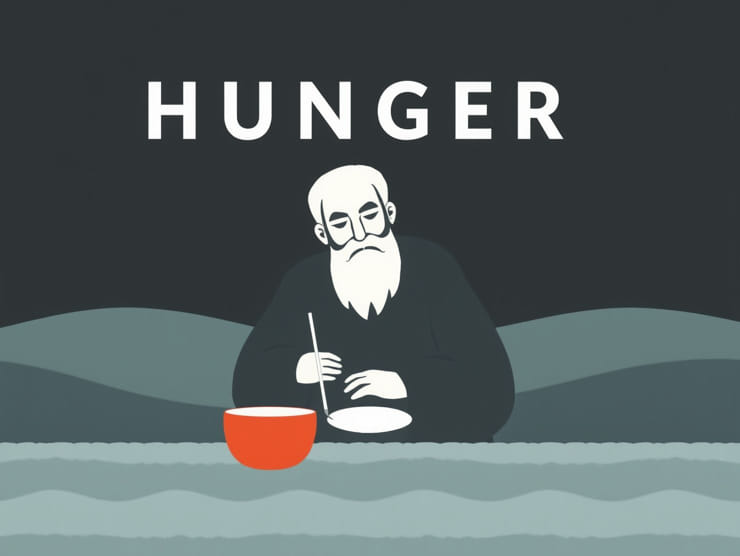
Set in late 19th-century Kristiania (now Oslo),Hungerby Knut Hamsun is a groundbreaking novel that delves deep into the psychological and emotional turmoil of a struggling writer facing extreme poverty. With vivid detail and stream-of-consciousness narration, the story exposes how hunger and hardship affect one’s thoughts, actions, and grip on reality. The protagonist is never named, emphasizing his role as a universal figure of suffering and artistic obsession. His descent into desperation, alternating between pride and despair, offers a haunting look at human vulnerability and the fragility of the mind.
Background of the Novel
Published in 1890,Hungeris considered a landmark in modern literature. It marked a significant break from the romanticism and realism of the 19th century and laid the groundwork for psychological fiction. Hamsun’s influence can be seen in the works of later writers such as Franz Kafka and Ernest Hemingway. The novel is semi-autobiographical, drawing from Hamsun’s own experiences as a starving writer in Oslo. This authenticity gives the narrative a raw and piercing emotional impact.
Main Character Overview
The narrator ofHungeris an unnamed young man who aims to establish himself as a writer. He lives alone, often moving from one cheap lodging to another. Despite his ambitions, he is plagued by intense poverty. He refuses charity out of pride, instead enduring long bouts of hunger that distort his thinking and sense of reality. His behavior swings between irrational confidence and crippling self-doubt. He hallucinates, argues with himself, and struggles to maintain any semblance of normal life. The reader watches as his physical deterioration parallels his mental unraveling.
Psychological Complexity
One of the most fascinating aspects of the novel is the exploration of the narrator’s inner world. His internal monologue reveals a man torn by conflicting desires: the need for food and shelter, the longing for recognition as a writer, and an almost religious devotion to independence. He engages in impulsive and sometimes absurd behavior, such as giving away money he desperately needs or refusing meals out of misplaced dignity. These contradictions humanize him while illustrating the madness born from prolonged starvation and isolation.
Plot Summary
Beginning: Descent into Hunger
The novel opens with the narrator already on the brink of destitution. He wanders through the city looking for food, pawning off belongings, and attempting to write topics for local newspapers. Although he occasionally succeeds in publishing his work, the payments are small and irregular. He often chooses to spend money on lodging instead of food, further worsening his condition. His thoughts begin to turn erratic, with moments of intense creativity followed by crushing hopelessness.
Middle: Increasing Delusion and Desperation
As the narrator continues to starve, his mental state becomes more fragile. He becomes delusional, imagining relationships and scenarios that are not real. At one point, he meets a young woman he calls Ylajali and becomes infatuated with her. Their interaction is awkward and brief, yet he obsesses over her. His grip on time, logic, and social norms continues to deteriorate. He invents stories to explain his situation and avoids people who might offer him help. The city’s streets become a maze of shame, confusion, and survival instincts.
End: Escape and Uncertainty
Toward the end of the novel, the narrator’s situation becomes unbearable. His efforts to write fail, his health worsens, and his mental instability peaks. Finally, in a moment of surrender, he signs up to work as a deckhand on a ship, leaving the city behind. This departure is ambiguous: it may represent escape, defeat, or renewal. Hamsun offers no neat resolution, staying true to the fragmented and chaotic life he has depicted throughout the novel.
Major Themes
Hunger and Survival
The title itself underscores the dominant theme: hunger, both physical and metaphorical. The narrator is not just starving for food but for recognition, meaning, and a sense of belonging. Hunger becomes a lens through which we see his moral struggles, creative aspirations, and slow unraveling. The act of going hungry becomes both a punishment and a point of pride, further complicating his character.
Isolation and Alienation
The narrator exists in near-total solitude, disconnected from friends, family, or a support system. His interactions with others are brief and strained, often clouded by paranoia or shame. The city itself becomes a cold and indifferent presence. This isolation emphasizes his descent into madness and represents a broader commentary on urban life and the loneliness of the individual.
Art and Identity
Despite his suffering, the narrator remains fiercely committed to his identity as a writer. Even when starving, he continues to draft topics and critique his own work. His devotion to art borders on the fanatical, reinforcing the tension between personal suffering and artistic pursuit. Hamsun questions whether such dedication is noble or self-destructive or perhaps both.
Pride and Self-Sabotage
The narrator’s pride often prevents him from accepting help or making practical decisions. He lies about his condition, returns money, and rejects offers of food all because he cannot bear to appear weak. This stubbornness, while admirable in its consistency, ultimately contributes to his downfall. The novel explores how pride can morph from virtue into a fatal flaw.
Style and Structure
Hamsun’s style inHungeris notable for its use of stream-of-consciousness and fragmented narrative. Rather than following a clear plot, the novel jumps from moment to moment, mimicking the disjointed thoughts of the protagonist. This approach immerses the reader in the character’s inner life and aligns with the themes of mental instability and existential dread. The language is precise and lyrical, but often jarring, capturing the surreal experience of extreme poverty.
Critical Reception and Legacy
When it was first published,Hungerreceived mixed reviews. Some critics found it too dark or too unconventional. However, it has since been recognized as a masterwork and is often included in discussions of early modernist literature. Its influence can be seen in later psychological novels and existential works. Hamsun himself went on to win the Nobel Prize in Literature in 1920, though his legacy remains controversial due to his political sympathies during World War II.
Hungerby Knut Hamsun is a deeply introspective novel that captures the brutal reality of poverty and the psychological impact of deprivation. Through a character who remains unnamed and largely unseen by society, Hamsun presents a haunting portrayal of human fragility, artistic ambition, and the fine line between genius and madness. Its relevance endures because of its unflinching honesty, innovative style, and timeless themes. Whether read as a work of fiction or a meditation on the creative spirit,Hungerremains a powerful and unforgettable literary experience.