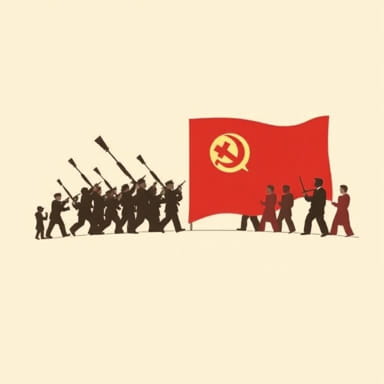
The Bolshevik Revolution, which erupted in Russia in October 1917, had a profound and immediate impact on the course of World War I. As revolutionary fervor swept through the crumbling Russian Empire, the priorities of the new Bolshevik government under Vladimir Lenin shifted drastically. Rather than continuing Russia’s involvement in the war alongside the Allies, the Bolsheviks focused on consolidating power internally. This change triggered significant consequences on the Eastern Front, altered diplomatic alliances, and reshaped the overall dynamics of the war. To understand how the Bolshevik Revolution affected the war, it is essential to explore the military, political, and strategic implications of Russia’s sudden departure from the battlefield.
Withdrawal of Russia from World War I
Collapse of the Eastern Front
Prior to the Bolshevik takeover, Russia had suffered catastrophic military losses against Germany and Austria-Hungary. The Eastern Front was marked by disorganization, low morale, and insufficient supplies. When the Bolsheviks seized power, one of their first priorities was ending Russia’s participation in what they called an imperialist conflict. The Eastern Front, already faltering, effectively collapsed after the revolution.
This withdrawal had major implications:
- The Central Powers were able to redirect hundreds of thousands of troops from the Eastern Front to the Western Front, increasing pressure on France and Britain.
- German forces occupied large areas of Eastern Europe, including Ukraine and Belarus, gaining access to resources and strategic territories.
- The sudden vacuum in Eastern Europe led to conflicts and power struggles that would continue long after the war ended.
Treaty of Brest-Litovsk
The official end of Russian involvement in World War I came with the Treaty of Brest-Litovsk, signed on March 3, 1918. The treaty was negotiated between the Bolsheviks and the Central Powers and had harsh terms for Russia.
Key outcomes of the treaty included:
- Russia ceded vast territories, including Ukraine, Poland, the Baltics, and Finland.
- Millions of people were placed under German or Austro-Hungarian control.
- Russia lost significant agricultural and industrial resources, further weakening its economy.
The treaty shocked the Allied powers, who viewed it as a betrayal. However, for the Bolsheviks, it was a necessary step to focus on their domestic revolution and civil war.
Impact on Allied War Strategy
Increased Burden on Western Allies
With Russia’s exit from the war, the Allied powers particularly Britain, France, and later the United States faced increased pressure on the Western Front. German high command took advantage of the reduced threat in the east to launch major offensives in 1918, such as the Spring Offensive, aimed at breaking the deadlock before American forces could fully deploy.
This shift meant that the Allies had to:
- Reallocate troops to critical points along the Western Front.
- Rely more heavily on American reinforcements and supplies.
- Adjust strategic planning to account for the absence of an Eastern Front distraction.
Entry of the United States
Although the U.S. had declared war on Germany in April 1917, the bulk of its troops did not arrive in Europe until 1918. The collapse of the Eastern Front made the American presence even more crucial to tip the balance in favor of the Allies. The Bolshevik Revolution indirectly emphasized the importance of American involvement by removing a major player from the Allied coalition.
Ideological and Diplomatic Repercussions
Global Spread of Communist Ideals
The Bolshevik Revolution did more than remove Russia from the war it introduced a radical new ideology that frightened Western governments. Communism challenged the capitalist and monarchist systems that many Allied nations stood for. In response, several of these nations, including Britain, France, and the United States, supported anti-Bolshevik forces during the Russian Civil War.
Implications of this ideological shift included:
- Growing distrust between the Western Allies and the new Soviet state.
- Attempts to isolate or undermine Bolshevik influence through intervention.
- A long-term realignment of international politics that eventually contributed to the Cold War.
Breakdown of Allied Unity
The departure of Russia from the war caused tensions within the Allied leadership. France and Britain had counted on Russian assistance in a two-front war. The unilateral peace with Germany violated secret agreements and weakened Allied diplomatic cohesion. Additionally, the Bolsheviks published previously confidential treaties between the Allies, embarrassing their former partners and exposing imperialist ambitions.
Internal Effects on Russia
Shift from Foreign War to Civil War
While the end of World War I involvement was seen as a relief by many Russians, it was quickly followed by internal chaos. The Russian Civil War broke out between the Bolsheviks (Reds) and their opponents (Whites), who included monarchists, liberals, and foreign-backed forces.
This internal conflict diverted all of the Bolsheviks’ attention and resources, leaving little interest in international alliances or continued warfare abroad. Russia’s military priorities were now inward-facing, contributing to its withdrawal from global diplomacy for several years.
Transformation of Russian Society
The revolution and the war’s end allowed the Bolsheviks to implement sweeping social and economic changes. They began redistributing land, nationalizing industry, and attempting to restructure Russian society along Marxist lines. These efforts were deeply influenced by Lenin’s focus on consolidating revolutionary power rather than continuing a war he viewed as counter to proletarian interests.
Long-Term Military Consequences
Changes in Global Power Balance
Russia’s exit from World War I reshaped the military and political balance in Europe. In the short term, Germany benefitted from the Eastern Front collapse. However, the long-term outcome was less favorable for the Central Powers, as the additional resources were not enough to prevent defeat in the West.
Meanwhile, Russia’s retreat from global affairs gave rise to new powers. The United States emerged from the war as a major international force. Britain and France, though victorious, were economically drained and politically fragile.
Precursor to Future Conflicts
The Bolshevik Revolution planted the seeds for future wars. The ideological divide it created influenced the Treaty of Versailles and the geopolitical tensions that followed. Some historians argue that the hostility between the Soviet Union and the West can trace its roots to this moment in 1917, when Russia turned its back on the war and embraced revolution instead.
A Revolution That Changed the War
The Bolshevik Revolution drastically changed the course of World War I by pulling Russia out of the conflict and freeing German forces to focus on the Western Front. The Treaty of Brest-Litovsk marked a significant territorial and strategic shift in Europe. For the Allies, Russia’s departure meant greater burdens, but also a clearer understanding of the importance of U.S. support. Meanwhile, the revolution unleashed ideological consequences that reshaped international relations for decades. In ending one war, the Bolsheviks ignited another the struggle over what kind of world would emerge from the ashes of empire and global conflict.