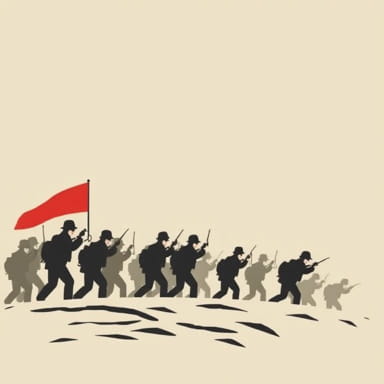
In the years leading up to World War I, militarism became one of the most significant factors contributing to the outbreak of global conflict. Across Europe, the belief in the necessity and glory of military strength grew rapidly. Nations invested heavily in expanding and modernizing their armies and navies, while military leaders gained greater influence in government affairs. This arms race and focus on military readiness created an atmosphere of suspicion, competition, and aggression among rival powers. Militarism was not the only cause of the war, but it laid the foundation for rapid mobilization and heightened tensions that exploded into war after the assassination of Archduke Franz Ferdinand in 1914.
Definition and Nature of Militarism
Militarism can be defined as the belief that a country should maintain a strong military and be prepared to use it aggressively to defend or promote national interests. In the late 19th and early 20th centuries, this ideology was deeply embedded in the political culture of many European countries. Leaders glorified war as a noble endeavor, and military service was seen as a duty and honor. This glorification of military power shaped national policies and influenced how states interacted with one another.
Key Characteristics of Militarism
- Large-scale military spending and arms buildup
- Increased influence of military leaders in government
- Military solutions prioritized over diplomacy
- Public support for national armies and war efforts
As military preparations became central to national identity, the prospect of war seemed not only possible but inevitable.
The European Arms Race
One of the clearest examples of militarism in pre-war Europe was the arms race among the major powers. Countries such as Germany, Britain, France, and Russia dramatically increased their military budgets and production of weapons. Germany, in particular, sought to challenge Britain’s naval supremacy by building a powerful fleet of battleships, which alarmed British leaders and led to their own naval expansion.
This competition for military superiority created a climate of distrust and fear. As nations armed themselves to the teeth, they also built complex military plans in anticipation of future conflict. This arms race meant that when war finally did break out, the means to fight it on an unprecedented scale were already in place.
Examples of Military Buildup
- Germany’s navy expansion through the Naval Laws of 1898 and 1900
- Britain’s response with the creation of the Dreadnought battleship
- France and Russia increasing their standing armies and military budgets
The more each country armed itself, the more others felt compelled to follow suit, further escalating tensions.
Influence of Military Leaders and War Plans
Militarism also affected the internal politics of nations, where military generals often held significant sway over political leaders. In Germany, for instance, the military high command had enormous influence on Kaiser Wilhelm II, pushing for aggressive strategies. Similar dynamics existed in Austria-Hungary and Russia, where military officials played a key role in shaping national policy.
Additionally, the existence of detailed and rigid military plans, such as Germany’s Schlieffen Plan, made diplomatic flexibility difficult. These plans relied on rapid mobilization and offensive action, leaving little room for negotiation once a crisis began. When war seemed imminent, leaders were under pressure to act quickly or risk being caught unprepared.
Consequences of Pre-set Military Strategies
- Schlieffen Plan required Germany to invade Belgium to quickly defeat France
- Russian mobilization plans pressured Germany into early declarations of war
- Political leaders deferred to generals to avoid disrupting complex timetables
The reliance on pre-war plans made escalation more likely and reduced the time available for diplomacy and compromise.
Militarism and Nationalism: A Dangerous Mix
Militarism was closely linked to nationalism. Many Europeans believed that military strength was a reflection of national greatness. Citizens were taught to see war as a patriotic duty, and victories in battle as signs of cultural superiority. This mindset encouraged public support for war and created pressure on governments to act decisively and aggressively when national pride was at stake.
For example, in Germany and France, newspapers and public speeches often celebrated military might and warned of the threats posed by rival nations. This propaganda fueled suspicion and antagonism, making cooperation and peace less politically viable.
Examples of Nationalist Militarism
- German militarist culture emphasizing discipline, unity, and loyalty to the Kaiser
- French desire for revenge over their defeat in the Franco-Prussian War
- Russian pride in protecting Slavic peoples, including Serbians
As public opinion became more militaristic, political leaders found themselves constrained by the expectations of their citizens and the prestige of their armed forces.
Impact on Alliances and International Relations
The presence of militarism also shaped the nature of alliances in pre-war Europe. The two major alliance blocs the Triple Alliance (Germany, Austria-Hungary, Italy) and the Triple Entente (France, Russia, Britain) were not just diplomatic arrangements but military pacts built on promises of mutual defense.
In such a context, militarism turned what could have been a localized conflict into a general war. When Austria-Hungary declared war on Serbia in response to the assassination of Archduke Franz Ferdinand, Russia mobilized in defense of Serbia. Germany then activated its war plans to support Austria-Hungary and pre-empt Russian and French attacks. Britain entered the war when Germany invaded Belgium. Within weeks, the continent was engulfed in a war that no one seemed able to stop.
How Militarism Strengthened Alliances
- Prepared militaries made countries confident in their ability to win a war
- Alliances reinforced the belief that war could be fought and won quickly
- Mobilization triggered automatic responses from allied nations
Rather than deterring war, these alliances and the militarism underpinning them made it more likely by increasing the stakes and reducing diplomatic flexibility.
Militarism played a central role in contributing to the outbreak of World War I. It fostered a culture that valued military power, promoted arms buildup, and emphasized offensive strategies over peaceful resolution. The belief that military strength was essential for national survival and prestige made European powers suspicious of one another and quick to resort to force. The existence of detailed war plans and pressure from military leaders accelerated mobilization and limited opportunities for diplomacy. When combined with nationalism and rigid alliance systems, militarism helped turn a regional crisis into a full-scale world war. Understanding how militarism influenced the behavior of nations provides critical insight into the causes of one of history’s most devastating conflicts.