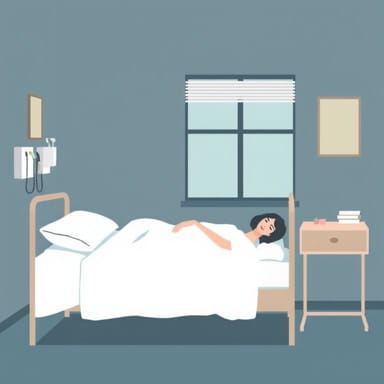
In the heart of the Victorian era, where societal norms confined women to rigid roles and health care remained deeply misunderstood, Harriet Martineau’s Life in the Sickroom emerged as a powerful voice of resistance, reflection, and reform. Written in 1844 during her own long illness, this autobiographical work blends personal narrative with philosophical insight. Martineau, known as one of Britain’s first female sociologists, used her experience of prolonged illness not as a retreat from life, but as a platform to critique medical practice, explore independence, and redefine what it means to live with chronic illness. This book remains an early cornerstone in medical humanities and women’s intellectual history.
Background on Harriet Martineau
A Pioneer in Sociology and Feminist Thought
Harriet Martineau was born in 1802 in Norwich, England. She defied societal expectations by becoming a writer, philosopher, and one of the earliest practitioners of sociology. Deaf from a young age, she relied on her keen observational skills and strong intellect to engage with politics, religion, economics, and social reform. Martineau translated and interpreted the works of Auguste Comte, which introduced positivist sociology to the English-speaking world. Her prolific writing career included essays, travel narratives, political treatises, and personal memoirs.
Turning Illness into Insight
During the 1830s and early 1840s, Martineau suffered from a debilitating illness, widely believed to be a uterine or ovarian condition. Confined to bed for years, she used the sickroom not as a place of defeat, but as a philosophical observatory. Out of this confinement came her influential work, Life in the Sickroom, a meditation on illness, autonomy, and the lived experience of the invalid.
Exploring Life in the Sickroom
Not a Typical Illness Memoir
Unlike typical Victorian accounts of illness, which often romanticized suffering or portrayed it as feminine virtue, Martineau’s Life in the Sickroom challenges these tropes. She refuses to be seen as a passive patient or a pious sufferer. Instead, she writes as an autonomous thinker, claiming the right to interpret her own condition and critique the medical establishment.
Main Themes of the Book
- Autonomy of the Invalid: Martineau insists that the chronically ill have the right to direct their own care, make decisions, and maintain intellectual and emotional independence.
- Critique of Medical Authority: She challenges the practices of doctors who ignore the subjective experiences of their patients.
- Importance of Mental Stimulation: Even when physically confined, Martineau argues that the mind must remain active and engaged through reading, correspondence, and reflection.
- Resistance to Pity: The author warns against reducing invalids to objects of pity or treating them like children.
Redefining the Sickroom
A Space of Control and Expression
Martineau describes the sickroom not as a prison, but as a realm of self-control and intellectual life. She discusses the arrangement of the room, the importance of light, fresh air, and beauty, and the role of books and letters in sustaining mental health. The sickroom, in her account, becomes a place where identity is not erased by illness but reshaped by it.
Reversing Roles: Invalid and Caregiver
One of Martineau’s striking contributions is her challenge to the assumed superiority of the healthy over the sick. She writes that caregivers often impose their will on patients under the guise of concern. Instead, she advocates for mutual respect, where the invalid’s perspective is central to their own care. Her insights anticipate modern discussions around patient-centered care.
Reception and Legacy
Victorian Responses
Upon publication, Life in the Sickroom received mixed reactions. Some praised it for its intellectual rigor and originality, while others found it unsettling particularly because it gave a voice to an unmarried, ill woman claiming moral and philosophical authority. Critics who expected spiritual sentimentality were surprised by Martineau’s clarity and directness.
Impact on Literature and Medicine
Martineau’s work influenced not only social thinkers but also laid early groundwork for the field now known as medical humanities. She demonstrated that illness narratives could challenge power structures and shape public understanding. In feminist literature, Life in the Sickroom is seen as a foundational text in reclaiming female authorship over the body and experience.
Relevance Today
Chronic Illness and Agency
In an age where millions live with chronic conditions, Martineau’s emphasis on patient agency remains vital. Her arguments resonate with contemporary calls for healthcare that listens to the patient, honors their lived experience, and promotes autonomy over paternalism.
Disability and Visibility
Martineau anticipated conversations we now associate with disability studies. She wrote not just about illness, but about the cultural assumptions attached to it. Her insistence on being more than her diagnosis more than an invalid continues to inspire those who seek to live fully, regardless of physical limitations.
Women and Medical Authority
As a woman writing in a male-dominated field, Martineau carved out a space where female intellect, suffering, and insight could be taken seriously. Today, her legacy empowers women to engage critically with healthcare systems that still sometimes marginalize their voices.
Key Quotes from Life in the Sickroom
- To be treated as an irresponsible being, incapable of judging for oneself, is the most irksome of all forms of benevolence.
- The sickroom is not a place of death, but of life life, condensed and intensified.
- I am not a shadow, a whisper, or a ghost. I think, I read, I write. I live.
Harriet Martineau’s Life in the Sickroom remains a radical and resonant work that challenges assumptions about illness, gender, and authority. Through sharp observation and personal strength, she redefined what it meant to be an invalid in the nineteenth century and in doing so, redefined the sickroom itself. Her voice continues to echo in today’s discussions on patient rights, disability, and the power of lived experience. For those interested in sociology, women’s history, or the ethics of care, this book offers timeless insights from a woman who transformed her physical limitations into philosophical strength.