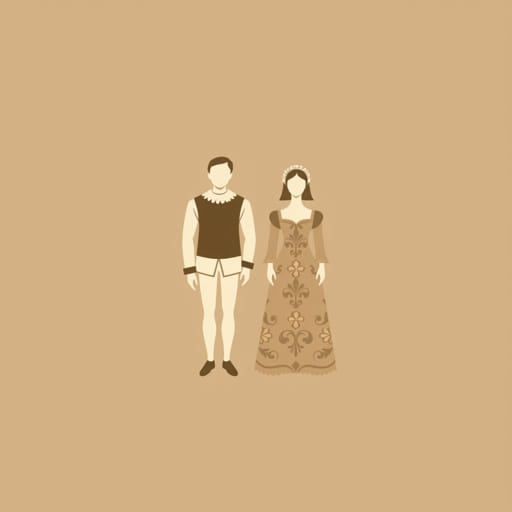
During the reign of King James I (16031625), known as the Jacobean era, the concept of gender played a significant role in shaping society, literature, politics, and daily life in England. The social order was deeply patriarchal, rooted in long-standing Christian and feudal traditions that placed men in positions of authority and women in roles of submission. However, beneath the surface of these rigid expectations, gender identity and roles were frequently questioned, challenged, and even subverted, especially on the stage. Gender in Jacobean England was not only a marker of biological difference but also a complex cultural construct shaped by class, law, and religion.
Patriarchal Society and Gender Norms
Men’s Dominant Role
Jacobean England was built upon a clear hierarchy, with men considered the natural leaders in both public and private spheres. The father ruled the household, the king ruled the land, and the Church affirmed male authority as divinely ordained. Masculinity was associated with strength, rationality, honor, and control. A man was expected to be the provider and protector, exercising authority over his wife, children, and servants.
Women’s Subordinate Position
Women were expected to be obedient, modest, and pious. Their primary roles were domestic caring for the home, bearing children, and supporting their husbands. Education for women was limited and often focused on moral instruction and religious devotion rather than intellectual development. Women’s access to legal rights and public life was minimal. A woman’s identity was often defined by her relationships: as a daughter, a wife, or a widow.
Marriage and Female Identity
The Importance of Marriage
Marriage was central to a woman’s life in Jacobean England. It was seen not only as a religious duty but also as a social contract that brought economic stability and social respectability. The father usually arranged the marriage, and the wife was expected to obey her husband in all matters. A woman’s chastity before marriage and fidelity afterward were of paramount importance.
Property and Legal Status
Upon marriage, a woman’s legal identity was absorbed into her husband’s under the concept of coverture. She could not own property, enter into contracts, or represent herself in court independently. Widows, however, gained more legal autonomy and could sometimes hold land or manage estates.
Gender and the Theatre
Men Playing Women
One of the most striking aspects of gender in Jacobean culture was the representation of gender on stage. Women were not allowed to perform in public theatres, so all female roles were played by young boys or men. This theatrical convention highlighted the performative nature of gender and created layers of meaning in plays where identity and disguise were key themes.
Subversion and Disguise
Many Jacobean plays explored gender fluidity and subverted traditional roles. Shakespeare’s plays likeTwelfth NightandAs You Like Itfeature female characters who disguise themselves as men, challenging the audience’s assumptions about gender behavior. These disguises allowed commentary on the flexibility and construction of gender roles within a society that otherwise upheld strict binaries.
Religion and Gender Expectations
Theological Justification of Gender Hierarchy
The Church of England and prevailing Christian doctrines played a critical role in reinforcing patriarchal values. Biblical texts were often cited to justify male authority and female subordination. Sermons and religious pamphlets emphasized the dangers of female pride and independence, encouraging women to accept their roles with humility and devotion.
Virginity and Purity
Religious ideals placed high importance on a woman’s chastity. Virginity was linked to honor, and a woman’s moral worth was tied to her sexual conduct. This pressure shaped many social customs and even legal practices, such as the emphasis on virginity tests or the shaming of unmarried mothers. Religious symbolism often painted women as either virtuous virgins or dangerous temptresses.
Exceptions and Notable Women
Queens and Noblewomen
While most women were excluded from power, noblewomen and royal figures occasionally defied norms. Queen Anne of Denmark, wife of James I, exerted influence through her patronage of the arts and political involvement. Aristocratic women like Lady Arbella Stuart also became figures of intrigue due to their potential claims to the throne or involvement in court politics.
Writers and Intellectuals
Despite societal restrictions, a few women managed to make their voices heard. Aemilia Lanyer, for example, published one of the first books of poetry by an Englishwoman,Salve Deus Rex Judaeorum. Her work addressed gender inequality and challenged traditional religious interpretations of Eve’s role in the Fall. Such writers provided rare but powerful counterpoints to dominant gender ideologies.
Gender and Class
Working-Class Women
Gender roles also varied depending on social class. Working-class women were often involved in labor outside the home, including domestic service, market selling, and agricultural work. Though still constrained by gender norms, they had greater visibility in public life than their wealthier counterparts, and their roles were more economically significant.
Prostitution and the Margins
Women on the social margins, especially in urban areas like London, sometimes turned to prostitution for survival. This was both stigmatized and paradoxically tolerated, as the state saw it as a necessary evil. The presence of these women highlighted the contradictions in gender norms and the limitations of moral control.
Gender in Jacobean England was defined by strict roles and expectations rooted in religion, law, and tradition. However, these roles were not always stable or universally accepted. Through the stage, literature, and even political life, gender roles were constantly questioned and negotiated. While men held the majority of social and legal power, women found ways to assert influence, resist limitations, and express their identities. The era’s complex view of gender continues to offer insights into how societies define and contest power, identity, and human worth based on sex and social roles.