Describes How Molecules Disperse In Their Environment
When molecules are introduced into an environment, they rarely stay confined to one area. Instead, they move and spread out,
Read More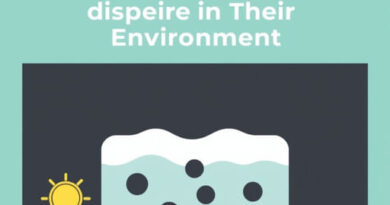
When molecules are introduced into an environment, they rarely stay confined to one area. Instead, they move and spread out,
Read More
Understanding the differences between ketone and alcohol polarity is essential in fields like organic chemistry, biochemistry, and pharmaceutical sciences. These
Read More
Understanding the concepts of isotope and isobar is crucial in the study of chemistry and nuclear physics. These terms often
Read More
Converting formic acid to acetic acid is a classic example of a chemical transformation involving the alteration of carbon atoms
Read More
Understanding the chemistry behind modern materials often begins with learning about polymerization. One of the most fundamental and widely used
Read More
Polymerization is a fascinating and fundamental process in chemistry that plays a major role in the creation of countless materials
Read More
Hydrogen carbonate is a fundamental chemical compound with diverse applications in both natural processes and industrial chemistry. It plays an
Read More
Chlorination of methane is a fundamental reaction in organic chemistry that demonstrates the principles of free radical substitution. While the
Read More
Arsenic is a chemical element that has long captured the interest of scientists, not only because of its historical use
Read More
In the world of atomic structure and nuclear chemistry, understanding the various classifications of atoms is crucial. One such classification
Read More