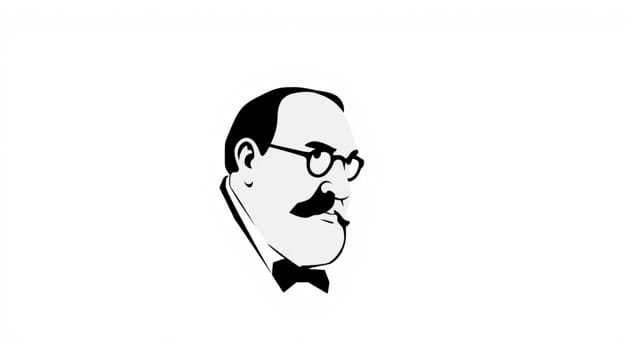
Peter Ustinov was a man of extraordinary talent and boundless creativity. His life was a tapestry woven from acting, writing, directing, and speaking out on important global issues. Renowned for his sharp wit and deep intellect, Ustinov built an illustrious career that spanned more than six decades and touched nearly every corner of the arts and humanitarian work. From his performances on stage and screen to his contributions as a novelist and diplomat, Ustinov’s life was filled with achievements that made him a cultural icon and global citizen. This topic explores the detailed biography of Peter Ustinov, examining his personal life, artistic contributions, and lasting legacy.
Early Life and Family Background
Peter Ustinov was born on April 16, 1921, in Swiss Cottage, London, England. His birth name was Peter Alexander Freiherr von Ustinov. He came from a richly diverse heritage, which would go on to influence much of his worldview and work. His father, Jona von Ustinov, was a journalist and diplomat of Russian, Ethiopian, and German descent. His mother, Nadia Benois, was a painter and ballet designer of French, Italian, and Russian ancestry.
This cosmopolitan background deeply influenced Peter from an early age. Multilingual and multicultural, he grew up speaking English, French, German, Italian, and Russian, a skill set that would later serve him in both his professional and diplomatic roles. His household was filled with intellectual discourse, and he was introduced to the arts at a young age through his mother’s connections to the theater and visual arts communities.
Education and Early Interest in the Arts
Peter Ustinov attended Westminster School in London but found the rigid education system uninspiring. Despite struggling with academic conformity, he showed early signs of creative brilliance. His talent for storytelling, mimicry, and impersonation became evident during his school years, where he entertained classmates and teachers with theatrical performances.
At the age of 16, he enrolled in the London Theatre Studio, founded by Michel Saint-Denis. There, Ustinov developed his acting skills and began exploring the broader spectrum of theatrical arts. His training laid the foundation for a career that would defy categorization and embrace every aspect of stage and screen.
Breakthrough in Acting and Film
Peter Ustinov made his stage debut in 1938 and quickly began to gain attention for his commanding presence and nuanced performances. He appeared in various stage productions before transitioning to film. His early screen roles included appearances in British wartime films, but it was in the 1950s and 1960s that he truly gained international fame.
One of his most notable performances came in the 1960 filmSpartacus, where he played the role of Lentulus Batiatus. This performance earned him the Academy Award for Best Supporting Actor. He won the Oscar again in 1964 for his role inTopkapi. Ustinov became well known not only for his character work but also for his ability to bring humor and intelligence to every role he played.
Iconic Role as Hercule Poirot
In the late 1970s and 1980s, Peter Ustinov took on the role of Agatha Christie’s famous detective Hercule Poirot. His portrayal, starting withDeath on the Nile(1978), brought the character to life in a warm and human way, winning over audiences worldwide. He would go on to portray Poirot in several television films, becoming one of the most beloved representations of the character.
Writing and Directing
Beyond acting, Peter Ustinov was also a successful writer and director. He penned numerous plays, screenplays, and books that reflected his wit, intellect, and humanistic perspective. His first play,The Love of Four Colonels, was a critical success and enjoyed a long run in London’s West End.
He also wrote novels, includingKrumnagelandAdd a Dash of Pity, which showcased his command of language and character development. As a director, Ustinov brought his own works and adaptations to life with a keen sense of timing and creativity. His ability to move seamlessly between disciplines marked him as a rare and multifaceted talent.
Humanitarian Work and Global Impact
In addition to his artistic accomplishments, Peter Ustinov was a committed humanitarian. In 1968, he became a goodwill ambassador for UNICEF, traveling extensively to promote education, peace, and children’s rights. His eloquence and passion made him a powerful advocate on the international stage.
Ustinov believed strongly in dialogue, tolerance, and cross-cultural understanding. His speeches at the United Nations and other global forums addressed issues such as poverty, racism, and war. He received numerous honors for his efforts, including a knighthood from Queen Elizabeth II in 1990 for his services to the arts and to humanitarian causes.
Academic Involvement and Public Speaking
Later in life, Ustinov also became involved in academia. He served as the Chancellor of Durham University from 1992 until his death. Known for his engaging lectures and storytelling, he was deeply admired by students and faculty alike. His legacy lives on at the university, where a college was named in his honor: Ustinov College.
Personal Life
Peter Ustinov’s personal life was as colorful as his professional one. He was married three times and had four children. Despite his fame, he maintained a down-to-earth personality and was known for his kindness and sense of humor. Friends and colleagues frequently spoke of his generosity and wisdom.
He had a love of travel, conversation, and intellectual engagement. Fluent in multiple languages and familiar with a wide range of cultures, he saw himself as a citizen of the world. This outlook infused his work and relationships with a spirit of openness and curiosity.
Death and Legacy
Peter Ustinov passed away on March 28, 2004, in Bursins, Switzerland, at the age of 82. His death was widely mourned across the globe. Tributes poured in from the entertainment industry, political leaders, and humanitarian organizations. He left behind a vast body of work and an enduring legacy that spans the arts, literature, and public service.
His contributions to film and theater are celebrated for their depth and variety. His humanitarian work continues to inspire those working in global advocacy and education. As an artist and global thinker, Ustinov’s life serves as a reminder of the power of creativity, empathy, and engagement.
The biography of Peter Ustinov reflects the life of a truly remarkable individual an actor, writer, director, and humanitarian whose influence extended far beyond the stage and screen. He embodied the ideals of cultural richness, intellectual curiosity, and compassion. Through his performances, writings, and humanitarian missions, Ustinov touched countless lives and left a legacy that continues to inspire. In a world that often rewards specialization, Peter Ustinov stood as a shining example of what it means to live fully, think broadly, and act with purpose.