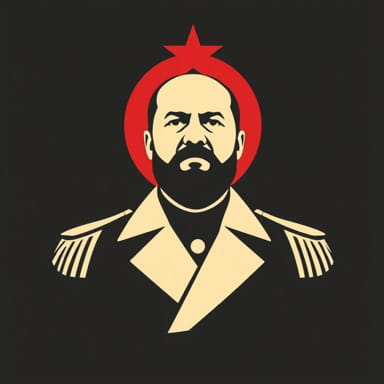
In the early 20th century, as the Russian Empire faced growing unrest, a radical movement emerged that would change the course of world history. At the heart of this transformation was the Bolshevik Party, led by a man whose ideas and actions redefined political revolutions: Vladimir Lenin. The leader of the Bolsheviks was not only a skilled orator and organizer but also a revolutionary theorist whose vision shaped the Soviet Union. Understanding the role and leadership of Lenin within the Bolshevik movement is essential to grasp the roots of the Russian Revolution and its global impact. His influence went far beyond his lifetime, leaving a lasting imprint on socialist and communist ideologies worldwide.
Origins of the Bolshevik Movement
The Bolshevik Party originated from a split in the Russian Social Democratic Labour Party (RSDLP) in 1903. The split divided the party into two factions: the Bolsheviks, led by Vladimir Lenin, and the Mensheviks, led by Julius Martov. The main difference between the two revolved around the nature of party membership and revolutionary strategy. While the Mensheviks favored a more inclusive, democratic approach, the Bolsheviks demanded a tightly organized, disciplined party made up of professional revolutionaries.
Lenin believed that only a centralized and committed party could successfully lead a proletarian revolution. His views were influenced by Karl Marx but adapted to the unique conditions of Tsarist Russia. Lenin’s vision would become the foundation for the Bolshevik ideology that culminated in the October Revolution of 1917.
Vladimir Lenin: The Strategic Revolutionary
Born Vladimir Ilyich Ulyanov in 1870, Lenin came from a middle-class family and was exposed to revolutionary ideas at a young age. The execution of his older brother, Alexander, for plotting against Tsar Alexander III had a profound effect on him. After studying law and becoming active in revolutionary circles, Lenin adopted Marxist principles and eventually founded the newspaper Iskra to spread socialist ideas throughout Russia.
Lenin’s leadership style was characterized by pragmatism, discipline, and an unwavering belief in the necessity of violent revolution to overthrow the bourgeois order. He authored several influential works, includingWhat Is to Be Done?andThe State and Revolution, where he outlined his theories of class struggle, the role of the vanguard party, and the need for a dictatorship of the proletariat.
The Bolsheviks and the 1917 Revolution
The outbreak of World War I and the resulting hardships exacerbated public discontent in Russia. In February 1917, mass protests and strikes led to the abdication of Tsar Nicholas II. A provisional government was established, but it failed to address critical issues such as land reform and withdrawal from the war.
Lenin saw an opportunity. He returned from exile in April 1917 with the help of the Germans, who hoped his presence would destabilize Russia further. Upon his arrival, Lenin issued the April Theses, calling for ‘peace, land, and bread’ a message that resonated deeply with workers, peasants, and soldiers.
Under Lenin’s leadership, the Bolsheviks gained majority support in key soviets (workers’ councils), especially in Petrograd. On October 25, 1917 (Julian calendar), the Bolsheviks seized power in what became known as the October Revolution. The Provisional Government was overthrown, and Lenin became the head of the new Soviet state.
Lenin’s Policies as Bolshevik Leader
Once in power, Lenin moved quickly to consolidate Bolshevik control. Some of his key policies included:
- Decree on Peace: Called for an immediate end to World War I, which resulted in the controversial Treaty of Brest-Litovsk with Germany in 1918.
- Decree on Land: Abolished private land ownership and redistributed land to peasants.
- Nationalization: Major industries, banks, and transport systems were brought under state control.
- Suppression of Opposition: The Bolsheviks banned rival political parties and created the Cheka (secret police) to crush dissent.
Lenin’s policies marked a sharp break from the democratic hopes many had during the February Revolution. His leadership established a one-party state and set the stage for a civil war between the Red (Bolshevik) and White (anti-Bolshevik) forces.
The Russian Civil War and Aftermath
From 1918 to 1921, the Bolsheviks fought a brutal civil war against various groups opposing their rule. Despite facing foreign intervention and internal divisions, the Red Army, led by Leon Trotsky and guided by Lenin’s strategies, emerged victorious. The Bolsheviks rebranded themselves as the Communist Party, and the Union of Soviet Socialist Republics (USSR) was officially established in 1922.
During the war, Lenin introduced the policy of War Communism, which involved grain requisitioning, forced labor, and nationalization of all economic sectors. While it helped the Bolsheviks survive, it caused immense suffering and unrest. In response, Lenin later introduced the New Economic Policy (NEP), allowing some private enterprise to revive the economy.
Lenin’s Legacy as Bolshevik Leader
Lenin suffered a series of strokes beginning in 1922 and died in January 1924. Despite his relatively short time in power, his legacy remains profound. As the leader of the Bolsheviks, Lenin transformed Marxist theory into a practical model for revolution. He laid the foundation for the Soviet Union and inspired other communist movements across the globe.
However, his leadership was not without controversy. Critics argue that Lenin’s intolerance for opposition, use of violence, and suppression of civil liberties laid the groundwork for later authoritarianism under Joseph Stalin. Nonetheless, to his supporters, Lenin remains a symbol of resistance against imperialism and capitalism.
The Lasting Impact of the Bolshevik Leader
The story of the Bolshevik leader, Vladimir Lenin, is a central chapter in the history of the 20th century. His rise from a radical intellectual to the architect of the world’s first socialist state showcases the power of ideology, organization, and determination. Lenin’s leadership of the Bolsheviks did not merely influence Russia it changed the global political landscape, inspiring revolutions, shaping ideologies, and sparking debates that continue to this day.
Understanding Lenin’s role in the Bolshevik movement provides a deeper insight into how revolutions unfold and the immense consequences they carry. Whether viewed as a visionary or a tyrant, the leader of the Bolsheviks left an indelible mark on world history.