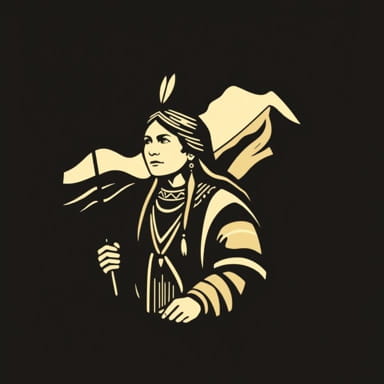
Among the many stories that emerged from the early exploration of the American West, one name remains deeply etched into history Sacagawea, a Shoshone woman whose extraordinary contributions played a vital role in the success of the Lewis and Clark Expedition. Her presence, knowledge, and guidance helped the Corps of Discovery navigate harsh terrains and negotiate with Native American tribes during their journey from the Missouri River to the Pacific Ocean. As a translator, guide, and symbol of peace, Sacagawea’s influence stretched far beyond what might be expected of a young woman who was only a teenager at the time of the expedition.
Early Life of Sacagawea
Sacagawea was born around 1788 into the Lemhi band of the Shoshone tribe in what is now Idaho. Her childhood was abruptly changed when she was captured during a raid by the Hidatsa, a rival tribe. Taken from her homeland, she was eventually sold or gambled into a nonconsensual marriage to Toussaint Charbonneau, a French-Canadian fur trader who lived among the Hidatsa near the Missouri River.
It was through Charbonneau that Sacagawea came into contact with the famed explorers Meriwether Lewis and William Clark. The Corps of Discovery, commissioned by President Thomas Jefferson, sought to explore the newly acquired Louisiana Territory and chart a water route to the Pacific Ocean. Recognizing the need for interpreters familiar with both Native American languages and the terrain, the expedition hired Charbonneau primarily because of Sacagawea’s linguistic abilities and tribal knowledge.
Joining the Lewis and Clark Expedition
When Sacagawea joined the expedition in 1804, she was pregnant. In February 1805, she gave birth to a son named Jean Baptiste Charbonneau, just as the Corps prepared to embark westward. Carrying her infant son on her back, Sacagawea became a full member of the expedition, enduring the same grueling challenges as the men while also caring for her child.
Her value to Lewis and Clark went beyond translation. As a Shoshone who understood both Hidatsa and Shoshone dialects, she was able to interpret between the tribes and the expedition members. She was also familiar with local edible plants, herbs, and survival techniques that were crucial in the wild and often hostile environments.
Symbol of Peace and Trust
One of Sacagawea’s most significant contributions was her symbolic role. Traveling with a woman and child sent a powerful message to other Native tribes. War parties never traveled with women, so her presence was a signal that the Corps of Discovery had peaceful intentions. This helped avert potential conflicts and opened lines of communication that otherwise might have remained closed.
A Pivotal Moment: Reunion with the Shoshone
In a remarkable twist of fate, Sacagawea helped broker one of the most important exchanges of the expedition. When the Corps encountered the Shoshone people deep in the Rocky Mountains, Sacagawea was shocked to recognize the tribe’s chief he was her own brother, Cameahwait. This emotional reunion strengthened the expedition’s relationship with the Shoshone and allowed the group to acquire horses and guidance to cross the difficult mountain terrain, a feat that would have been nearly impossible without tribal assistance.
The successful negotiation not only aided Lewis and Clark in crossing the Rockies, but it also confirmed Sacagawea’s central role in the expedition’s overall progress and survival. Her personal connection to the Shoshone and her reputation as a trustworthy figure helped pave the way for safe passage.
Navigational Skills and Natural Knowledge
While Sacagawea was not always the primary guide, her input was invaluable when the expedition traversed unfamiliar lands. She helped identify landmarks and terrain features and advised on the safest and most efficient routes. Her deep knowledge of regional flora also contributed to the Corps’ sustenance and health, helping to prevent starvation and treat illness with natural remedies.
Her ability to adapt and endure alongside the expedition, despite being a young mother in an unforgiving environment, displayed a remarkable level of strength and resilience. She was also credited with rescuing important documents, instruments, and supplies during a river accident, an act that Clark noted with great appreciation in his journal.
Life After the Expedition
Following the end of the expedition in 1806, Sacagawea and Charbonneau returned to the Hidatsa village. Little is known with certainty about her later years. Historical accounts vary, with some sources suggesting she died in 1812, while others claim she lived into her 90s and died in 1884 on a reservation in Wyoming. Regardless of the year of her death, her legacy lived on through her son, Jean Baptiste, who was educated in Europe and later became a prominent Western figure.
Recognition and Legacy
Over the centuries, Sacagawea became an enduring symbol of courage, resourcefulness, and unity. She has been honored in countless statues, schools, landmarks, and even on U.S. currency. Her presence on the one-dollar coin issued by the U.S. Mint in 2000 was a tribute to her role in shaping American history and her place as one of the few Native American women widely recognized in national narratives.
Today, she is celebrated not just for her role as a guide and interpreter, but also as a cultural bridge between two worlds. Her story offers a lens into the complex dynamics of early American exploration and Native American interaction. Sacagawea’s contributions helped shape the course of the Lewis and Clark expedition, ensuring its success and leaving an impact that still resonates in American memory.
More Than Just a Guide
The story of the Shoshone woman who aided Lewis and Clark is a testament to how one individual’s knowledge, determination, and empathy can influence the course of history. Sacagawea’s involvement in the Corps of Discovery went far beyond logistical support; she was a unifying force who helped foster understanding across cultural divides. In the broader narrative of American exploration, her contributions serve as a powerful reminder of the often-overlooked roles Indigenous people especially Indigenous women played in shaping the United States.
In remembering Sacagawea, we remember not only a figure from the past, but a symbol of cooperation, resilience, and quiet leadership whose legacy continues to inspire new generations interested in the real stories behind the westward expansion of America.